

A professionally installed water softener in 2026 typically costs between $1,500 and $3,000 for many homeowners, and that's a practical starting point for budgeting. But that number only gets you in the ballpark, because the final price depends on the system you need, your water source, your plumbing, and whether the job is a simple swap or a more involved installation.
If you're in Central Florida, you're probably not asking this question out of curiosity. You're asking because the glasses come out of the dishwasher spotted, the shower door never looks clean, soap doesn't lather the way it should, and your fixtures keep collecting crusty buildup. In homes on private wells, the problem can be even more frustrating when hard water shows up alongside iron, sulfur smells, or sediment.
National averages are useful, but they don't always reflect what happens in Sebring, Lake Wales, Frostproof, Avon Park, or Winter Haven. Water conditions vary house to house. Older plumbing changes the labor. A well-water home may need more than a basic softener. That's why the true water softener installation cost has to be looked at as an all-in project cost, not just the sticker price of the equipment.
This guide breaks down what you're really paying for, what drives the price up or keeps it reasonable, and what Central Florida homeowners should watch for before signing off on a quote.
Table of Contents
- Understanding Your Total Water Softener Investment
- What Is Included in a Water Softener Installation Price
- Key Factors That Determine Your Final Cost
- Water Softener Costs in Central Florida A Realistic Look
- DIY Installation vs Hiring a Professional
- Financing Your System and Calculating Your Return on Investment
- How to Get an Accurate Quote from Florida Water Management
Understanding Your Total Water Softener Investment
A homeowner in Central Florida sees scale on the shower glass, white spotting on dishes, and a water heater that never seems to last as long as it should. Then the price shopping starts, and the numbers online rarely match what the house needs.
A realistic water softener budget is the full installed cost, not just the price of the tank and valve. For many homes, that means the system, labor, plumbing parts, drain connection, startup, and sometimes permit or code-related work. In this part of Florida, the final number can shift fast between a simple city-water install in a newer garage and a well-water job that needs extra treatment before the softener can do its job.
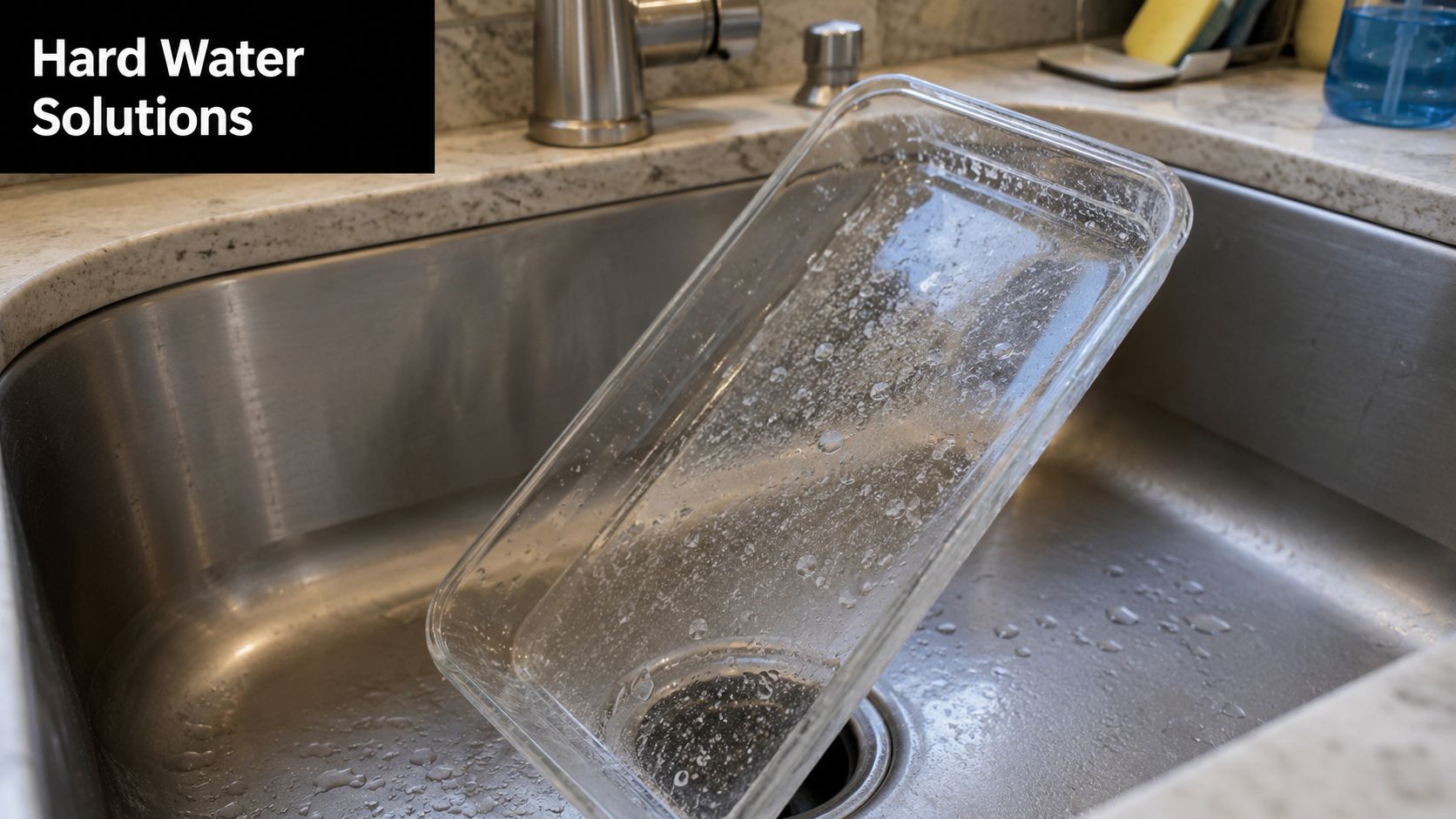
National cost guides are useful for a rough starting point. They miss local variables that matter in Central Florida. Well water often brings iron, sulfur, or sediment into the conversation. Some municipalities have their own permit expectations. Older homes around Orlando, Clermont, Leesburg, and nearby areas can also add labor if the main line is hard to access or the garage setup leaves no clean path for a drain.
Here is where homeowners get surprised. The low online price usually assumes the house already has proper space, a nearby drain, accessible plumbing, and water quality that only needs softening. Many homes do not check all four boxes.
The budget usually moves because of a few specific issues:
- Water source: Municipal water and private well water are different jobs with different equipment needs.
- Water quality: Hardness alone is one thing. Hardness with iron, sulfur, or low pH is another.
- Household size and usage: The right system size depends on actual demand, not just the number printed on a box.
- Plumbing conditions: Long pipe runs, tight mechanical spaces, older shutoffs, or drain access problems add labor and materials.
- Local code and permit handling: Some installations need permit work or changes to meet local requirements.
The practical rule is simple. A useful quote is based on your water test and your plumbing layout.
That is also why a homeowner comparing systems should look beyond sticker price and understand the types of whole-home water softening systems used in Florida homes. The cheaper option upfront can cost more later if it is undersized, installed without the right pre-treatment, or forced to handle well-water issues it was never built for.
What Is Included in a Water Softener Installation Price
A homeowner in Central Florida will often see one number online for the unit and a very different number on the actual quote. The gap usually comes from everything required to make the system work correctly in that specific house.
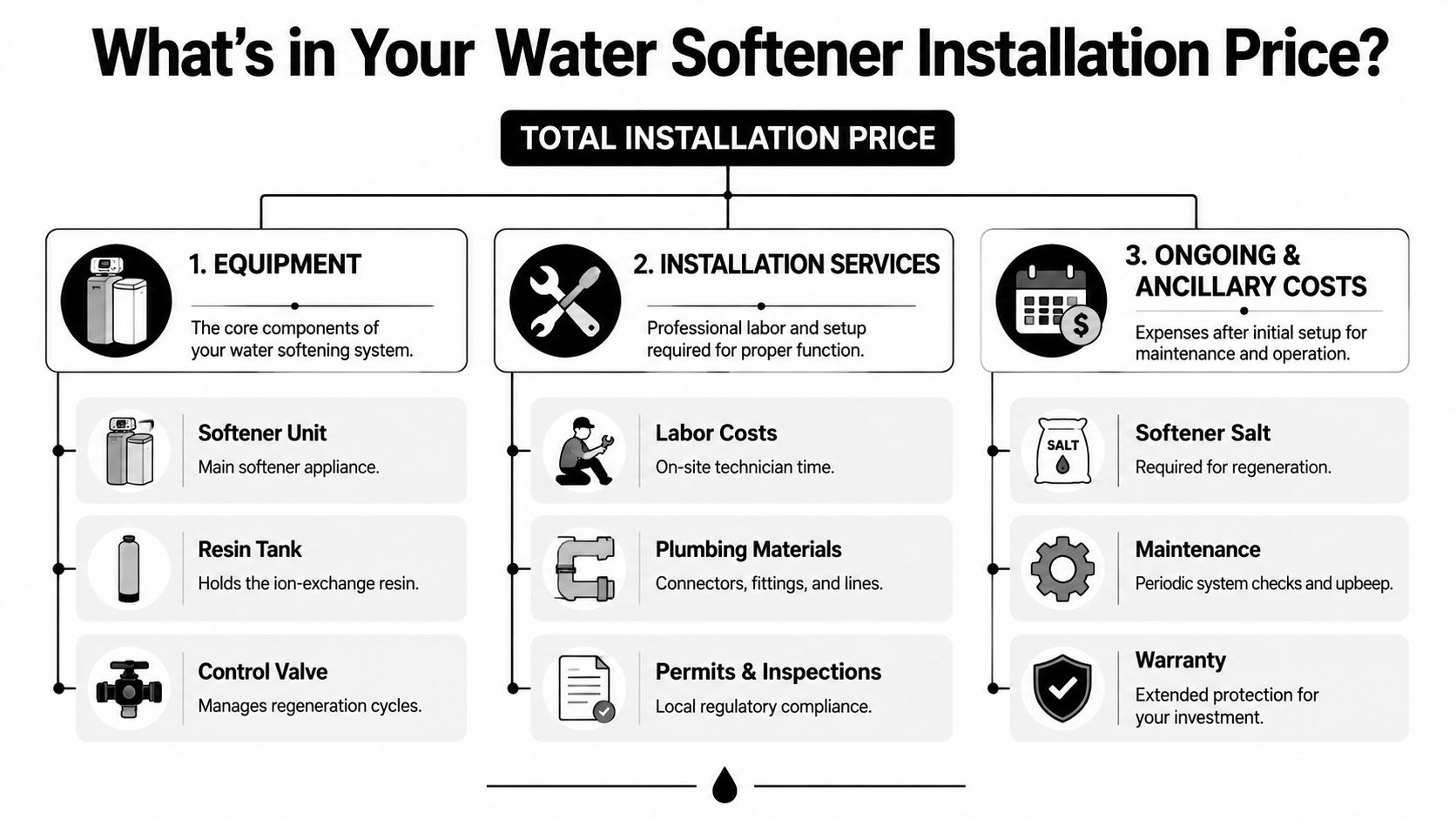
A real installation price usually includes three parts. The system itself, the labor to install it, and the small job-site items that add up fast in the field.
Equipment
Equipment pricing starts with the softener, but it rarely ends there. The core package usually includes the resin tank, brine tank, control valve, and the bypass or connection hardware needed to tie it into the home.
That number changes based on what the water needs. A basic salt-based softener for city water is one category. A setup that also needs pre-filtration, iron handling, or odor treatment is a different category with different equipment.
Homeowners comparing options can get a better feel for those categories by reviewing whole-home water softening systems used in Florida homes. That helps explain why two quotes can both say "water softener" and still be built around very different equipment packages.
Professional labor
Labor is the part homeowners tend to underestimate.
A straightforward replacement in a garage with open access is usually faster and cleaner than a first-time install where the plumber has to cut in a loop, reroute piping, add a drain connection, and make room around the water heater or panel. In Central Florida, I also see labor shift when the install point is far from the main line or when an older home has shutoff valves or pipe conditions that should be corrected while the system is being installed.
Homewyse cost data for water softener installation shows how labor and added piping can move the price based on job conditions. That matches what happens in the field. Two homes can use similar softeners and still end up with different installation totals because the plumbing work is different.
A replacement job usually costs less than a first-time install because the drain path, electrical access, and connection points may already be there.
Materials and permit-related costs
At this point, the quote needs to be clear.
Materials often include pipe, fittings, valves, flex connectors, drain line parts, clamps, and bypass components. On some homes, there is also a small amount of site adaptation work, such as securing the drain line properly, extending tubing, or making minor plumbing corrections so the system meets code and can be serviced later.
Permit handling can also be part of the price, depending on the municipality and the scope of the work. In Central Florida, that may mean local paperwork, inspection scheduling, and small code-related adjustments that do not show up in a low online price.
A clean estimate should spell out items like these:
| Cost area | What it usually covers |
|---|---|
| Connection materials | Pipe, fittings, valves, drain line parts |
| Site adaptation | Bypass setup, drain routing, minor plumbing changes |
| Permit handling | Local paperwork and inspection coordination where required |
| Startup items | Initial setup, programming, and verification |
If those items are missing or lumped into one vague line, ask questions before signing. The all-in cost is not just the price of the box. It is the price of getting a correctly sized system installed, started up, and ready to run in your home.
Key Factors That Determine Your Final Cost
A homeowner in Winter Haven can get a straightforward softener install on city water, while a homeowner outside Frostproof on a private well may need a different setup entirely. That is why online national averages only help so much. In Central Florida, the final number usually comes down to four job-specific variables.
System Type and Technology
The equipment choice has a direct effect on budget.
A standard ion-exchange softener is usually the lowest-cost whole-home option when hardness is the main issue. A twin-tank or higher-capacity system costs more up front, but it can make sense for larger households, homes with higher peak demand, or families who do not want softened water capacity to drop during regeneration.
On well water, the softener is often only one part of the system. If the water also has iron, sulfur odor, or sediment, pre-treatment may be needed to keep the softener working properly. That changes both equipment cost and installation cost. It also changes long-term maintenance.
This is one of the biggest mistakes I see with low online prices. The listed unit price looks fine until the home needs a sediment filter, an iron filter, extra valves, or a different installation layout to make the system perform the way the homeowner expects.
Grain Capacity
Sizing affects both the price you pay now and the cost of owning the system later.
A larger system is not automatically the better buy. A small household on municipal water may do well with a modest unit, while a larger family with heavier daily use may need more grain capacity and better flow performance. Aquasana's softener sizing and cost guide explains the basic sizing logic using household water use and hardness level.
Poor sizing creates expensive problems. An undersized unit regenerates too often, uses more salt and water than it should, and may let hardness break through during heavy use. An oversized unit raises the initial price without giving much practical benefit.
Bedroom count helps, but it does not answer the full question. Hardness level, number of people in the home, fixture demand, and daily habits matter more.
Water Source
Water source changes the job more than almost any other factor in this part of Florida.
On municipal water, the discussion is usually simpler. The installer is mainly looking at hardness level, flow rate, available space, and how to tie the system into the home cleanly. On private well water, the water may carry hardness along with iron staining, rotten-egg odor, or suspended solids. In that case, the quote should reflect treatment design, not just the price of a softener tank.
That is why a local estimate usually beats a national calculator. A house on city water in Lake Wales often falls into a very different planning range than a rural well-water property nearby. Homeowners comparing options can get a better sense of local pricing and scope from this Central Florida water softener installation cost guide for Lake Wales homes.
Plumbing Complexity
Plumbing conditions often decide whether the job stays near the lower end of the range or climbs.
The installer needs access to the main water line, a practical drain route, enough room to service the unit later, and a nearby power source if the control valve requires one. In Central Florida garages, that sounds simple until the water heater, washer, shelving, and old repairs are all packed into the same corner.
A few conditions regularly add labor or materials:
- Tight access: Limited working room slows the install and can require more fittings or rerouting.
- Long or awkward drain runs: The farther the drain point is from the equipment location, the more time and material the job needs.
- Older plumbing: Mixed pipe materials, aging shutoffs, or previous patchwork repairs can add correction work before the system goes in.
- Code and permit variables: Some municipalities require permit paperwork or inspection coordination, and some homes need small code updates before installation.
Two homes can need the same size softener and still get very different quotes. In the field, that usually comes back to the water source, the system design, and how much work the plumbing layout demands.
Water Softener Costs in Central Florida A Realistic Look
The best way to understand local pricing is to look at the kind of homes we see around Central Florida. Not exact quotes, because that requires testing and site review, but realistic situations.
A city-water home in Lake Wales
A three-bedroom home on municipal water usually starts with the classic hard-water complaints. Spotting on dishes, scale on fixtures, rough-feeling laundry, and buildup around shower doors.
For that type of property, a professionally installed whole-home softener often fits into the common planning range of about $1,000 to $3,000 total described in this installation cost guide for whole-home softeners. If the plumbing location is accessible and the home doesn't need unusual drain work, the project tends to stay toward the more manageable side of the range.
A larger well-water property near Frostproof
A larger home on a private well is where national averages start to lose usefulness. The family may need softening, but the water may also show staining or odor. In that situation, the discussion shifts from a single appliance to a system design.
The homeowner might begin with a softener budget in mind and then learn the water needs pre-treatment ahead of it. That's not upselling when the water requires it. It's the difference between installing equipment that looks right on paper and installing a setup that performs correctly in the home.
In Central Florida well-water jobs, the test result matters more than the advertised price tag.
An older house in Sebring or Avon Park
Older homes can make a moderate system install behave like a bigger project. The issue isn't always the equipment. It's access, existing pipe layout, shutoff condition, or where the drain can legally and practically be tied in.
A homeowner may expect the same cost as a neighbor with a newer build and similar square footage, but the labor side can change fast when the installer has to work around older plumbing decisions. That's why local estimates need to be based on the actual house.
These examples are useful for planning, but they aren't substitutes for a real on-site evaluation. A water test and a look at the plumbing are what turn a ballpark into a reliable quote.
DIY Installation vs Hiring a Professional
A homeowner in Lakeland buys a softener on Saturday, planning to save the install cost. By Sunday afternoon, the unit is still in the garage because the drain connection is not where they expected, the shutoff valve will not fully close, and the plumbing aisle trip turned into three trips. That is a common Central Florida service call.
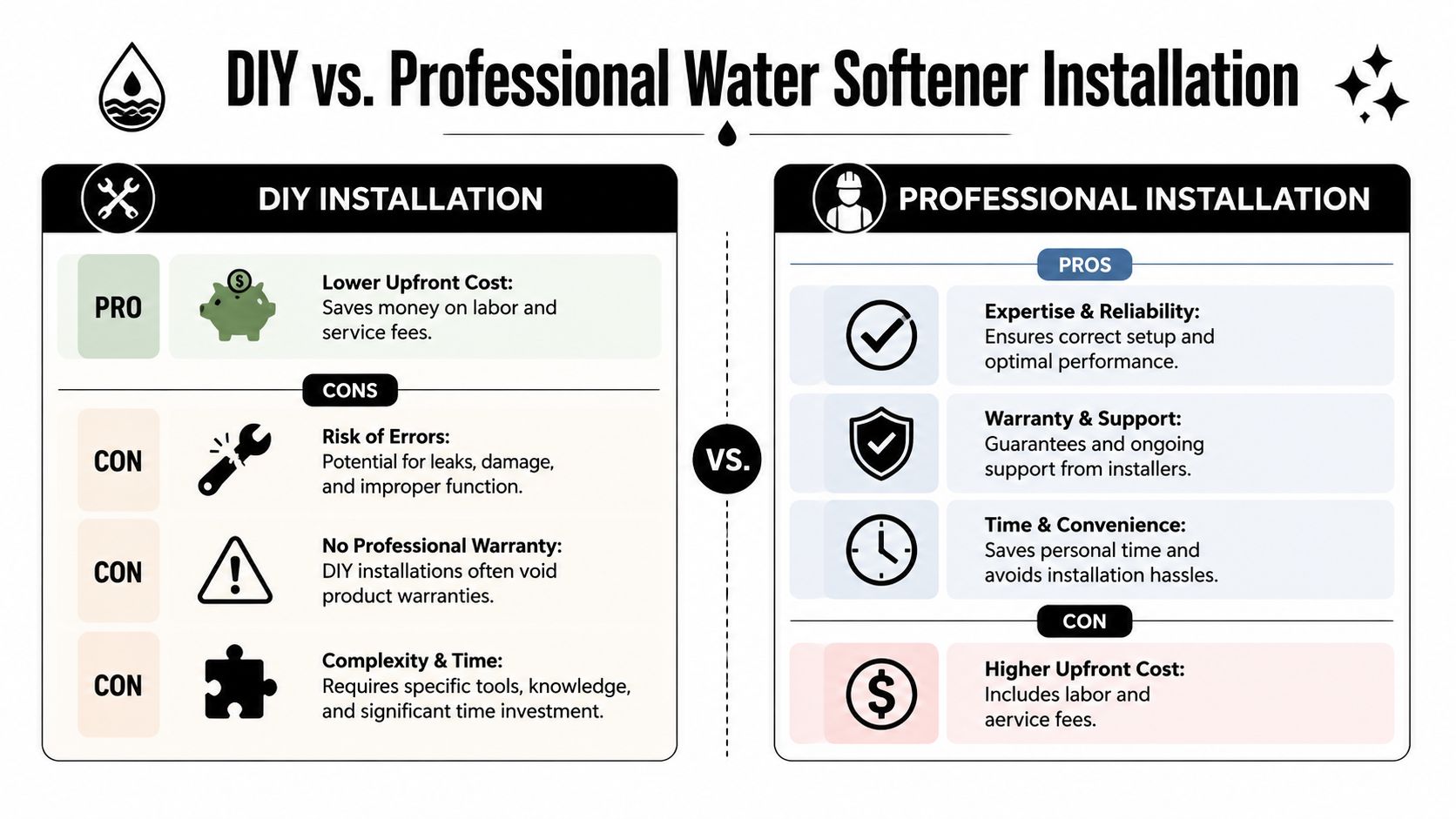
Where DIY can make sense
DIY works best on a straightforward replacement. The home already had a correctly installed softener, the piping is accessible, the drain connection is usable, and the homeowner is comfortable cutting and reconnecting plumbing without creating a leak.
That is a narrow category.
In a newer municipal-water home with a loop in place, an experienced homeowner may be able to handle the swap and keep the upfront bill lower. If the project stays limited to replacing like for like, DIY can be a reasonable option.
Where homeowners get surprised
First-time installations are different. The softener itself is only part of the job. You still have to deal with a bypass setup, drain routing, startup programming, and a location that allows future service.
In Central Florida, local conditions change the risk. A well-water home near Frostproof or Polk County may need more than hardness treatment, and a DIY installer usually does not know that until the system is already purchased. An older home in Sebring or Avon Park may have tight access, tired shutoffs, or drain limitations that turn a simple plan into plumbing repair.
The hidden cost is usually not one big item. It is the stack of smaller corrections. Extra fittings. Valve replacement. Drain changes. Rework after a leak. Time off your weekend. In some areas, permit and code requirements can add cost too, especially on a first-time install.
A few mistakes show up often:
- Wrong sizing: The system cycles too often, wastes salt and water, or cannot keep up with household demand.
- Bad drain setup: Poor routing creates service issues and can lead to code problems.
- Weak plumbing connections: A small drip behind the unit can become cabinet, drywall, or flooring damage.
- Poor placement: The unit is installed where it works today but becomes difficult to service later.
- Warranty limits: Some manufacturers give better coverage when the system is installed by a qualified professional.
A softener install is only "done" when it is sized correctly, piped cleanly, programmed properly, and easy to service later.
What professional installation actually buys you
Professional installation buys more than labor. It buys system selection based on the home, cleaner pipe layout, startup checks, and someone catching problems before they become callbacks.
That matters more on well water, older plumbing, and first-time installs. It also matters when a homeowner wants the full payoff from soft water, including the day-to-day benefits for fixtures, cleaning, appliances, and bathing comfort explained in these home water softening system benefits.
Here is the practical way to look at it:
| Situation | Better choice |
|---|---|
| Existing softener replacement with easy access | DIY may work for an experienced homeowner |
| First-time whole-home install | Professional installation is usually the safer choice |
| Private well with staining, odor, or multiple water issues | Professional installation is usually the better route |
| Older home or complicated plumbing layout | Professional installation often prevents expensive rework |
For many Central Florida homeowners, the biggest savings does not come from skipping labor. It comes from getting the right equipment the first time and avoiding a bad install that costs more to fix later.
Financing Your System and Calculating Your Return on Investment
A lot of Central Florida homeowners reach this point after the same frustrating stretch. The water heater is building scale, the shower glass never looks clean, and soap seems to disappear faster than it should. Then the question changes from "How much does a softener cost?" to "How do I fit the right system into the budget, and will it pay off?"
Financing can help spread out the upfront cost, especially on first-time installs or well-water jobs that need more than a basic unit. The better question is whether the monthly payment is attached to the right equipment. A cheaper payment on an undersized or poorly matched system is still a bad deal.
Return on investment shows up in the house in practical ways, not in a flashy number on paper. Softened water helps reduce mineral scale in the plumbing system and on fixtures. It also cuts down on the constant re-cleaning that hard water causes in bathrooms, kitchens, and on glass.
Homeowners usually notice the payoff in a few specific places:
- Appliances last under less stress: Water heaters, dishwashers, and washing machines are not fighting the same mineral buildup.
- Less soap and detergent waste: Cleaning products tend to rinse and lather better in softened water.
- Lower fixture maintenance: Faucets, showerheads, and glass stay easier to keep clean.
- Better daily use: Showers, laundry, and handwashing usually feel better with softened water.
The savings are not identical from house to house. A city-water home in Orlando with moderate hardness may see the benefit mostly in cleaning, fixture upkeep, and appliance wear. A well-water home in parts of Lake, Polk, or Osceola County may see a bigger payoff if hard water has been stacking on top of iron, staining, or other treatment issues.
For a practical overview of the day-to-day payoff, these home water softening system benefits give a good homeowner-level picture.
Operating cost belongs in the math too. Salt, periodic service, and the occasional repair are part of ownership. In Central Florida, usage varies a lot by water hardness, household size, and whether the system is treating municipal water or private well water with heavier mineral load.
That is why I tell homeowners to judge value by total ownership cost, not sticker price alone. A correctly sized system with clean installation and realistic upkeep often costs less over time than a bargain unit that burns through salt, struggles to keep up, or needs replacement early.
How to Get an Accurate Quote from Florida Water Management
A homeowner in Central Florida gets quoted one price over the phone, then the number changes after the installer sees a tight garage, no nearby drain, and well water with iron. That happens all the time. A water softener quote is only accurate when it matches both the water quality and the actual plumbing conditions at the house.
What to have ready
Before you request pricing, have these details ready so the quote can be built around your home instead of a generic install:
- Household size: The number of people living in the home affects sizing and salt use.
- Water problems: Hard water spots, scale, orange staining, sulfur odor, sediment, or soap that will not rinse well.
- Water source: City water or private well. In Central Florida, that changes the equipment recommendation fast.
- Planned install location: Garage, utility room, or exterior service area.
- Main shutoff location: Access matters because labor changes when plumbing is cramped or difficult to reach.
What makes a quote reliable
A solid quote includes more than a model number and a labor allowance. It should reflect the actual treatment need, the pipe layout, and any extras required by the property.
Look for these four things:
- Water testing for hardness and other common Florida issues such as iron, sulfur, or sediment.
- A site inspection to check plumbing access, drain options, electrical availability if needed, and space for future service.
- A written scope of work that spells out equipment, installation materials, labor, and anything excluded.
- A clear explanation of ownership costs such as salt, maintenance, and any service the system may need over time.
I always tell homeowners to be careful with quotes built from a quick phone call alone. If nobody has tested the water or looked at the install area, the final price can change once actual conditions show up.
That matters even more in this part of Florida. A municipal water home in Winter Haven usually prices differently than a well-water home in Lake Wales or Avon Park. Permit requirements, drain routing, prefiltration, and outdoor exposure can all affect the number.
If you want a real quote, ask for a water test and an on-site look at the plumbing before you agree to anything. That is how you get pricing that reflects your house, your water, and the full job, not just the base unit.
If you're dealing with hard water in Sebring, Lake Wales, Avon Park, Winter Haven, Frostproof, or nearby areas, Florida Water Management can help you get a clear answer before you spend a dollar on the wrong equipment. Schedule a free water test, get an honest assessment of your home's water, and find out what your real all-in cost looks like.