

You turn on the kitchen tap, fill a glass, and stop cold. The water looks yellow-brown, maybe rusty, maybe muddy, and your first thought is usually the same. Something is wrong with the well.
That reaction is reasonable. Brown well water can come from something relatively common in Central Florida, like iron or stirred-up sediment, but it can also point to a well problem that needs fast attention. The hard part for most homeowners isn't noticing the problem. It's figuring out whether this is a short-lived event after a rainstorm or a sign of a deeper issue in the well, pump, casing, or plumbing.
In Sebring, Avon Park, Lake Wales, Winter Haven, Frostproof, and the surrounding area, that distinction matters. Local wells often pull from groundwater with natural minerals, and our weather can change what shows up at the tap almost overnight. The right response depends on the cause. A sediment issue calls for one path. Dissolved iron calls for another. A possible bacteria issue changes the conversation entirely.
Table of Contents
- That Sinking Feeling When Your Well Water Turns Brown
- The Common Culprits Behind Brown Well Water
- How to Diagnose the Problem at Home
- Is Brown Well Water Safe and What Should You Do Right Now
- Your Guide to Permanent Solutions for Clear Well Water
- Well Maintenance and When to Call a Pro in Central Florida
- Frequently Asked Questions About Brown Well Water
That Sinking Feeling When Your Well Water Turns Brown
You turn on the kitchen tap after a hard afternoon rain, and the water coming out looks like tea or watered-down rust. For a Central Florida well owner, that gets your attention fast. The first concern is usually the same. Is this a temporary mess-up from the weather, or is something wrong with the well system?
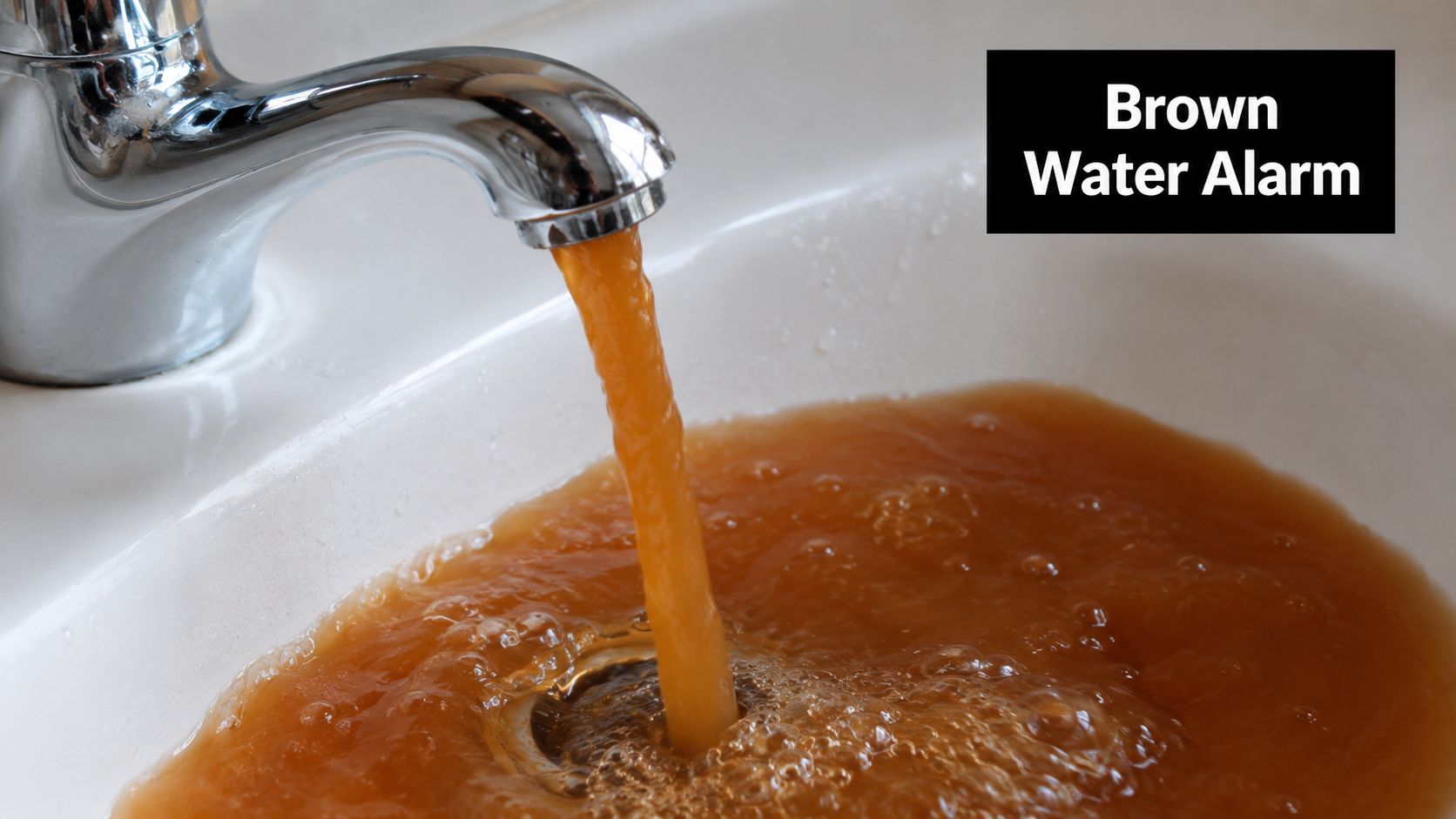
That distinction matters more here than in a lot of other parts of the country. Central Florida wells often pull from water-bearing zones where iron, manganese, fine sediment, and organic color can show up differently depending on recent weather, water table changes, and how hard the system has been working. A sudden color change after heavy rain or after the pump has been cycling hard points to a different response than water that has been slowly getting browner over months.
Brown water is a symptom, not a diagnosis.
Some cases are mainly appearance problems, the kind that stain fixtures and laundry but come from naturally occurring minerals or tannins. Other cases deserve faster attention, especially if the change was sudden or the water also looks cloudy, smells off, or leaves slime in toilets and tanks. I tell homeowners the same thing all the time. The color matters, but the timing matters just as much.
A good starting point is to stop guessing and look at the whole system. The well, pressure tank, treatment equipment, plumbing, and recent weather all tell part of the story. If you want to see what kinds of well water filtration systems are used once the cause is identified, it helps to understand first whether you're dealing with a short-term disturbance or an ongoing water quality problem.
That difference is what usually separates a one-time correction from a permanent fix.
The Common Culprits Behind Brown Well Water
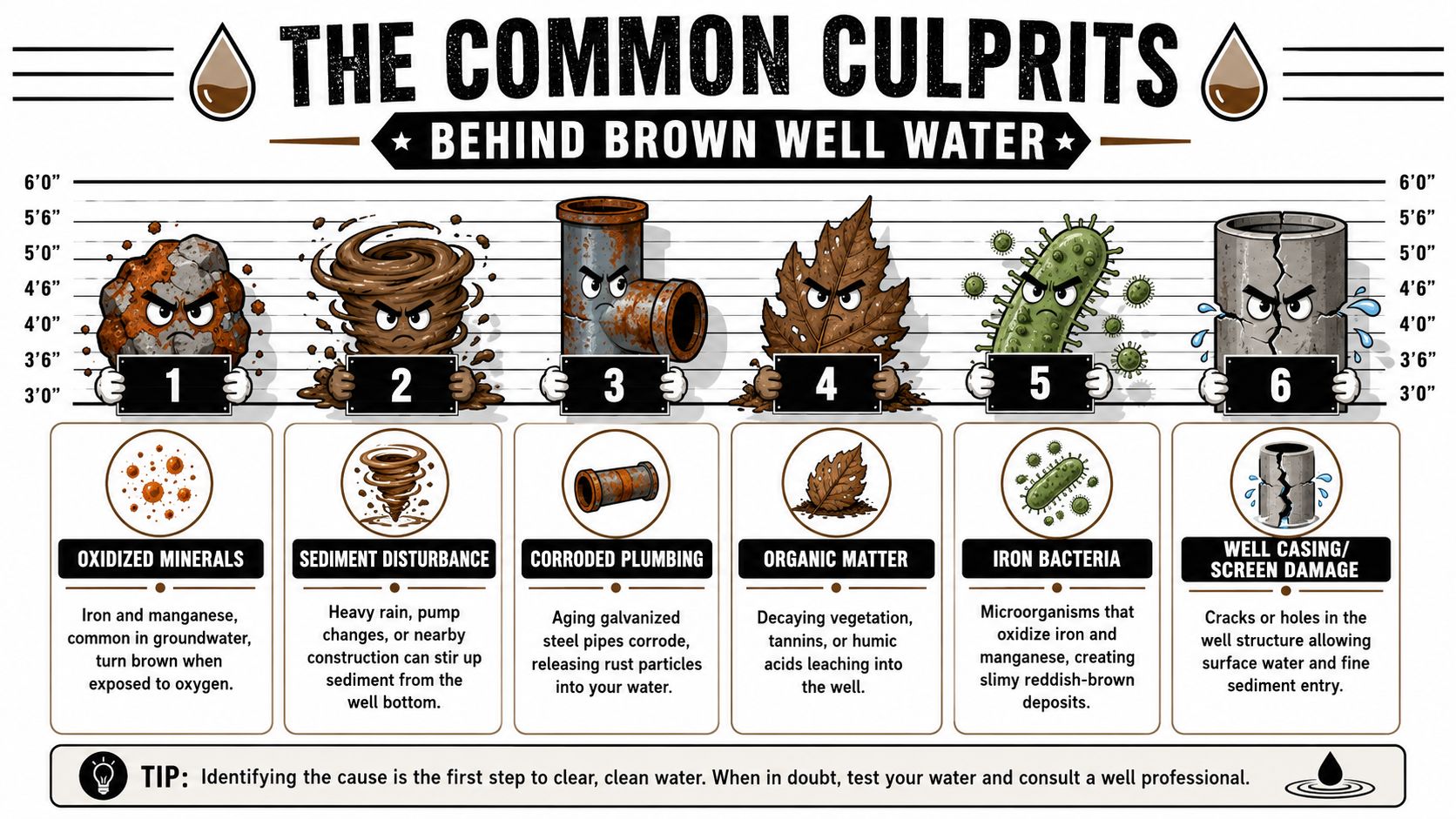
A brown-water complaint usually comes down to one of a few causes, but the pattern matters as much as the color. In Central Florida, I look first at whether the problem showed up after a storm, after heavy water use, or whether it has been creeping in over time. That usually points us toward either a temporary disturbance in the well or a water-quality issue that will keep coming back until it is treated correctly.
Iron and manganese in Central Florida wells
Iron is the cause I see most often. In many Central Florida wells, dissolved iron stays invisible underground, then turns yellow, orange, or brown after the water hits air. Homeowners notice it in a glass, in toilet bowls, and on white fixtures long before they know the well water itself is the source. This well water explanation of iron discoloration gives a basic overview of how that color change happens.
Iron works like rust in solution. The water can come out clear, then darken as it sits. Manganese behaves in a similar way, but it often shows up as darker staining, sometimes brown and sometimes nearly black. If the color develops after the water is drawn, dissolved minerals move to the top of the suspect list.
That kind of issue is usually persistent, not random. Rain can change how noticeable it is, but iron and manganese are commonly part of the well's baseline water chemistry.
Sediment, silt, and storm-driven disturbance
Sediment is different. It usually points to something being stirred up rather than something dissolved in the water all the time.
After a heavy Central Florida rain, the water table can shift fast. A shallow well, a compromised well cap, a pump set too low, or a well that has accumulated fine material over the years can start pulling silt, sand, or organic debris. The result is murky water, grit in aerators, and discoloration that often improves after the system settles down or the well is flushed.
Watch for these signs that sediment is involved:
- Cloudy or muddy appearance: The water looks opaque rather than just tinted.
- Particles in the bottom of a glass: Let it sit and material settles out.
- Problem starts after storms or heavy demand: Irrigation, back-to-back showers, or filling a large tub can stir up the well.
- Faucet screens clog with debris: Sand, silt, or rust-colored grit collects quickly.
That temporary-versus-permanent distinction matters here. A one-time muddy episode after a major rain calls for a different response than water that is brown every morning for months.
Tannins, iron bacteria, and aging plumbing
Tannins are another common source of confusion in this part of the state. In areas with more organic material in the groundwater, tannins can turn water a tea color while it still looks clear. There is no grit. There may be little or no metallic taste. Homeowners often assume iron because the water is brown, then spend money on the wrong filter.
Iron bacteria adds another layer. This is usually less about the water looking uniformly brown and more about slime, staining, and buildup in toilet tanks, filter housings, or plumbing components. If there is reddish-brown slime or a swampy, unpleasant smell, the problem may involve bacterial growth in the well or plumbing, not just dissolved minerals. In those cases, proper disinfection or a dedicated well water sterilization system may be part of the fix.
Plumbing corrosion can also be the source, especially in older homes. If the discoloration is strongest on the hot side, appears at one fixture, or comes with visible rust flakes, I start looking at the water heater, galvanized piping, or steel well components before blaming the aquifer.
Here is the quick field version of what those clues usually mean:
| Clue | More likely cause |
|---|---|
| Water clears from the tap, then turns rusty in the glass | Iron |
| Dark brown or black staining | Manganese |
| Cloudy brown water with grit or settling particles | Sediment or silt |
| Clear, tea-colored water | Tannins |
| Reddish-brown slime in tanks or fixtures | Iron bacteria |
| Brown water only at hot taps or one location | Plumbing or water heater issue |
The mistake I see most often is treating every brown-water complaint the same way. In Central Florida, a storm-related sediment event, a tannin issue, and an iron problem can all look similar at first glance, but they do not call for the same equipment or the same repair plan.
How to Diagnose the Problem at Home
A good home check answers one question first. Did something temporary stir up the well, or are you looking at a problem that will keep coming back until the source is fixed?

In Central Florida, that distinction matters more than many homeowners realize. Our sandy soils, shallow water table, and fast swings after heavy rain can cloud up a well for a short time. A casing problem, failing treatment unit, or persistent iron issue behaves very differently. The pattern usually shows up before lab results do.
Start with a simple bucket test
Fill a clear glass or white bucket from a cold tap and set it down for a few minutes. Look at what the water does, not just the color.
- Particles drop to the bottom: sediment or silt is likely part of the problem.
- Water stays clear but looks yellow, orange, or tea-colored: dissolved iron or tannins are more likely.
- Color is strongest from the hot side: check the water heater and hot-side plumbing.
- Slime shows up in toilet tanks, filter housings, or low-use fixtures: bacterial growth is more likely than plain mineral staining.
Then check where it happens.
- One fixture only: start with that faucet, supply line, or nearby plumbing.
- Every fixture in the house: look toward the well, pressure tank, or whole-house treatment equipment.
- Water is clear before treatment and brown after treatment: the filter, softener, backwashing valve, or media bed may be the problem.
That last point gets missed all the time. A clogged sediment filter can restrict flow and release trapped material. The wrong well water filtration system for Florida well conditions can also leave you chasing symptoms instead of fixing the cause.
Watch what happens over time
Timing is one of the best diagnostic tools you have.
If the water turned brown right after a hard rain, flooding nearby, a long irrigation cycle, or heavy household use, I would treat that differently than water that has been discolored every morning for two weeks. In Central Florida, storms can shift the water table fast and stir fine sediment into a well, especially in older wells or wells with construction issues. A permanent iron or tannin problem usually stays consistent. It may vary a little, but it does not disappear just because the weather changed.
A short flush test helps here. Run cold water from an outside spigot or bathtub for several minutes and watch for a pattern.
- Gets better as you flush: sediment disturbance or stagnant water in the plumbing is more likely.
- Stays the same the whole time: the source water itself is more suspect.
- Comes and goes after rain events: pay close attention to surface runoff, casing condition, and well cap integrity.
- Shows up after the pump kicks on or after high demand: the well may be drawing down and pulling sediment.
Compare your well to the area around you
Ask a nearby neighbor on a private well whether they saw the same change after the same storm. That is a practical field check, especially in rural parts of Central Florida where several homes may sit over similar formations.
If nearby wells also turned brown after heavy rain and then cleared, local groundwater conditions may be the driver. If theirs stayed clear and yours did not, narrow your focus to your well depth, pump position, casing, screen, or treatment equipment.
Keep notes for a day or two. Write down when the color appears, whether it is worse at hot or cold taps, whether particles settle, and whether rain or heavy usage happened first. Those details make diagnosis faster and prevent the common mistake of treating every brown-water event like it is the same problem.
Is Brown Well Water Safe and What Should You Do Right Now
Most homeowners really mean one thing when they ask why their well water is brown. Is this dangerous?
Sometimes the answer is that the discoloration is mostly aesthetic. Iron, manganese, and tannins can make water look bad, stain everything they touch, and still not be the immediate health threat people fear. But brown color can also hide a more serious problem, especially when sediment enters through a damaged casing, poor construction, or surface infiltration.
What to avoid until you know more
Sediment isn't just ugly. Sediment accumulation, especially in wells with damaged casings or inadequate depth, can introduce dirt and silt along with harmful pathogens such as E. Coli, as described in this brown water troubleshooting guide focused on well integrity and contamination.
That is why the safest short-term response is straightforward:
- Don't drink it: Use bottled water or another safe source for drinking and cooking until testing is done.
- Pause laundry: Brown water can stain clothing, towels, and bedding.
- Avoid filling tubs for kids: Discolored water may be harmless, but if contamination is involved, you don't want prolonged exposure.
- Hold off on ice making: Ice traps the same water you're trying not to consume.
- Think beyond color: If odor, slime, or recent flooding is involved, treat it as a contamination concern.
If your concern includes possible bacteria or well contamination, a properly designed water sterilization system can be part of the long-term fix after testing confirms what's present.
Brown water doesn't always mean "unsafe." But until you know whether you're dealing with minerals, tannins, sediment, or contaminated runoff, caution is the right move.
Your Guide to Permanent Solutions for Clear Well Water
Permanent treatment starts with one question: did the water turn brown for a short time, or has it stayed that way?
In Central Florida, that distinction matters more than many homeowners realize. A hard rain can stir up fine sediment, change flow conditions in the well, or push tannins and surface influence into a vulnerable system for a day or two. Ongoing brown water points in a different direction, usually iron, manganese, equipment problems, or a well construction issue that needs correction. If you treat a temporary event like a permanent mineral problem, you can spend good money on the wrong equipment.

Match the fix to the cause
A sediment filter handles sand, silt, and other visible particles. It protects plumbing and appliances, but it does not remove dissolved iron that looks clear coming out of the well and turns rusty after it hits air.
An iron or manganese filter is built for dissolved minerals. These systems oxidize the minerals first, then trap them in media. That process works like forcing dissolved metal out of hiding so the filter can catch it before it reaches the house.
A water softener may help with light iron in some homes, but I would not treat it as the default answer for brown well water in this part of Florida. It will not solve tannins, heavy sediment, or slime problems, and it often gets blamed when the underlying problem was a poor match from the start.
For tannins, the water often looks tea-colored rather than rusty. That usually calls for specialized media designed for organics, not a standard iron filter.
Temporary event or permanent problem
Here is the practical way to separate the two.
If the discoloration showed up right after heavy rain, flooding, pump service, or nearby ground disturbance, the response may include short-term flushing, filter changes, inspection of the well cap and casing, and follow-up testing. In some Central Florida wells, especially shallow or older ones, stormwater influence can create a short-lived color problem that clears once conditions stabilize.
If the water is brown every day, stains fixtures, or keeps coming back after a brief improvement, that usually calls for a long-term correction. The solution may be treatment equipment, well repair, or both.
| Cause | Best long-term fix | Common mistake |
|---|---|---|
| Sand, silt, or grit | Sediment filtration, pump and screen evaluation, casing repair if needed | Installing an iron filter first |
| Dissolved iron | Oxidation plus iron filtration | Using a basic cartridge alone |
| Manganese | Properly selected oxidation media and correct backwash setup | Assuming a softener will handle it by itself |
| Tannins | Organic removal media matched to the water | Treating it like rust staining |
| Iron bacteria or slime | Disinfection, cleaning, then follow-up treatment based on testing | Replacing filters without addressing the growth source |
| Corroded plumbing components | Pipe or component replacement | Changing whole-house media when the staining starts after the pressure tank or house piping |
Clear water usually comes from matching the equipment to the water chemistry and the well condition, not from buying the strongest filter on the shelf.
I see one mistake over and over. Homeowners buy equipment based on color alone. Brown water can come from suspended dirt, dissolved metals, organic staining, bacterial slime, or old plumbing. Those problems can look similar at the faucet and need very different fixes.
If the well itself is part of the problem, treatment equipment will only do part of the job. A low-hanging pump may pull sediment from the bottom. A damaged casing can let surface water in. A poor seal can turn every big summer storm into a water quality event. In those cases, the right answer includes correcting the well or pump setup first, then sizing treatment around the actual water results.
For homeowners who want a lasting fix instead of trial and error, a properly designed well water treatment system for your specific water conditions gives you the best chance of keeping water clear through both everyday use and Central Florida's weather swings.
Well Maintenance and When to Call a Pro in Central Florida
You walk into the kitchen the morning after a hard summer rain, turn on the tap, and the water looks like weak tea. In Central Florida, that kind of change can mean two very different things. Sometimes a storm temporarily stirs up sediment or pulls surface influence into a vulnerable well. Sometimes the rain only exposes a deeper problem that was already there, like a bad seal, a casing issue, or a pump set too low.
That distinction matters because the right response is different.
A well that turns brown once after a major downpour needs a different level of concern than a well that goes brown every few weeks, or stays brown no matter what the weather does. I tell homeowners to pay as much attention to the pattern as the color. One isolated event may point to a short-term disturbance. Repeated events usually mean the well system needs inspection, not just another filter change.
A good maintenance routine helps you catch that difference early:
- Test once a year: Check for the basics that commonly affect Central Florida well water, including iron, manganese, pH, turbidity, and bacteria.
- Test after a trigger event: Heavy rain, flooding, nearby digging, pump service, or a sudden color change all justify follow-up testing.
- Check cartridges, screens, and aerators: What collects there can tell you a lot about whether you are dealing with fine sediment, oxidized metals, or slime.
- Keep a simple log: Write down storm dates, service calls, filter changes, and when the discoloration appears. Patterns are easier to spot on paper than from memory.
- Watch for pressure changes: Brown water combined with a drop in pressure can point to pump, screen, or well production problems.
Central Florida wells live in a setting that changes fast. Heavy rains can shift groundwater conditions in a hurry, especially in shallow or poorly protected wells. Iron-bearing water can also look worse after the water chemistry gets disturbed. That is why two neighbors on the same road can have very different results after the same storm.
Call a professional if the water stays brown for more than a short period, keeps coming back after rain, develops slime or odor, or starts carrying more sediment than usual. Call sooner if the discoloration appears with pressure loss, sputtering faucets, or signs that surface water may be getting into the well. Those symptoms can point to a well construction or pump issue, and trial-and-error treatment usually wastes time and money.
Local experience helps here. A contractor who works on Central Florida wells regularly knows the difference between a one-off weather event and a well that is becoming vulnerable. That kind of diagnosis is what turns worry into a practical repair plan.
Frequently Asked Questions About Brown Well Water
Quick answers homeowners ask all the time
Will brown well water go away on its own?
Sometimes, yes. In Central Florida, a hard rain can stir up a shallow well or temporarily change groundwater conditions, and the color may clear once things settle down. If the water keeps turning brown between storms, or never fully clears, treat it as an ongoing well or treatment issue rather than a one-time weather event.
Can I shower in brown water?
Brown water from sediment, iron, or tannins is often more of a staining and nuisance problem than a health complaint. Still, color alone does not confirm safety. If you do use it before testing, avoid washing light fabrics, and expect staining on tubs, grout, and lighter hair colors.
Why is only my hot water brown?
Start with the water heater. A rusting tank, sediment buildup, or aging hot-side plumbing can discolor water on the hot side while the cold water stays clear. I see this fairly often in homes where the well water has enough iron to settle inside the heater over time.
How do I tell tannins from iron?
Tannins usually give water a tea or weak coffee color and often do not leave gritty sediment behind. Iron tends to look more orange-brown or rusty, especially after the water sits and oxidizes. The catch is that Central Florida wells can have both, which is why a quick visual guess sometimes leads homeowners to buy the wrong filter.
How do I remove rust stains from fixtures and laundry?
Cleaners can lighten the stains, but the ultimate solution is stopping the staining water. If the source is iron, sediment, or tannin-related discoloration, the right treatment system cuts down the cleanup work dramatically. Otherwise, the stains keep coming back.
Do I really need testing if the water looks better today?
Yes. Water that clears up after a storm can still point to a well that is vulnerable to surface influence or intermittent sediment intrusion. A sample taken with the local geology in mind helps separate a short-term event from a problem that needs repair or treatment.