

If you're in Frostproof and your water leaves orange stains in the tub, a chalky crust on faucets, or that rotten egg smell when you turn on the shower, you're not dealing with a small nuisance. You're dealing with water that affects the whole house. It shows up on fixtures, inside plumbing, on dishes, in laundry, and on your skin every day.
That's why many local homeowners end up looking beyond pitcher filters and under-sink units. A whole house water filter in Frostproof, FL treats water where it enters the home, so the water reaching your showers, sinks, toilets, water heater, and appliances is already being addressed. According to NSF's guidance on home water treatment, point-of-entry systems treat all water as it enters the residence, while point-of-use systems treat water at a single faucet or fixture.
For Frostproof and Polk County homes, the right answer usually starts with one thing. Test the water first. A sulfur problem needs a different fix than chlorine taste. Hardness needs a different approach than iron. And if you're on a private well, that matters even more.
Table of Contents
- Is Your Water Ruining Your Frostproof Home
- Frostproof Water Quality Challenges Explained
- A Guide to Whole House Filtration Systems
- How to Choose and Size Your Water System
- The Installation and Maintenance Process
- Understanding System Costs and Local Permitting
- Frequently Asked Questions About Whole House Filters
Is Your Water Ruining Your Frostproof Home
A lot of homeowners call when the signs stop being easy to ignore. The shower has orange streaks that keep coming back. The dishwasher leaves a film on glasses. White scale builds up around faucets no matter how often you scrub it. Water smells fine one week, then sulfur shows up the next time the weather shifts or the well acts differently.
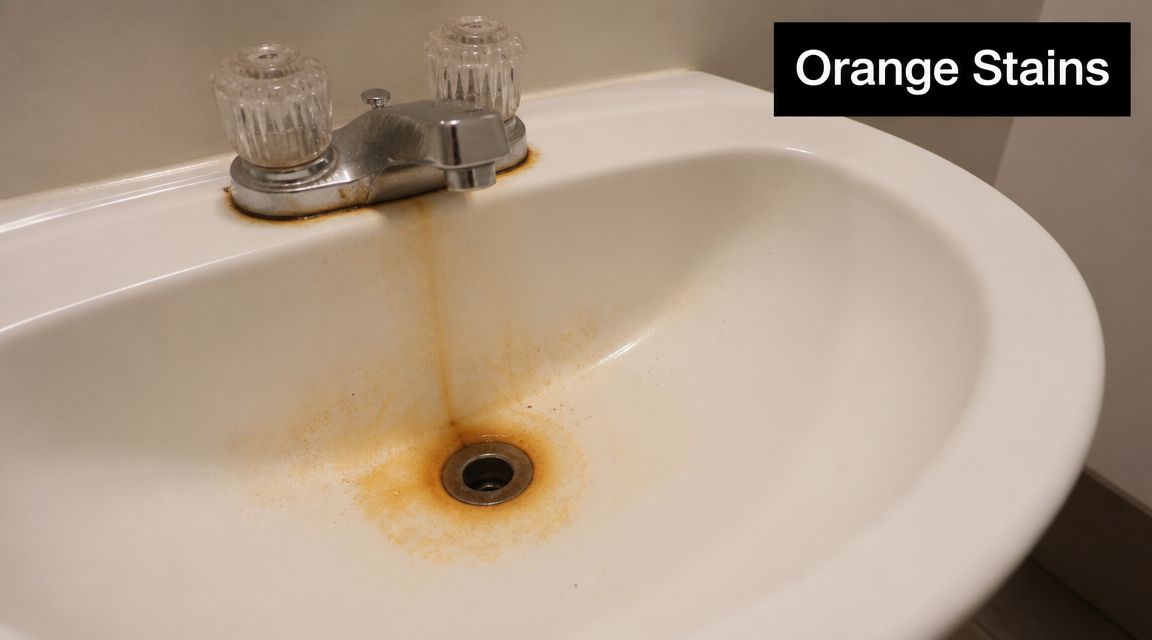
These problems rarely stay in one room. Hard water leaves deposits in water heaters, on fixtures, and through appliance lines. Iron stains toilets, tubs, and sinks. Chlorine taste and odor can make even a cold glass of water unpleasant. Sulfur odor doesn't just affect drinking water. You notice it more in warm shower steam than almost anywhere else.
The damage usually starts before homeowners realize it
What makes this frustrating is that the water may still look clear. Clear water can still be hard. Clear water can still carry odor. Clear water can still shorten the life of fixtures and make soap work poorly.
Practical rule: If the problem shows up in more than one room, don't shop for a single-tap fix first. Start at the entry point.
That's where a whole-house system changes the conversation. Instead of trying to patch one symptom at a time, you treat the incoming water before it moves through the house. That approach makes more sense when the issue affects bathing, laundry, appliances, and plumbing at the same time.
Most Frostproof homes need a tailored fix, not a shelf solution
In this area, the same-looking symptom can come from different causes. White residue may point to hardness. Orange staining may suggest iron. A bad smell can mean sulfur, stagnant plumbing conditions, or another source entirely. If you guess wrong, you can spend money on equipment that doesn't solve the actual problem.
That's why the first step should be a water test. If you want clear answers before you buy anything, schedule a free water test through the Florida Water Management contact page. It's the fastest way to find out what your water is doing and what kind of whole-house treatment fits your home.
Frostproof Water Quality Challenges Explained
Frostproof water problems usually start with the source. City water complaints tend to center on taste, odor, and disinfectant-related issues. Well water in Polk County is a different job. It often brings hardness, sulfur odor, iron staining, sediment, or a combination of those problems at the same time.
Local geology is a big reason why. Much of this area sits over limestone, and that commonly shows up as hard water in the home. Homeowners see the results on shower glass, faucets, water heaters, and soap performance long before they see anything in a lab report.
Why Frostproof homes see recurring water problems
Two houses on the same road can need different treatment. A municipal customer may want to reduce chlorine taste and protect fixtures from scale. A well-water homeowner may be dealing with rotten egg odor in the morning, orange stains in the toilet, and grit that plugs cartridges faster than expected.
That difference matters because water treatment only works when it matches the actual water conditions. Carbon helps with many taste and odor issues, but it does not remove hardness. A softener controls hardness, but it does not disinfect water. Iron and sulfur treatment often need their own media, contact tank, or injection setup. If your home runs on a well, it helps to review the options for well water treatment systems in Central Florida.
Older plumbing can make the symptoms look worse. Scale breaks loose and shows up as debris. Iron can stain tubs and laundry. Sulfur odor often gets stronger in hot water, which leads homeowners to blame the heater when the source water is part of the problem.
Why whole-house treatment matters more than single-tap filters
A faucet filter improves one location. It does nothing for the shower, washing machine, dishwasher, ice maker, or the plumbing lines feeding the house. In Frostproof homes with hard water, sulfur, or iron, the entry point is usually the right place to treat the problem.
NSF defines point-of-use systems as devices that treat water at a specific outlet, such as a faucet filter or reverse osmosis unit. It defines point-of-entry systems as equipment that treats water as it enters the home. NSF also notes that whole-house treatment can include softeners, UV systems, and filters for particulates, chlorine, taste, and odor, and that testing should come first, as explained in NSF's home water treatment guidance.
In practical terms around Frostproof, that usually means:
- Municipal water homes: often need house-wide improvement in taste, odor, and chlorine-related complaints
- Well-water homes: often need staged treatment for sediment, sulfur, iron, hardness, or sanitation concerns
- Hard-water homes: get better fixture protection and longer appliance life when treatment happens before the water moves through the plumbing
Generic systems disappoint homeowners here for a simple reason. They are built for broad marketing claims, not for the specific mix of limestone hardness, well odor, staining, and sediment that shows up across Polk County. Testing first and choosing equipment based on those results saves money and avoids installing a system that only fixes part of the problem.
A Guide to Whole House Filtration Systems
A whole-house setup works like a tool kit. Each piece has a specific job. When homeowners get poor results, it's usually because the wrong tool was chosen, or the right tools were installed in the wrong order.
Each filter solves a different problem
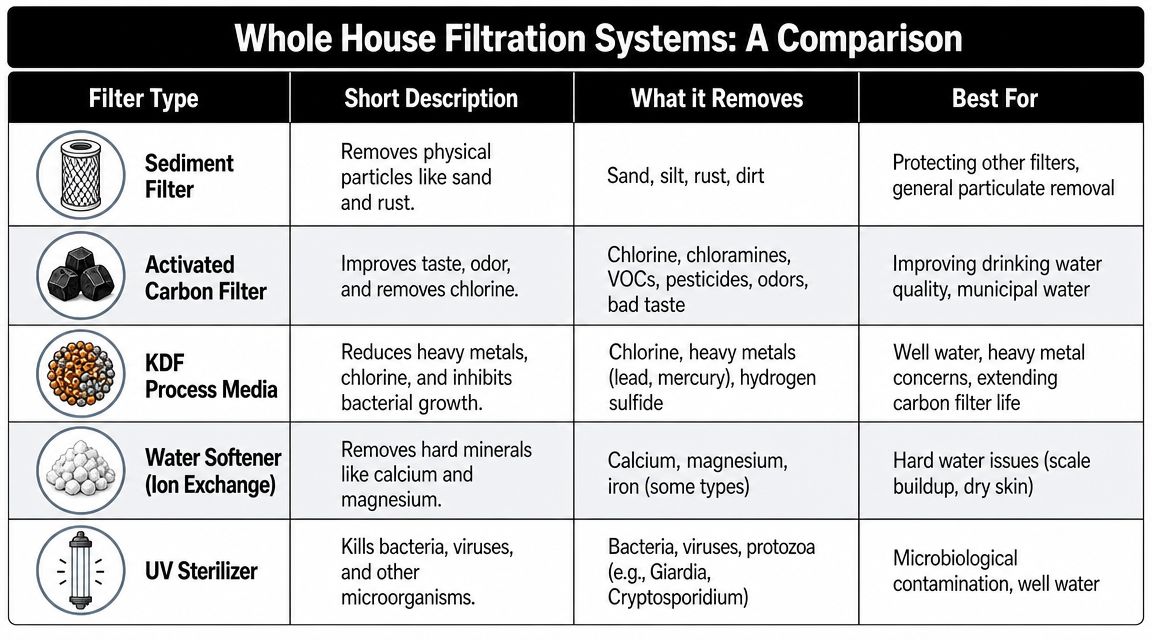
Sediment filters catch physical material such as sand, silt, dirt, and rust. These are often the first stage, especially on well water. They protect downstream equipment from clogging or fouling.
Activated carbon filters are commonly used when the main complaint is chlorine taste, odor, or general chemical taste issues. They're a strong fit for municipal supplies and for homes that want better water throughout the house instead of just at the kitchen sink.
Water softeners handle hardness minerals that create scale and soap issues. They don't replace a carbon filter, and a carbon filter doesn't replace a softener. Those systems solve different problems, which is why many Frostproof homes need both.
Iron and sulfur treatment is more specialized. If the home has orange staining, black staining, or rotten egg odor, standard carbon alone usually isn't the full answer. The treatment has to match the chemistry.
UV sterilizers are used when microbiological protection is part of the goal. They're especially relevant for private wells when testing shows that disinfection belongs in the treatment plan.
A reverse osmosis system is different from the rest because it's usually installed at a drinking-water tap rather than as a whole-house stage. It pairs well with a whole-house system when a homeowner wants broad protection across the house plus refined drinking water at the sink.
For homeowners comparing options, whole-home water filtration services typically include combinations of these technologies based on the water test and the home's plumbing needs.
Matching filtration technology to your water problem
| Problem | Primary Cause | Filtration Solution |
|---|---|---|
| Grit in sinks or tubs | Sand, silt, rust, debris | Sediment filtration |
| Water smells like a pool | Chlorine or related taste and odor issues | Activated carbon filtration |
| White crust on fixtures | Hardness minerals | Water softener |
| Orange or dark staining | Iron or related staining minerals | Iron-specific treatment |
| Rotten egg smell | Sulfur-related odor issues | Sulfur treatment, sometimes paired with other media |
| Concern about well sanitation | Microbiological risk | UV sterilizer as part of a tested treatment plan |
| Want cleaner drinking water too | Multiple taste and dissolved impurity concerns at one tap | Reverse osmosis at point of use |
The mistake I see most often is trying to make one tank solve every water problem in the house. Good systems are matched, layered, and ordered correctly.
Not every house needs every stage. Some city-water homes do well with a carbon system and a softener. Some well-water homes need sediment control, sulfur or iron treatment, then softening, then UV. The right sequence depends on test results, not guesswork.
How to Choose and Size Your Water System
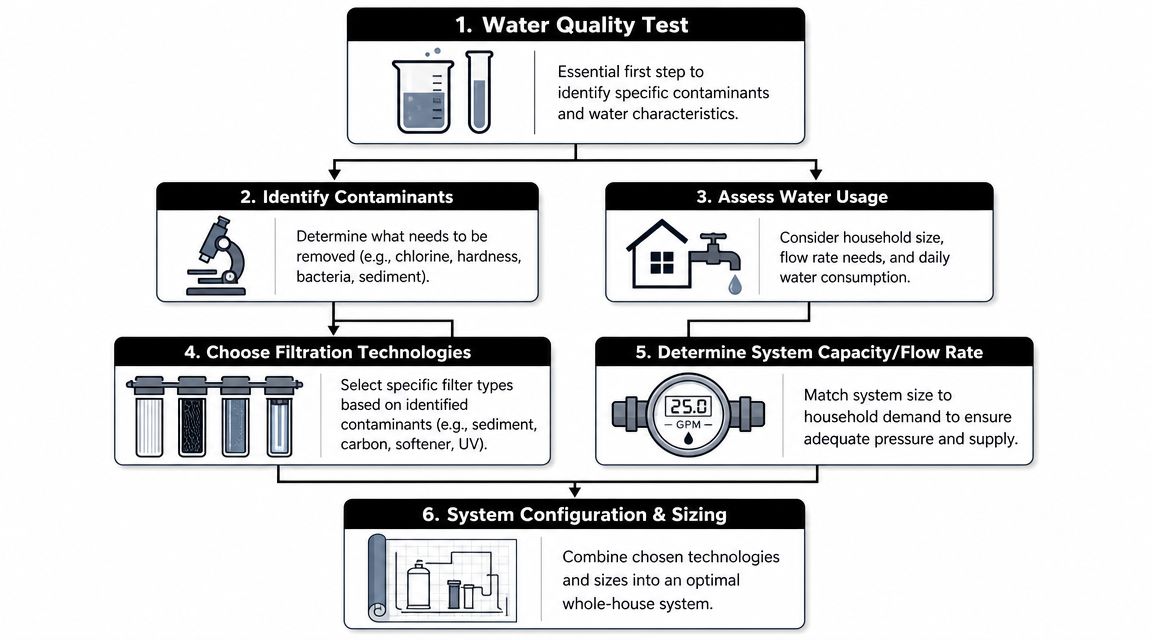
Choosing the right system starts with two questions. What's in the water? And how much water does the house need at one time? If either piece is missed, the system can underperform even if the equipment itself is good.
Start with chemistry, then size for demand
Water chemistry tells you what treatment stages belong in the system. Flow demand tells you how large that system needs to be so the house still functions normally when more than one fixture is running.
The Florida Department of Environmental Protection describes whole-house systems in Florida as point-of-entry treatment and says its Water Supply Restoration Funding program installs a standard whole-house carbon system with a five-micron pre-filter, flow meter, 54-inch by 10-inch GAC tank, and ultraviolet light, with a capacity of 6 gallons per minute, which it considers sufficient for the average home, as outlined in the Florida DEP guidance on water filtration systems.
That 6 gpm benchmark is useful because it gives homeowners a real residential reference point. It doesn't mean every Frostproof home should use that exact setup. It means sizing matters, and flow rate should be part of the design conversation from the start.
Common system combinations in Frostproof homes
A proper design usually looks more like a sequence than a single product.
- If the main issue is city-water taste and odor: A sediment stage may protect the system, and a carbon stage may handle the whole-house improvement goal.
- If hardness is the issue: A softener is often the primary fix because scale control is the primary objective.
- If the home has well-water odor and staining: Treatment may need separate stages for sediment, iron or sulfur control, and possibly softening.
- If the water test raises sanitation concerns: UV can be added where it fits the treatment train.
Some homeowners ask whether one compact all-in-one system is better. Sometimes it is, if the water profile is simple. Often it isn't, because serviceability matters. A system with clearly defined treatment stages is easier to diagnose, maintain, and adjust when water conditions change.
What usually causes pressure complaints
Most pressure complaints don't come from the idea of filtration itself. They come from poor sizing, neglected maintenance, clogged prefilters, or equipment that was installed without accounting for actual household demand. A home with multiple bathrooms, irrigation tie-ins, or frequent simultaneous use needs a system selected for that reality.
Sizing rule: Don't choose equipment based only on the lowest price or the box label. Choose it based on the water report and how the house actually uses water.
That's why custom configuration beats one-size-fits-all packages. Even two homes on the same road can need different treatment layouts if one is on a well, one is on municipal water, or one has heavier demand from family size and fixture use. Florida Water Management designs and services systems such as whole-home filtration, softening, reverse osmosis, and water sterilization based on those site-specific conditions.
The Installation and Maintenance Process
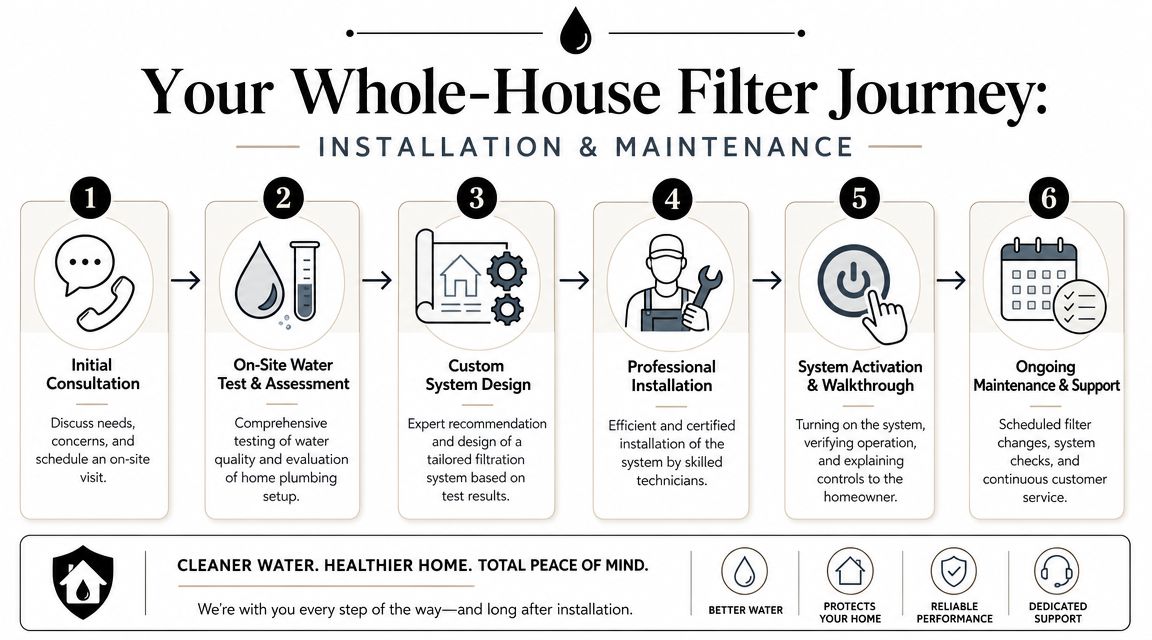
The install itself is usually more straightforward than homeowners expect. The essential work happens before the tools come out. Water quality gets checked, plumbing layout gets reviewed, and the treatment order gets planned so each stage supports the next one.
What installation usually looks like
Most whole-house systems are installed near where the water line enters the home. That allows the system to treat water before it branches off to fixtures and appliances. Placement also needs to leave room for service, shutoff access, and future maintenance.
A clean installation usually includes:
- Accessible bypass valves: So the system can be serviced without shutting down the whole house longer than necessary.
- Proper staging order: Sediment protection before more sensitive media when the water requires it.
- Drain and power planning: Important for systems like softeners and UV units where those connections matter.
- Final operation check: Water flow, regeneration settings if applicable, and basic homeowner walkthrough.
Homeowners should expect an explanation of what each component does, what normal operation looks like, and what maintenance signs to watch for.
What maintenance actually involves
Maintenance depends on the equipment. Some systems need simple periodic filter replacement. Some need salt added. Some need media service or UV bulb replacement. The point isn't that the system is high-maintenance. The point is that any treatment equipment performs best when someone follows the service schedule.
Typical ongoing tasks include:
- Sediment filter changes: Important when a home has visible particulate or well sediment.
- Carbon media service: Needed over time so taste and odor performance doesn't fade.
- Softener salt management: Straightforward, but it has to be kept up.
- UV service: The lamp must be replaced on schedule if the unit is part of the treatment plan.
A neglected system doesn't fail all at once. Homeowners usually notice it slowly through returning odor, renewed staining, or weaker water quality at the tap.
Good maintenance is what keeps a whole-house water filter in Frostproof, FL working like it should year after year. It also protects the investment you made in the plumbing and appliances the system was supposed to help in the first place.
Understanding System Costs and Local Permitting
The final price of a whole-house system depends on the water problems being solved, the treatment stages required, the size of the home's demand, and how complicated the plumbing layout is. A simple city-water setup is different from a well-water system that needs several treatment stages working together.
What changes the final price
The biggest cost drivers are usually the treatment train and installation complexity.
- Simple filtration needs: Usually cost less because the system has fewer components.
- Multiple water problems: Usually require more than one treatment stage.
- Higher-demand homes: May need larger or differently configured equipment.
- Tight mechanical spaces or older plumbing: Can increase labor and design complexity.
That's why online price shopping often misleads homeowners. A single advertised filter price doesn't tell you what the full installed system needs to include. If you want a clearer picture of the variables involved, this guide on what a home water filtration system can cost is a useful place to start.
Permitting and plumbing considerations
Some installations are straightforward. Others involve plumbing changes that need a closer look, especially on well systems or when equipment placement requires more involved work. Local code compliance matters because the goal isn't just cleaner water. The goal is a system that's installed safely, serviceably, and in a way that doesn't create headaches later.
If a contractor can't explain where the system will go, how it will be serviced, and whether any local plumbing requirements apply, that's a red flag.
Frequently Asked Questions About Whole House Filters
Homeowners in Frostproof usually ask the same practical questions once they understand what a whole-house system does. Those questions are worth asking because the right answer depends on design, not sales talk.
Common questions from Frostproof homeowners
Will a whole-house system reduce my water pressure?
It can if the system is undersized, installed incorrectly, or left unmaintained. A properly selected system should be sized around the home's actual use. Pressure complaints usually point back to design or service issues, not the idea of whole-house filtration itself.
Is a whole-house system better than just using bottled water?
They solve different problems. Bottled water only addresses drinking water, and only when someone remembers to buy, store, and use it. A whole-house system addresses the water used for bathing, laundry, fixtures, and appliances. If the problems in your home include odor, staining, scale, or poor shower water, bottled water doesn't touch any of that.
I'm on a private well. What should I pay special attention to?
Test results matter even more on well water. Don't assume odor means one thing or staining means another. Wells can present several issues at once, and the equipment has to be arranged to match those conditions.
Do I need reverse osmosis if I already have a whole-house filter?
Not always. A whole-house system protects the home broadly. Reverse osmosis is usually added when a homeowner wants more refined drinking water at a specific tap. Many homes do well with whole-house treatment alone, while others want both.
How do I know what system is right for my house?
Start with a water test and then match treatment to the actual findings. That's the only reliable way to avoid paying for equipment that doesn't solve the specific issue.
If your water has been staining, smelling, scaling up fixtures, or making you question what's coming out of the tap, don't guess. Get the water checked and make the decision from real results.
If you want straight answers about your water, Florida Water Management can help you start with a free water test and a practical recommendation based on what's in your Frostproof home's water.