

If you're on a Central Florida well, you may already know the routine. The water looks clear when it first comes out of the tap, then the sink starts turning orange. Your shower leaves rust streaks. White laundry comes out dingy. Sometimes there's also that sulfur smell, plus scale building up on fixtures because the water is hard on top of everything else.
That mix is what confuses homeowners. Iron by itself is one problem. Hardness is another. Sulfur changes the equipment choice again. A lot of off-the-shelf advice skips that part and treats iron removal like a one-filter decision. In the field, that's rarely how it works around Sebring, Avon Park, Lake Wales, Winter Haven, Frostproof, and other Central Florida well-water areas.
The right fix starts with identifying what form of iron you have, how much of it is present, what the pH is doing, and whether sulfur and hardness are riding along with it. Once you know that, choosing a system gets much easier.
Table of Contents
- Identifying the Iron Problem in Your Water
- Understanding Your Iron Treatment Options
- Choosing the Right System for Your Home or Well
- DIY Installation vs Professional Service
- Maintaining Your Iron Removal System for Peak Performance
- Special Considerations for Central Florida Water
Identifying the Iron Problem in Your Water
A Central Florida well owner usually notices the problem on a Monday morning. The shower leaves orange streaks on the tile, the toilet ring comes back a day after cleaning, and the water smells a little off. In this area, that combination often means more than iron alone. Hardness and sulfur regularly show up in the same water, and that is where homeowners get steered into the wrong equipment.
What homeowners usually notice first
Homeowners rarely call and say they have ferrous iron. They call about rust stains, metallic taste, dingy laundry, or fixtures that never look clean for long.
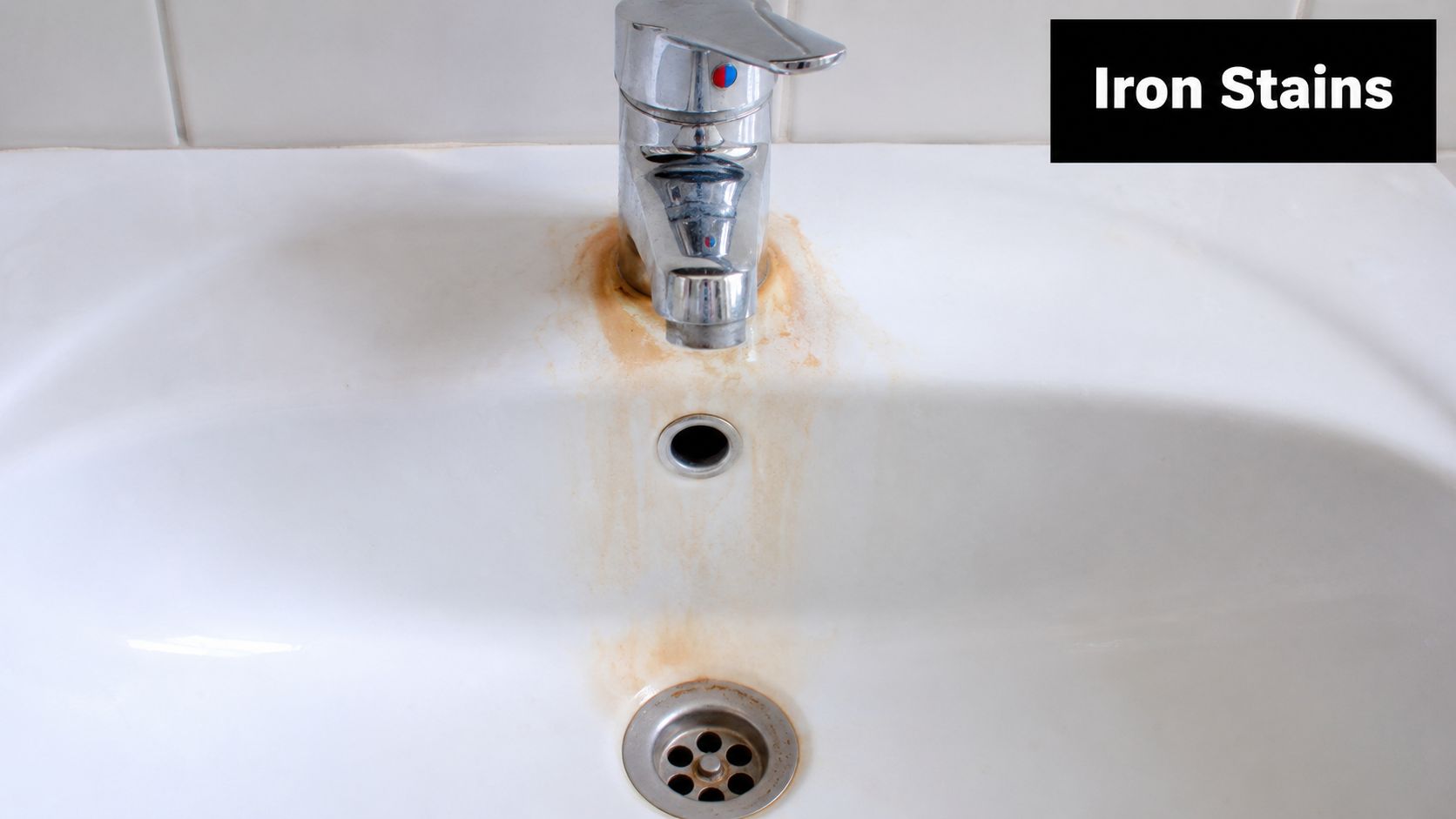
The first clue is often timing. Water that looks clear at the tap but turns yellow, orange, or brown after sitting usually points to dissolved iron. Water that already looks rusty or cloudy often contains oxidized iron. Slimy buildup in toilet tanks, on plumbing parts, or around fixtures points toward iron bacteria. Iron bacteria create the messiest problems because they require more than simple metal removal.
In Central Florida, I also look for the overlap problems. Sulfur can mask the iron issue because people focus on the rotten egg smell first. Hard water can hide in plain sight because the white scale gets more attention than the orange staining. Treat only one of those problems and the homeowner still ends up frustrated.
Clear water does not rule out iron. It often means the iron is still dissolved and waiting to react once it hits air.
A simple jar test at home
A jar test gives a useful first read before you spend money on the wrong filter.
- Fill a clear glass jar from a cold-water tap.
- Check it right away. Clear water can still contain dissolved iron.
- Let it sit uncovered for a while. If the color shifts to yellow, orange, or brown, dissolved iron is oxidizing.
- Watch for sediment or immediate cloudiness. That usually points to ferric iron already in particle form.
- Check nearby fixtures and toilet tanks for slime or odor. That often points to iron bacteria, and sulfur may be part of the same problem.
That quick test helps separate likely iron types, but it does not tell you how to build the right treatment train. pH, hardness, sulfur, manganese, and bacterial activity all affect what will work and what will foul out early. A softener alone may handle a light iron load in some homes, but it can struggle badly when sulfur and hardness are hitting the system at the same time.
If you want a whole-home answer instead of trial and error, start with a professional water filtration system evaluation in Sebring and surrounding areas. A proper analysis shows whether the underlying issue is dissolved iron, oxidized iron, iron bacteria, sulfur, hardness, or the combination that shows up so often in Central Florida wells.
Understanding Your Iron Treatment Options
Iron treatment succeeds or fails on water chemistry. In Central Florida, the confusing cases are the ones with iron, hardness, and sulfur showing up together. A filter that works on paper can foul early, lose pressure, or let odor slip through if the system is built for only one of those problems.
Oxidation and filtration
For many well systems, the workhorse approach is oxidation followed by filtration. Dissolved iron is changed into solid particles, then the filter media catches those particles before they reach the house.
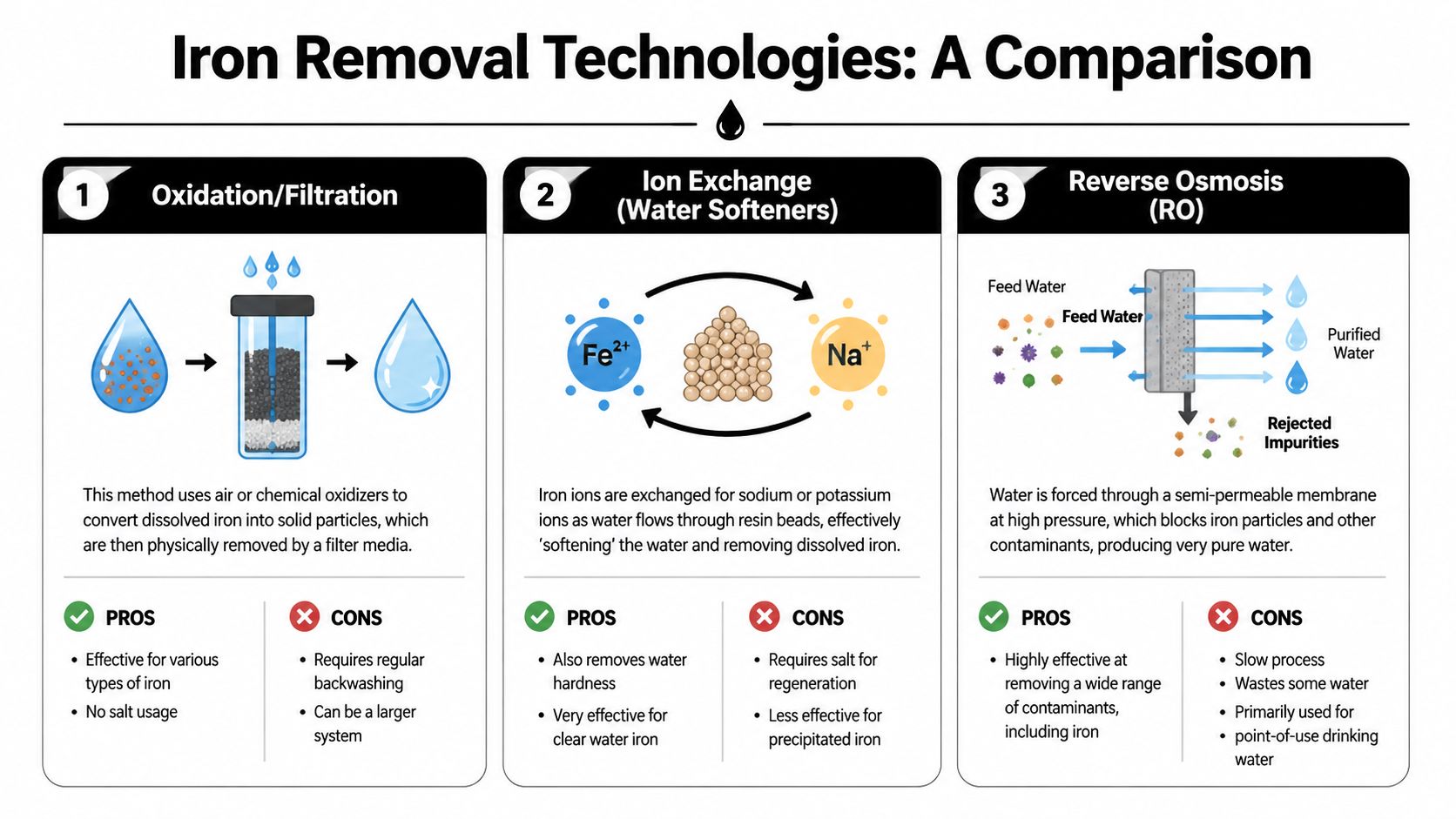
Air injection can work well in the right water. Chlorine and other oxidants are often used where iron is heavier or sulfur odor is part of the complaint. The trade-off is contact time and cleanup. If the iron is not fully oxidized before it reaches the media bed, the filter gets overloaded and performance drops fast.
pH also changes the outcome. Low pH water makes oxidation harder and can leave you with poor iron removal even though the equipment is technically installed correctly. In this part of Florida, I also watch for sulfur and manganese before settling on an oxidizing filter, because they change media choice, backwash demand, and service intervals.
Some homes need a single backwashing filter. Others need a contact tank ahead of the filter so the iron has time to react. That is common on wells with stronger iron levels or that rotten-egg smell homeowners want gone at the same time.
Ion exchange, sequestration, and disinfection
A water softener uses ion exchange. It is mainly there for hardness, but it can remove some dissolved iron under the right conditions. However, many homeowners misunderstand these limitations. If the water is very hard, carries sulfur odor, or has enough iron to foul the resin, a softener stops being the solution and starts becoming another maintenance problem.
Softener-based iron removal works best on lighter iron loads with consistent water chemistry. It is rarely my first recommendation when the house already has orange staining, sulfur smell, and scale buildup together. In that situation, the softener usually belongs after iron and sulfur treatment, not ahead of it.
Sequestration is a different tool. Polyphosphate keeps a small amount of iron suspended so staining is less noticeable, but it does not remove the iron from the water. It can make sense in narrow cases with light iron and no major sulfur issue. For a lot of private wells, it is a bandage, not a fix.
Disinfection matters when iron bacteria or sulfur bacteria are part of the problem. Chlorine is commonly used because it can oxidize iron and address biological activity in the same treatment train. That can be the right call on problem wells, but it adds feed equipment, contact time requirements, and follow-up filtration to remove the oxidized material.
Reverse osmosis has its place at a kitchen sink for drinking water polishing. It is usually not the main answer for whole-house iron control on a well. For that, the better path is matching the treatment train to the full water profile through a well water treatment system built around your test results.
Choosing the Right System for Your Home or Well
A lot of Central Florida well owners call after trying to solve one problem and making two others worse. The house has orange staining, rotten egg odor in the shower, and scale on fixtures. Someone installs a softener because the water is hard. A few months later, the sulfur smell is still there, the iron staining comes back, and the softener needs more attention than it should.
That happens because system selection starts with the full water profile, not the most obvious symptom. Iron matters, but so do hardness, sulfur, pH, flow rate, and whether the iron is clear-water iron, oxidized iron, or tied to bacteria. Around here, those problems often show up together, and they change what will hold up in daily use.
Match the system to the water profile
Light iron can sometimes be handled with simpler equipment. Small amounts may be managed with sequestration in narrow cases, and some moderate iron levels can be handled by a softener if the chemistry is stable and sulfur is not part of the picture. Once sulfur odor, higher iron loading, or difficult pH enters the mix, that approach usually stops being the smart choice.
Homeowners often find this part challenging.
A softener may sit inside the iron range on paper and still be the wrong first piece of equipment. If the well also has hydrogen sulfide, hard water scale, or enough iron to foul resin quickly, the treatment train usually needs oxidation and filtration ahead of softening. Otherwise, the softener becomes the cleanup crew for problems it was never built to carry by itself.
For many higher-iron wells, especially the ones with sulfur odor, catalytic media or another oxidation-filtration setup makes more sense as the lead treatment. Those systems are designed to convert dissolved iron into a filterable form and remove it before it reaches downstream equipment. On wells with iron bacteria or sulfur bacteria, chemical feed and contact time may still be part of the answer, but that decision should come from the test results and the plumbing demand in the home.
A provider such as Florida Water Management's well water treatment service can map the treatment order around the actual water chemistry, whether that means iron and sulfur removal first, then softening, or a more involved setup for problem wells.
Practical system selection by water condition
| Water Condition | What usually works best |
|---|---|
| Light dissolved iron, no sulfur, stable chemistry | Sequestration in limited cases or a properly sized softener |
| Moderate iron with hard water | Softener only if sulfur is absent and iron loading is modest |
| Iron plus sulfur odor | Oxidation-filtration is usually the better starting point |
| Higher iron loading | Dedicated iron filtration, often with catalytic media or chemical oxidation |
| Iron bacteria or sulfur bacteria | Disinfection paired with filtration, not filtration alone |
A few factors matter more than the label on the tank:
- Iron form: Clear-water iron, oxidized iron, and bacterial iron do not behave the same, so they should not be treated the same.
- Sulfur presence: If the water smells like rotten eggs, choose a system that addresses sulfur with the iron problem instead of treating them as separate guesses.
- Hardness level: Hard water changes the order of equipment. In many homes, softening works better after iron and sulfur reduction.
- Household demand: A treatment unit that looks fine in a brochure can fall short if the house has multiple bathrooms, high peak use, or irrigation tied into the same supply.
- Maintenance tolerance: Some systems need chemical refill, media replacement, or regular cleaning. That trade-off should be part of the buying decision, not a surprise later.
The best system is the one that fits your water on its worst day, not just the lab report on a clean sample. In Central Florida, that usually means treating iron, sulfur, and hardness as one connected problem and building the equipment order around that reality.
DIY Installation vs Professional Service
Some water treatment jobs are realistic for a hands-on homeowner. Others look simple until the first backwash cycle, pressure drop, or leak shows up.
What a capable DIYer can handle
A basic point-of-use filter is usually the safer DIY lane. Under-sink filters, simple sediment housings, and some countertop systems are manageable if you're comfortable shutting off water, making tight plumbing connections, and following manufacturer instructions closely.
DIY can also make sense when you're handling a straightforward replacement of the same component with the same size and connection type. That's very different from building a whole-home iron-removal train on a private well.
A few DIY wins are real:
- Lower upfront labor cost: If the job is simple, you can save on installation.
- Familiar maintenance access: You know exactly where the unit is and how it was piped.
- Good fit for point-of-use treatment: Drinking-water systems are often more forgiving than whole-home equipment.
Where whole-home systems go wrong
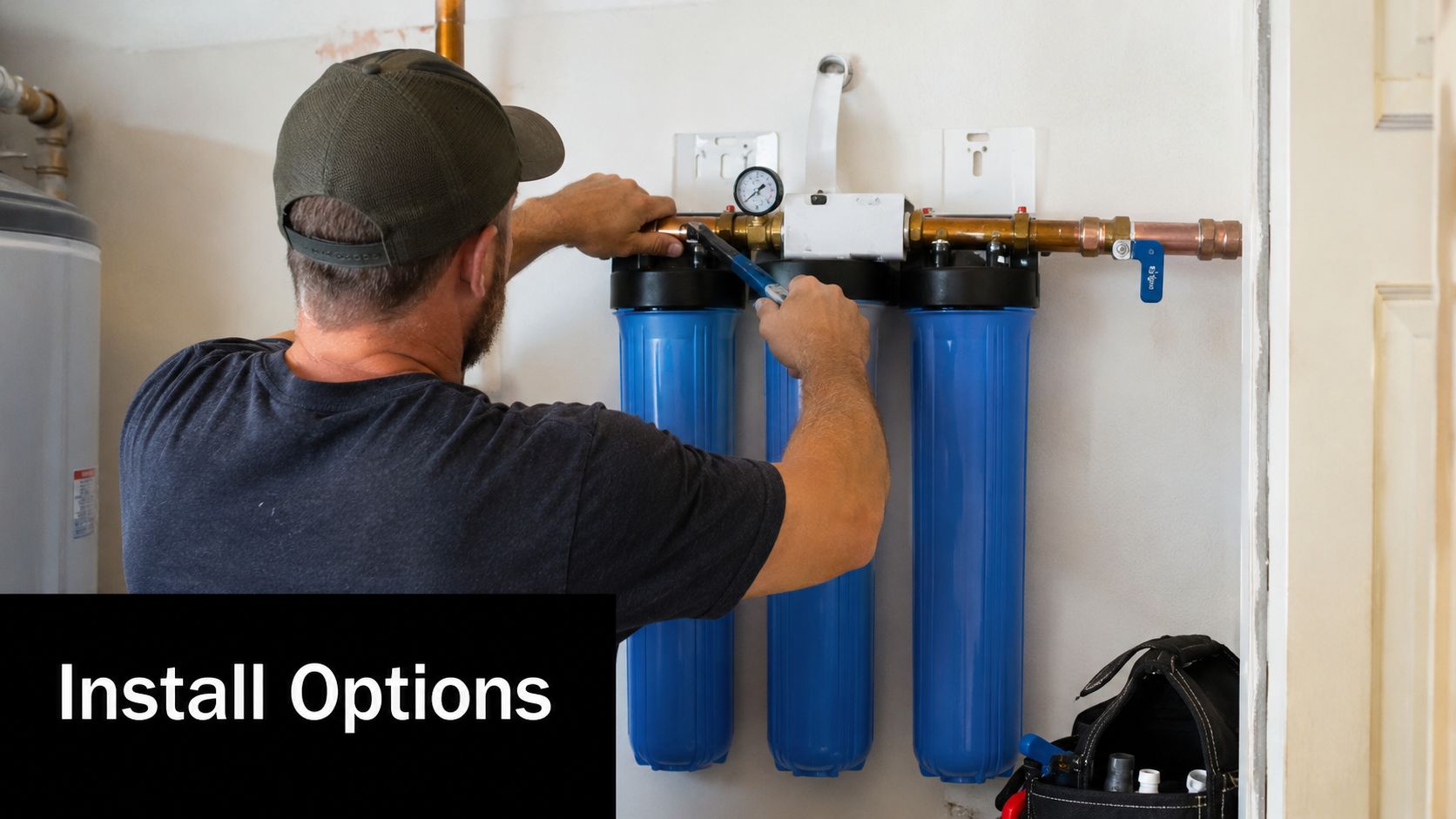
Whole-home iron treatment gets complicated fast because the system has to match pressure, backwash demand, retention time, drain requirements, and contaminant mix. If any of those are off, the equipment may still run, but it won't run well.
Common installation mistakes include:
- Undersized treatment tanks: The system can't keep up with household demand, so iron breaks through.
- Poor drain setup: Backwashing media filters need proper drainage. Without it, the media bed won't clean itself correctly.
- Bad sequence: If hard water, sulfur, and iron aren't addressed in the right order, one device can foul the next.
- Missed code and well integration issues: Well systems often involve pressure tanks, switches, bypasses, and service access that need to stay functional.
A whole-home iron filter that's installed wrong may still produce water. It just won't produce reliable water.
Professional installation buys correct sizing, code-aware plumbing, startup testing, and accountability if something isn't performing the way it should. On a Central Florida well, where one house can have iron and sulfur while the neighbor has hard water and low pH instead, that matters more than often recognized.
Maintaining Your Iron Removal System for Peak Performance
Iron equipment isn't maintenance-free. If you ignore it, even a good system will slide. The signs usually show up slowly at first. A little staining returns. Water pressure dips. The sulfur odor creeps back in after a rain event or heavy water use.
What to check regularly
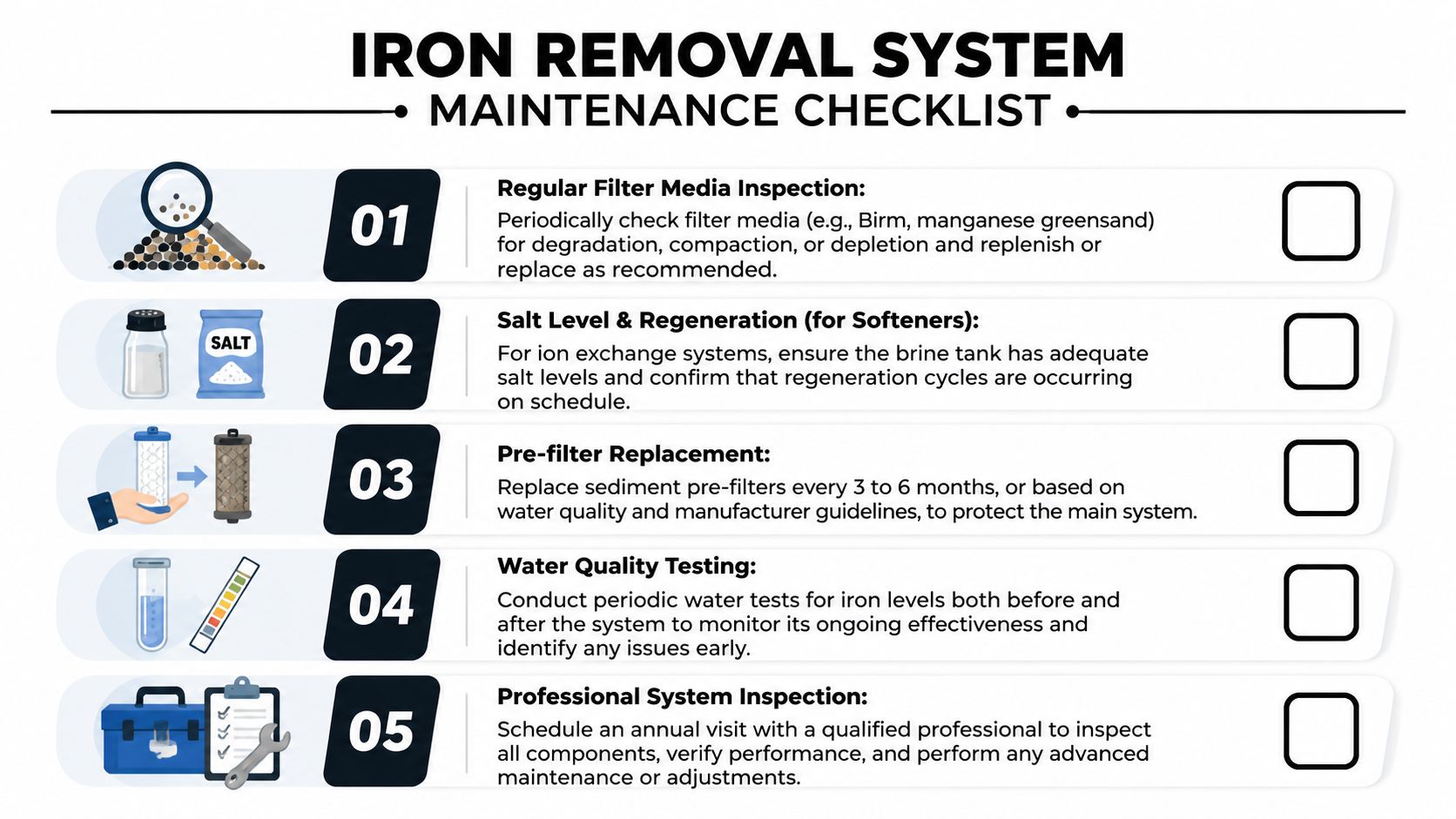
Start with the parts your system depends on every day.
- Filter media condition: Media can compact, foul, or lose effectiveness over time. If backwashing isn't cleaning the bed properly, iron can start passing through.
- Brine tank and salt level: If your setup includes a softener downstream or upstream of iron treatment, keep enough salt in the tank and make sure regeneration occurs.
- Pre-filters: Sediment filters protect larger equipment. If they clog, pressure drops and the rest of the system gets stressed.
- Chemical feed supplies: If your system uses chlorine or another oxidant, don't let the feed tank run empty.
- Water quality checks: Test the water before and after the system from time to time so you catch changes early.
For homeowners with a softener as part of the overall setup, regular service matters because hardness and iron can affect each other. If you want to understand how the softening side fits into the bigger picture, water softening system service and support is part of keeping an iron-control setup working correctly.
Field note: A lot of “my iron filter stopped working” calls turn out to be maintenance issues, not failed equipment.
Troubleshooting common problems
When performance changes, don't jump straight to replacement. Start with the basics.
| Symptom | Likely issue | First thing to check |
|---|---|---|
| Rust stains returning | Media exhaustion, poor backwash, oxidant problem | Confirm the system is cycling and media is cleaning |
| Rotten egg smell returning | Sulfur load changed, oxidant issue, bacterial growth | Check chemical feed, air draw, and service intervals |
| Lower water pressure | Clogged pre-filter or loaded media bed | Inspect sediment filter and pressure drop across the unit |
| Softener using more salt than expected | Iron fouling or regeneration issue | Check resin condition and brine draw |
| Water looks clear but stains later | Dissolved iron breaking through | Verify oxidation stage and contact conditions |
Maintenance should be routine, not reactive. A scheduled inspection catches problems before staining comes back all over the house.
For most homes, a sensible maintenance rhythm includes:
- Look over the system visually for leaks, salt bridging, and empty feed tanks.
- Replace pre-filters on schedule based on water conditions and manufacturer guidance.
- Watch for changes in staining or odor because they often show up before a full system failure.
- Test the water periodically to confirm the treatment is still doing its job.
- Have the system inspected professionally when performance drifts or as part of regular annual service.
Special Considerations for Central Florida Water
A common Central Florida service call goes like this. The water smells like rotten eggs in the morning, the toilets leave rust streaks by the end of the week, and the softener is burning through salt without fixing either problem. That is not three separate issues. It is usually one water profile with three symptoms.
Why iron hardness and sulfur show up together
Central Florida well owners often deal with iron, hardness, and sulfur at the same time. That combination changes system design, service needs, and what equipment will hold up.
Hardness leaves scale on fixtures, heater elements, and plumbing. Iron causes orange or brown staining and can foul resin and valves. Sulfur creates odor and often means the treatment train needs an oxidation step before final polishing. Treat only one piece of that mix and the complaints usually come back in a different form.
I see this mistake all the time with off-the-shelf solutions. A basic cartridge filter will not remove dissolved iron. A softener can help in the right range, but high iron or sulfur will shorten its life and drive up maintenance. If sulfur is part of the problem, the order of treatment matters. Oxidation, contact time, filtration, then softening is often the better sequence.
Why one-size-fits-all systems fall short
Generic advice misses what makes Central Florida wells tricky. The water can look clear at the tap, then stain after it sits. That points to dissolved iron. In other homes, the odor is strongest on the hot side, which can mean sulfur issues are interacting with the water heater. Add hardness on top of that, and a system that works in another state may struggle here within months.
The practical answer is usually integrated treatment. One tank rarely handles iron, sulfur, and hardness well over the long term. Many homes need an oxidizing filter or chemical feed setup for iron and sulfur, a filtration stage to remove what gets oxidized, and a softener downstream to control hardness once the iron load is reduced.
To remove iron from water for the long term, start with the full water profile, not the symptom that annoys you most. Stains, odor, and scale are connected more often than homeowners expect.
If your sinks are staining, your water smells off, or your softener still is not solving the problem, get a free water test from Florida Water Management. A proper analysis shows whether iron, sulfur, hardness, pH, or more than one issue is driving the problem, so you can choose a treatment plan that fits your home.