

A residential reverse osmosis system can cost anywhere from $150 for a basic under-sink unit to over $15,000 for a high-capacity whole-house system. The average homeowner spends around $2,475, but the final price depends heavily on your home's water quality and needs.
If you're pricing an RO system right now, you've probably seen numbers that don't seem to belong in the same category. One site shows a few hundred dollars. Another shows several thousand. Then someone mentions pre-treatment, a storage tank, or a booster pump, and the budget changes again.
That's normal, especially in Central Florida. A house on city water in one neighborhood and a house on a private well a few miles away can need very different equipment. The total reverse osmosis system cost isn't just the unit. It's the equipment, the installation, the condition of your incoming water, and the maintenance that follows.
Most homeowners don't need another vague price range. They need a quote tied to their actual water. That's why the smartest first step is a professional water analysis, not guessing from national averages. If you want to understand what type of RO setup fits your home, start with a look at residential reverse osmosis system options.
Table of Contents
- Decoding Your RO System Investment
- Under-Sink vs Whole-Home RO Systems Cost Comparison
- Key Factors That Drive Your Total RO System Cost
- The Hidden Costs of Professional Installation
- Why Central Florida Water Changes Everything
- Maximizing Your Return on Pure Water
Decoding Your RO System Investment
A Central Florida homeowner usually starts in the same place. The kitchen tap tastes off, the shower leaves buildup, or the well water smells like sulfur. Then the online pricing search starts, and the numbers are all over the map.
A useful baseline does exist. The average cost of a residential reverse osmosis system, including unit and installation, is $2,475, with point-of-use systems costing $150 to $1,300 and whole-house point-of-entry systems ranging from $1,000 to $4,800 or more, depending on type, brand, and installation complexity, according to This Old House's reverse osmosis system cost guide.
That number helps with rough budgeting. It does not tell you what your home will cost to treat.
In this part of Florida, the gap between an online average and a real quote can be wide. National guides often assume relatively clean municipal water. Many Central Florida homes, especially on wells, need pre-treatment for iron, hardness, sulfur, sediment, or pressure issues before an RO membrane can run reliably. That is where Florida well water inflation shows up. The RO unit may be only part of the job.
A homeowner comparing options should separate the investment into three parts:
- Equipment cost: The RO unit, storage tank, booster pump if needed, repressurization components, and pre-filters.
- Installation cost: Plumbing tie-ins, drain connection, dedicated faucet, electrical work if the design requires it, startup, and testing.
- Ongoing ownership cost: Filter changes, membrane replacement, service calls, sanitizing, and any maintenance on pre-treatment equipment protecting the RO system.
The practical mistake is comparing only the box price. A low-priced system can become the expensive option if it is undersized, installed without the right pre-treatment, or forced to handle water chemistry it was never built for. Homeowners looking at a reverse osmosis water treatment system for Florida homes need the full installed cost, not just the equipment tag.
The only accurate way to quote an RO system is to test the water first.
A proper water test shows what is in the water, how much of it is present, and what has to be handled before the membrane. That is how you avoid paying for equipment you do not need, or worse, skipping equipment the system cannot live without. In Central Florida, that step matters more than any national average because local well water can change the design fast.
Under-Sink vs Whole-Home RO Systems Cost Comparison
A lot of Central Florida homeowners start in the same place. They want better water, see an under-sink RO online for a few hundred dollars, then get blindsided when a whole-home quote lands in the thousands. Those two systems are not competing versions of the same product. They solve different problems, carry different installation demands, and in Florida well water conditions, they trigger very different supporting costs.
The price gap is real. In 2026, the purchase price for residential reverse osmosis systems ranges from $200 to $950 for under-sink units and $4,500 to $15,000+ for whole-house systems, according to Crystal Quest's 2026 reverse osmosis system cost guide.
Cost at a Glance Under-Sink vs. Whole-Home RO Systems
| Feature | Under-Sink RO System | Whole-Home RO System |
|---|---|---|
| Primary purpose | Drinking and cooking water at one location | Treats water for the entire house |
| Equipment cost | $200 to $950 | $4,500 to $15,000+ |
| Installation scope | Compact install under one sink | Larger mechanical install at point of entry |
| Maintenance intensity | Lower and simpler | Higher and more system-dependent |
| Best fit | Homeowners who want better tasting water at one faucet | Homeowners who want purified water throughout the house |
When an under-sink system makes sense
Under-sink RO fits households that want clean water for drinking, cooking, ice, and coffee, without rebuilding the water treatment setup for the entire house.
For many homes, that is the smart buy. If the complaint is taste, odor, or concern about what comes out of the kitchen tap, a properly selected under-sink unit usually gives the best value per dollar spent. It also stays simpler to service, easier to install, and easier to replace later if needs change.
This option usually makes the most sense for city water homes, smaller households, or well water homes where the owner only wants purified water at one faucet and already has the right pre-treatment in place.
When whole-home RO is worth the jump
Whole-home RO is a much bigger project. It treats water as it enters the home, so the system has to keep up with showers, faucets, appliances, and daily demand across the property.
That added cost comes from the design requirements, not just the membrane itself:
- Higher production needs: The system must supply enough treated water for the whole house, not one faucet.
- More equipment: Storage tanks, delivery pumps, repressurization, controls, drain capacity, and protection for the membrane often become part of the build.
- More installation work: Space, incoming pressure, plumbing layout, electrical access, and service clearance all affect the final quote.
In Central Florida, whole-home RO is also where Florida well water inflation starts showing up clearly. A national price guide may show the base system cost, but it usually does not reflect what happens when raw well water brings iron, hardness, sulfur, or sediment into the design. That is how a homeowner goes from comparing RO units to paying for the equipment that keeps the RO alive.
What homeowners usually miss in this comparison
The common mistake is comparing an under-sink sticker price to a whole-home installed quote. That comparison is off from the start.
An under-sink system often stays close to the product price plus a straightforward installation charge. A whole-home system can require pretreatment, holding capacity, pump work, plumbing changes, startup adjustments, and more maintenance over time. The equipment category is different, and the risk of getting it wrong is higher.
I tell homeowners to decide based on the problem they want solved. If the goal is high-quality water at the kitchen sink, under-sink RO is often enough. If the goal is low-TDS water throughout the house, or the water quality is rough enough to affect fixtures, skin, laundry, and appliances, whole-home RO may be justified.
The right choice does not come from a national average. It comes from a professional water test and a design that matches the house, the water, and how the family uses it.
Key Factors That Drive Your Total RO System Cost
Two homes on the same street can get very different RO quotes. In Central Florida, that usually comes back to raw water quality, daily water demand, and how much equipment is needed to keep the membrane from fouling early.
Water quality decides the build
For Central Florida homeowners, water chemistry is often the biggest price driver, not the RO unit itself. Well water with hardness, iron, sulfur, manganese, sediment, or silica usually needs pre-treatment before it ever reaches the membrane.
For homeowners on private wells with high hardness above 15 gpg, iron above 2 ppm, or silica, mandatory pre-treatment systems such as acid dosing, iron filters, or softeners add $1,000 to $3,000 to the initial installation, and that pre-treatment is necessary to prevent membrane fouling and extend the 2 to 5-year membrane lifespan, according to Crystal Quest's water filtration guide.
That added equipment is part of what I call Florida well water inflation. National guides often price the RO skid or under-sink unit and stop there. They do not show the extra filtration, chemical feed, media replacement, service calls, and cleanout work that rough Florida well water can force into the design.
This is why a professional water test matters so much. A lab report or field test package shows whether pre-treatment is required, which contaminants need to be addressed first, and whether the quote in front of you is realistic or incomplete.
Capacity and system design change the price
Output requirements push cost up fast. A system serving one drinking faucet is a very different build from one expected to support showers, laundry, and a full household without pressure complaints.
Three design choices usually move the price the most:
- Production rate: Higher daily demand requires larger membranes, pumps, or both.
- Storage volume: Some homes need atmospheric storage or larger pressurized tanks to cover peak use.
- Recovery setup: Poor recovery design wastes more water and can raise operating costs over time.
I see this mistake often. A homeowner shops by gallon-per-day rating alone, then finds out the system still cannot keep up during morning demand because the house needs different storage, different pump sizing, or both.
Features can help or waste money
Extra features only make sense when they solve a real water or service problem. A permeate pump, booster pump, TDS monitor, auto-flush valve, leak shutoff, or upgraded controller can be worth the money if the water conditions and usage justify them. If they do not, they turn into line items that look impressive on paper and add very little value in the field.
Buy the system your water requires, not the system with the longest feature list.
The best quote is usually the one that matches the test results, the home's plumbing conditions, and the family's actual water use. In Central Florida, that is the only reliable way to price an RO system without getting surprised later by pre-treatment upgrades, early membrane replacement, or service costs that should have been identified at the start.
The Hidden Costs of Professional Installation
A Central Florida homeowner sees a whole-home RO quote online, assumes the install is straightforward, and then gets a local estimate that comes in much higher. In many cases, the jump is not contractor markup. It is the added labor, plumbing corrections, pre-treatment tie-ins, and startup work that difficult well water requires.
For broad national context, Modernize's whole-house RO cost overview notes that system price, installation labor, and ongoing service all add to the ownership cost. That baseline helps. It does not capture the full picture on many Florida wells, where installation often includes work that a basic municipal-water setup never needs.
What professional installation actually includes
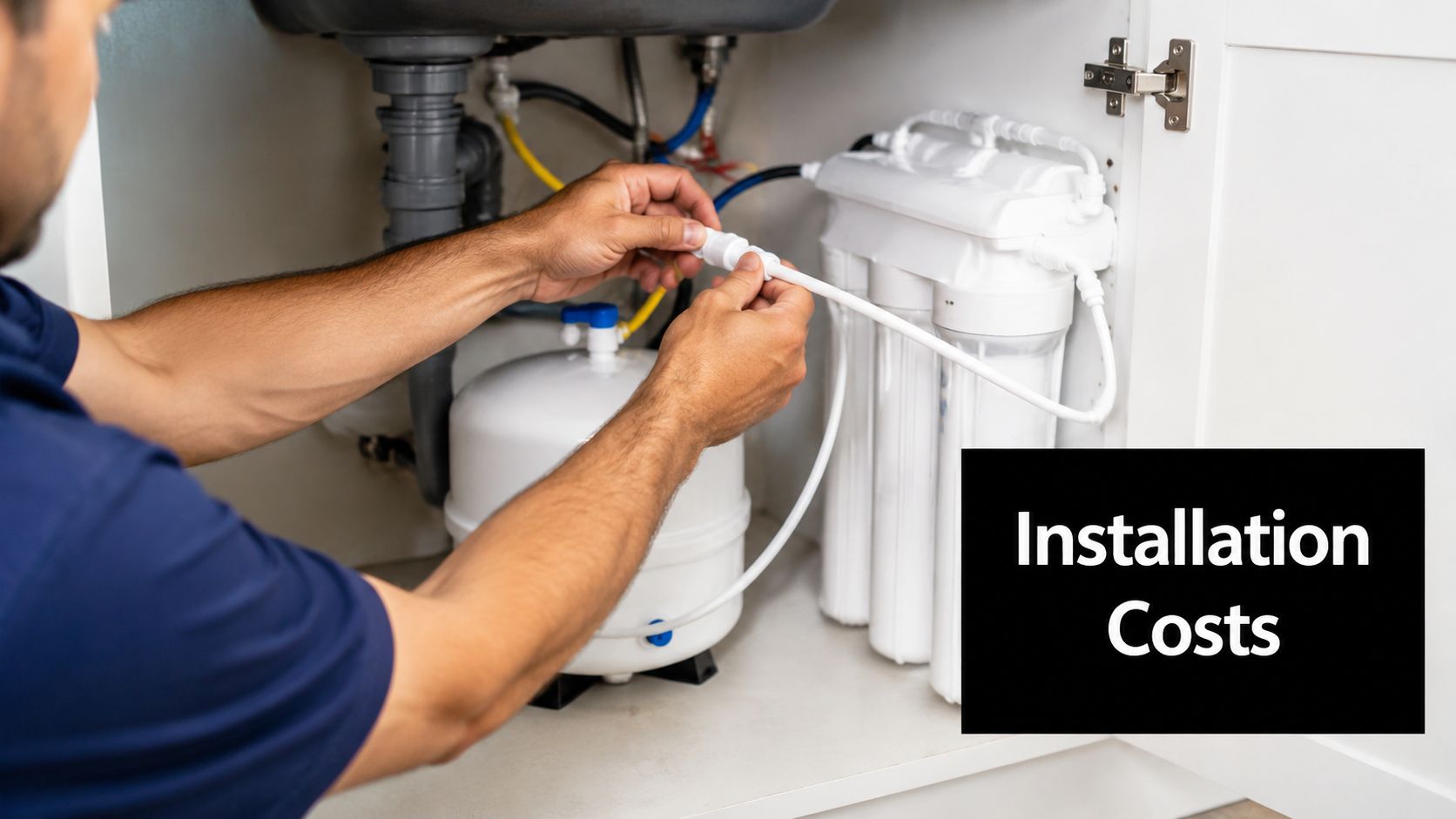
A proper RO installation covers much more than connecting a feed line and turning the unit on.
Under-sink systems may require a faucet hole, drain saddle placement, pressure verification, startup flushing, leak checks, and confirmation that the storage tank and shutoff work correctly. Whole-home systems usually involve more. I often see jobs that need pre-filter manifolds, repressurization equipment, drain routing, bypass valves, electrical coordination for pumps, and enough clearance to service the system without tearing half the setup apart later.
Placement matters. A cramped install saves space on day one and costs more every time filters, housings, pumps, or membranes need service.
That is one of the hidden labor costs homeowners miss.
Where Florida well water pushes install costs higher
This is the part many national guides gloss over. In Central Florida, the RO system often is not the first piece of equipment that has to be addressed.
If a water test shows iron, sulfur, hardness, sediment, low pH, or pressure problems, the installer may need to correct those conditions before the RO system can run properly. That can mean replacing old treatment equipment, reworking plumbing around existing tanks, or adding pre-treatment that protects the membrane from early failure. Homeowners looking at water filtration system options in Sebring, FL usually find that the install price depends as much on feed water quality as on the RO unit itself.
This is Florida well water inflation in plain terms. The quote grows because the water requires more equipment and more labor, not because the RO label changed.
Why DIY often costs more later
DIY installation can work on a simple under-sink unit with good incoming water and solid pressure. Whole-home RO is different.
An RO system installed without the right pretreatment, drain setup, or pressure support can lose production, waste water, foul membranes early, or develop leaks that stay hidden until cabinets, walls, or flooring are already damaged. I have also seen homeowners buy a system online, pay a plumber to hook it up, and still end up replacing parts because nobody tested the water first and matched the design to the actual conditions.
Professional installation pays for correct startup, protection of the membrane, and a system layout that can be maintained.
The best way to control this cost is simple. Get a professional water test before asking for a quote. That is how you find out whether the job is a basic install or a full Central Florida well-water correction project.
Why Central Florida Water Changes Everything
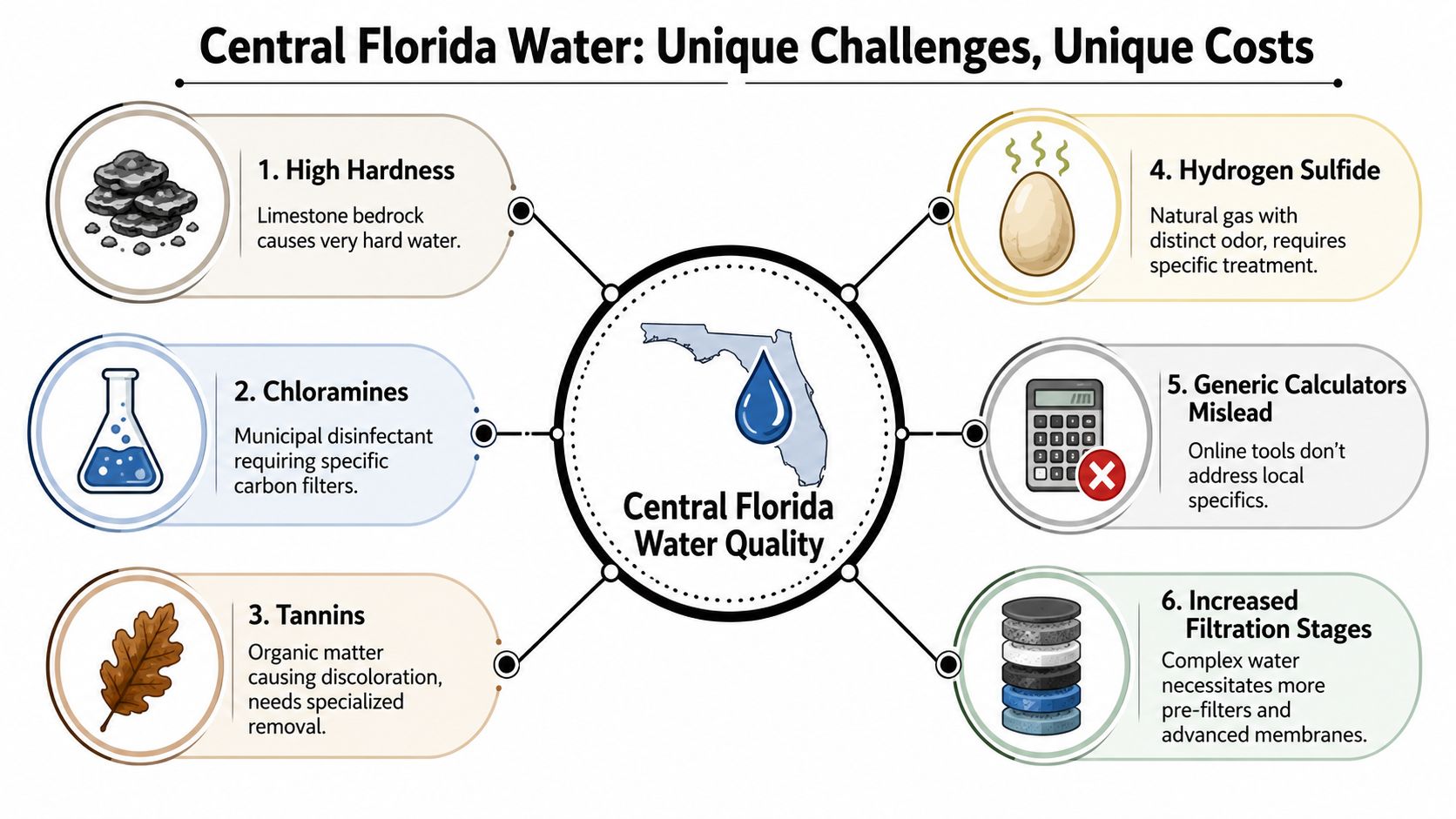
A homeowner in Sebring sees a national article that says RO maintenance is manageable and replacement filters are affordable. Then the local water test comes back with hardness, iron, sulfur odor, sediment, and weak pressure all in the same well. The system price changes fast because Central Florida water rarely gives you one clean problem to solve.
National RO cost guides help with rough budgeting. They do not reflect what happens in Sebring, Avon Park, Lake Wales, Winter Haven, Frostproof, and other nearby areas where private wells often need multiple layers of treatment before RO can run properly for the long term.
Florida well water inflation is real
This is the hidden cost national guides usually miss. In Central Florida, pre-filters load up faster, membranes foul sooner, and service intervals tighten when well water carries iron, sulfur, and sediment. According to Crystal Quest's Florida-focused RO buying guide, heavy turbidity and poor feed conditions can shorten membrane life and raise annual maintenance well beyond standard national estimates.
That is what I mean by Florida well water inflation. The RO unit may look similar on paper, but the water forces more equipment in front of it and more service behind it.
A basic quote can turn into a different project once testing shows acidity, staining minerals, or low pressure. Booster pumps, contact tanks, extra sediment stages, iron reduction, or pH correction are not cosmetic add-ons. They protect the membrane and keep the system producing water at a usable rate.
Generic online calculators miss the costs that matter here
Online calculators usually ask about square footage, bathrooms, and whether the home uses city or well water. That is not enough information for a Central Florida property. A well with sulfur odor and iron bacteria is a different job from a well with hardness and low pH, even if both homes are the same size.
Homeowners comparing local whole-home water filtration solutions in Sebring and surrounding areas usually find that local design starts with the actual water chemistry, not a national average.
Most RO pricing mistakes in Central Florida happen before installation, when someone tries to quote the system without a professional water test.
Florida pricing also runs higher than many homeowners expect once the design accounts for local water conditions. According to Aqua Soft Palm Beach's Florida RO cost overview, whole-house reverse osmosis systems in Florida often fall into a higher range than national guides suggest because they must address issues such as mineral content, acidity, and other state-specific feed water problems.
That does not mean every home needs a top-tier whole-home RO package. It means an accurate quote in Central Florida starts with a professional water test, because the cost is driven by what the water will do to the system over time.
Maximizing Your Return on Pure Water
A Central Florida homeowner gets an RO quote online, sees a reasonable price, and assumes the project is straightforward. Then the water test shows iron, hardness, sulfur, or low pH, and the budget changes. That gap is common here. National pricing guides usually miss the Florida well water inflation that shows up in pretreatment, membrane protection, service frequency, and drain planning.
The best value comes from solving the actual water problem the first time. In some homes, that means point-of-use RO at the kitchen sink. In others, the water quality is rough enough that RO only works well as part of a larger treatment plan. A low sticker price means very little if the system is undersized, installed without the right pretreatment, or pushed into water conditions that shorten membrane life.
How to keep ownership costs under control
A few decisions have the biggest effect on long-term cost and performance:
- Start with a professional water test: This is how you find out whether RO is the right fit, and what has to happen upstream before it can run reliably.
- Match the system to actual water use: A family home, seasonal property, and small business all place different demands on storage, flow rate, and service intervals.
- Account for pretreatment from the beginning: In Central Florida, iron, sulfur, hardness, sediment, and acidity often add equipment that national articles leave out.
- Plan for maintenance, not just installation: Filters, membranes, sanitizing, and service visits are part of the ownership cost.
- Use upstream conditioning where it makes sense: In many homes, a softener or other treatment equipment reduces stress on the RO system. Homeowners comparing options often benefit from understanding the benefits of a home water softening system, especially where hardness is part of the problem.
The daily payoff is real. Better tasting water, clearer ice, cleaner cooking water, and fewer mineral-related issues with fixtures and appliances all matter. But the bigger win is predictability. You know why each piece of equipment is there, what it will cost to maintain, and whether the system is built for your water instead of a generic national average.
If you're budgeting for reverse osmosis in Central Florida, start with the test, not the equipment brochure. That is the only way to get an accurate quote and avoid paying later for hidden pretreatment and service needs.
Florida Water Management helps homeowners and small businesses across Central Florida get straight answers before they buy. If you want a recommendation based on your actual water, schedule a free water test through Florida Water Management.