

$300 to $1,250 is the typical installed price range for most under-sink reverse osmosis systems in 2025 and 2026. If you're shopping for the whole project instead of just the box, the broader market average sits around $2,200 for installed RO work overall.
That's the part most homeowners miss. You see a unit online, then the quote comes back higher because installation, filter changes, and water-specific add-ons are part of the actual bill, not extras.
Table of Contents
- What Homeowners Usually Pay for an RO System
- How a Reverse Osmosis System Works
- Equipment Price Ranges by System Type
- Installation Labor and the True Installed Cost
- Filters, Membranes, and the True Cost of Ownership
- What Drives the Price Up or Down in Real Homes
- Sample Cost Scenarios for Central Florida Homes
- Getting an Accurate Quote and Next Steps
What Homeowners Usually Pay for an RO System
You're at the kitchen sink in Central Florida, looking at a shiny under-sink unit online, and the price looks manageable. Then a contractor hands you a quote that runs much higher than the sticker price, and the question turns into whether the bill is padded or whether you are missing the hidden costs. That gap is normal, and it is why reverse osmosis water filter price searches create so much confusion.
For a standard under-sink setup, a realistic installed range is about $300 to $1,250, depending on whether you choose a basic tanked unit or a more complex tankless model and how much labor the job needs. A Crystal Quest cost guide on reverse osmosis systems puts that kind of spread in context. Broader installed-project averages sit around $2,200, with most projects falling between $1,000 and $4,800 according to major consumer cost guides (HomeAdvisor estimate, Angi estimate).
That spread exists because “RO system” can mean several different things. A simple drinking-water unit under one sink is a different purchase from a whole-house setup, and it is also different from a premium tankless model with extra controls. The search term sounds simple, but the budget behind it is not.
Practical rule: if a quote only shows the equipment price, you still do not know your full bill.
The other two line items that change the total are installation labor and replacement filters. Those recurring costs matter because RO is not a one-time appliance purchase, it is a system with a maintenance schedule. If you want the true number for your house, price the install and the filter plan together, not separately.
For a plain-English comparison of RO versus other filtered water approaches, this reverse osmosis versus filtered water overview lays out the trade-offs cleanly.
How a Reverse Osmosis System Works
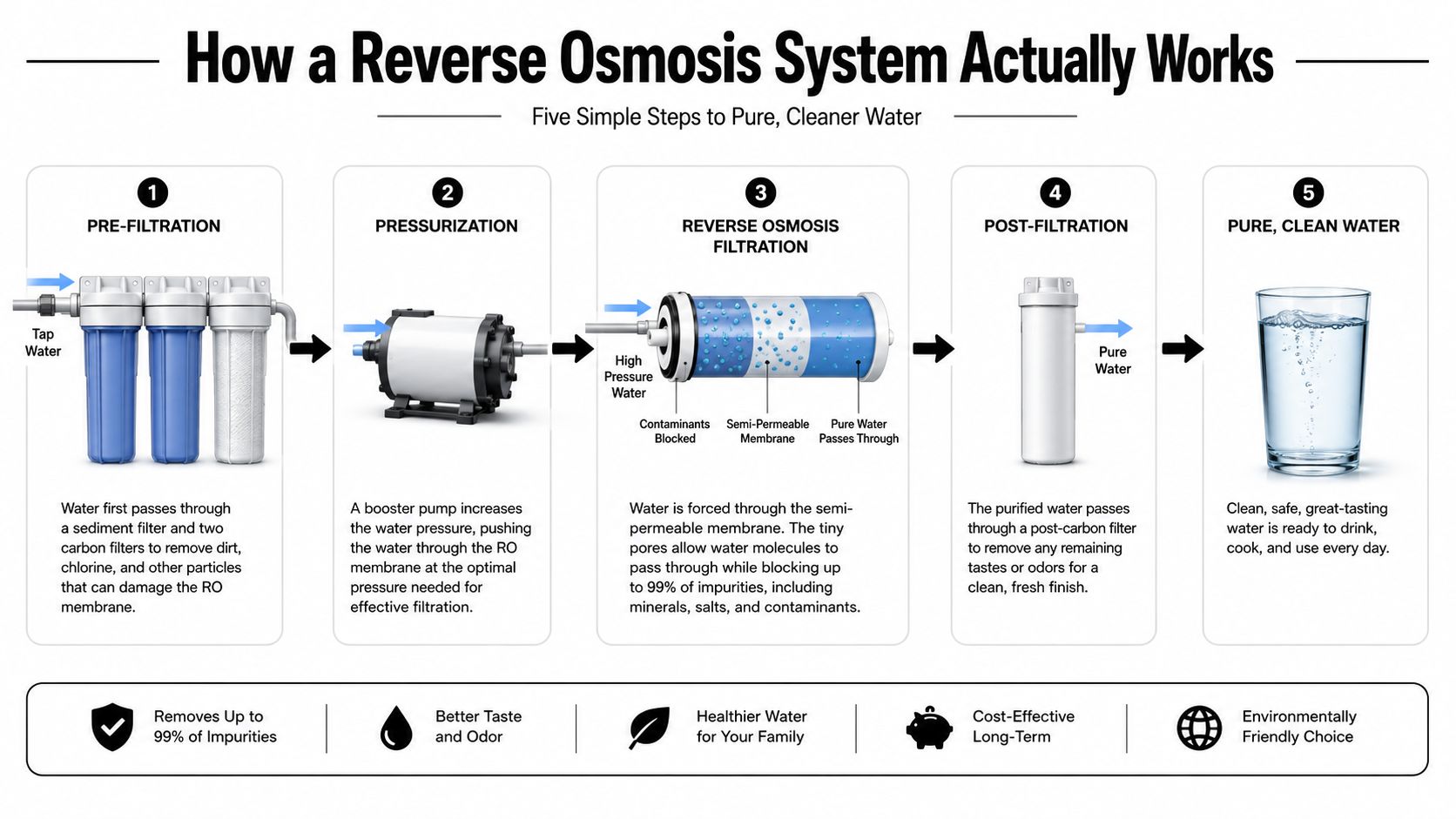
An RO system forces tap water through a semi-permeable membrane that accepts water molecules and sends dissolved contaminants elsewhere. The membrane is the center of the process, but it never works alone. In a real home install, the water usually passes through sediment pre-filters and carbon filters before it reaches the membrane, because those stages protect the membrane and handle chlorine, grit, and other common problems that shorten system life.
That sequence is why the hardware list matters. A basic under-sink setup may include a sediment pre-filter, carbon block, RO membrane, and a polishing filter for taste. Many systems also need a storage tank or tankless pump assembly, a dedicated faucet, and a drain saddle to carry away the rejected water. Each part adds to the bill, and each part can affect how well the unit performs in a house with hard water, low pressure, or a fussy drain line.
The price difference starts making sense once you look at the job each part is doing. A unit built for a simple kitchen drinking-water setup uses fewer components than a system designed for higher demand, faster flow, or tighter space under the sink. If you want a clear side-by-side view of how RO compares with other filtered water options, this overview of reverse osmosis versus filtered water explains why under-sink RO usually costs more than a basic carbon filter.
RO works because several parts do different jobs in sequence.
That is the right way to read an RO quote. You are not buying one cartridge. You are buying a treatment train, plus the labor and maintenance that come with it.
Equipment Price Ranges by System Type
The quickest way to read reverse osmosis water filter price is to stop treating every unit like the same purchase. They are different products with different jobs. A basic under-sink tank system, a tankless unit, and a whole-house RO setup sit in different price bands because they solve different problems.
| System type | Typical equipment price | Average price | Best fit |
|---|---|---|---|
| Basic under-sink with tank | $150 to $950 retail (Crystal Quest's detailed cost guide) | About $275 (Water Filter Guru's reverse osmosis system reviews) | Most homeowners who want drinking and cooking water |
| Tankless under-sink | Higher than tank systems, often $450 to $1,200 complete in premium setups (BOS Water's cost breakdown for good RO systems) | About $450 (Water Filter Guru's reverse osmosis system reviews) | Smaller kitchens, faster flow, compact footprints |
| Whole-house RO | Roughly $4,800 to $8,000+ for many homeowner projects (Crystal Quest's reverse osmosis system cost guide) | Project totals can land around $2,200 when the system is simpler (HomeAdvisor estimate) | Homes that need treated water at every tap |
| Commercial or specialty high-capacity | Higher than typical homeowner equipment, especially when throughput rises | Varies by capacity and controls | Rentals, restaurants, or large-demand properties |
A cheap-looking unit usually gives you fewer stages, lower output, and basic controls. A higher-priced unit often adds a pump, better recovery, smart monitoring, or larger membranes. Those parts cost more because they solve real problems like weak pressure, slow refill times, and too much waste.
Tankless systems are where sticker shock shows up fast. Consumer-grade pricing can jump hard, and the tracked Amazon example in the brief shows one model moving from $288.66 to $549.00, which is a good reminder that product pricing does not stay still (Amazon-tracked model data).
My advice is simple. If you only need drinking water at one sink, do not pay for whole-house complexity. If you need speed, a compact footprint, or higher flow, tankless can justify the premium. Match the system to the job, not the sales pitch.
Installation Labor and the True Installed Cost
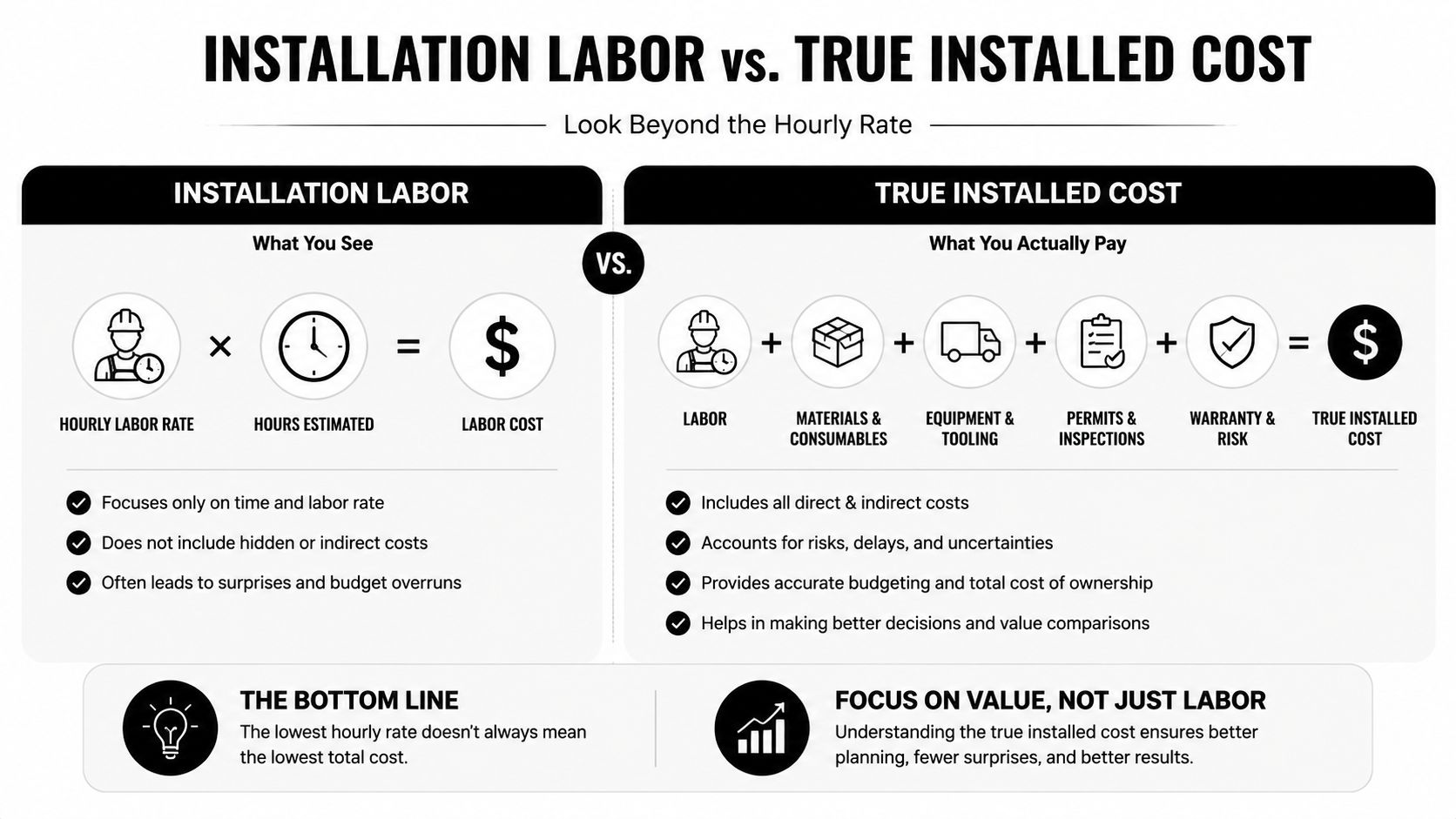
The box price is not the final price. Labor turns equipment into a working system, and that's where a lot of homeowners get surprised. For under-sink RO, professional installation commonly adds $300 to $700, while a simple point-of-use swap can run $100 to $300 and a whole-house system can climb to around $1,500 (Angi installation cost guidance).
HomeAdvisor and Angi both place the average installed RO project around $2,200, with most jobs falling between $1,000 and $4,800 (HomeAdvisor estimate, Angi estimate). That's not because installers are inventing fees. It's because the job often includes more than mounting a filter.
What a fair install should include
A real install usually covers the feed-water tee, drain saddle, tubing runs, dedicated faucet hole if needed, pressure verification, leak testing, and a final TDS reading. If those items aren't in the quote, ask about them before you sign. A cheap bid that skips half the scope is not a bargain, it's a future service call.
A fair quote tells you what's included before the first fitting is tightened.
You should also look at the first-year filter plan, not just the labor. Many homeowners compare the install total and forget that cartridges will need replacing right away or soon after. That's where the true installed cost starts to separate from the sticker price.
In Central Florida, I'd rather see a homeowner spend a little more on a proper install than chase a bargain with weak pressure management or bad drain routing. Leaks and poor drainage cost more than a clean job done right the first time.
Filters, Membranes, and the True Cost of Ownership
The sticker price is just the entry fee. The recurring cost is what decides whether an RO system feels like a smart purchase or a nuisance. Standard replacement filters often run $20 to $100 each, and annual maintenance is commonly estimated at $50 to $250 (PMC review on RO economics).
Express Water's published replacement pricing shows how wide the parts market really is, with some components starting at $9.99 and others listed at $19.99, $22.99, $34.99, $39.99, $69.99, $119.99, and $139.99 depending on the stage and model (Express Water replacement parts). That's the part most buyers never budget for.
What actually wears out
A standard 4- or 5-stage under-sink system usually uses sediment and carbon pre-filters first, then a membrane, then a polishing stage. The filters that catch the worst debris are the ones that take the abuse, and when water quality is rough, they load up faster. If flow slows down, the taste changes, or the TDS reading starts drifting upward, service time is coming.
For a replacement-oriented guide, this RO filter replacement resource is the type of page homeowners should look for when they're comparing ownership costs. The point is simple, filters are consumables, not accessories.
If you're trying to predict the 5-year bill, start with cartridges and membrane life, not the faucet finish.
A mistake is treating maintenance like an afterthought. Over several years, the replacements, membrane swaps, and service checks can materially change the total cost of ownership. That's why I tell homeowners to ask about replacement frequency before they ask about cabinet color.
What Drives the Price Up or Down in Real Homes
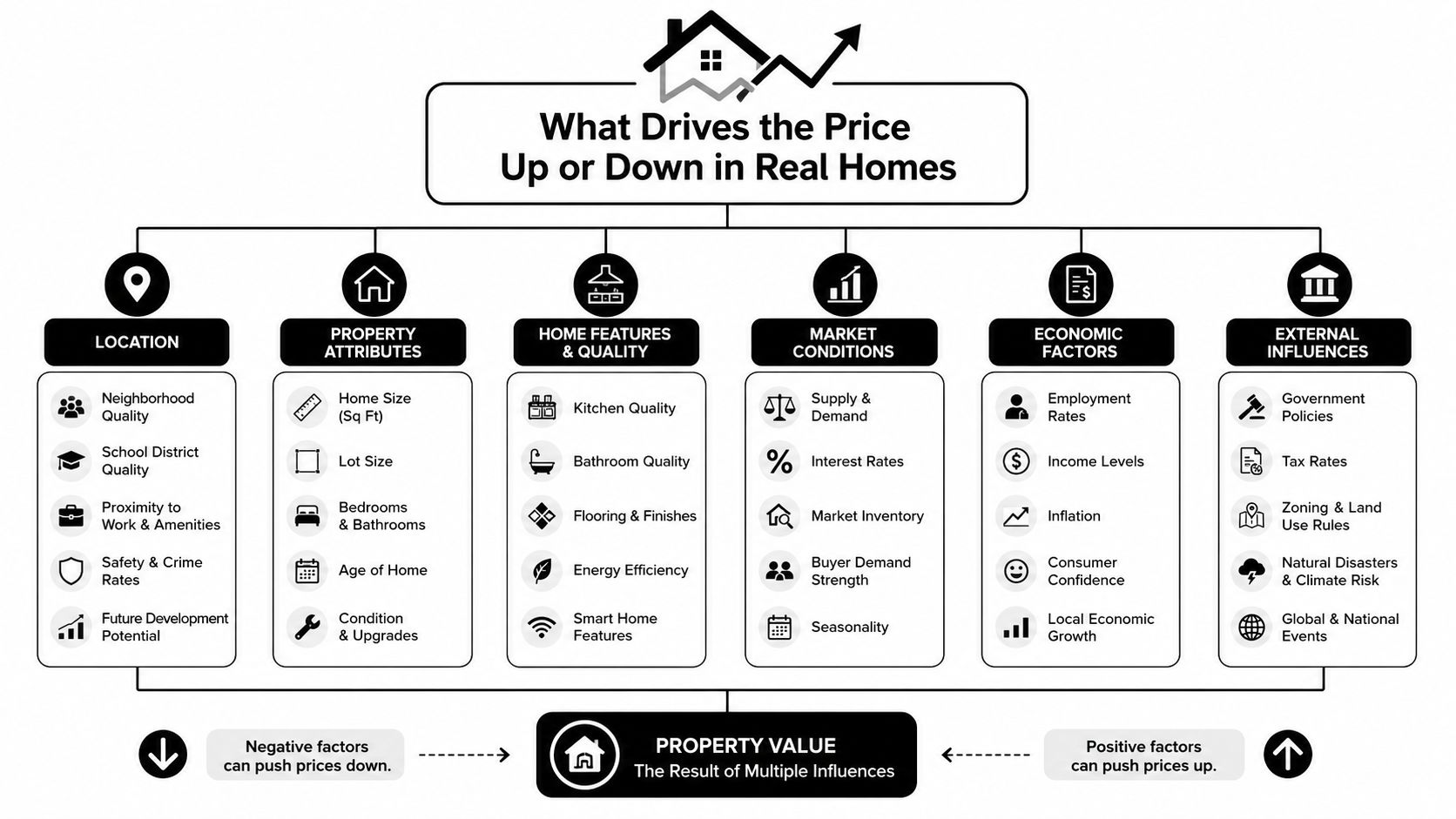
Two homes can sit on the same street and get very different RO quotes. The reason is water quality and plumbing layout, not salesmanship. Hard water, high iron, sulfur, and high dissolved solids shorten membrane life, and that often means extra pretreatment upstream.
Three Central Florida examples
A city-water home with normal chlorine handling usually needs the standard carbon stage already built into the unit, but no special pretreatment. A private-well home with sulfur odor and iron may need more upfront treatment before the membrane can do its job. A hard-water rental can land somewhere in between, but if the landlord wants fewer service calls, the quote usually reflects that.
Drain and pressure quirks matter too. A long run to a faucet, awkward slab access, low incoming pressure, or a tricky drain saddle can all add labor. Some homes need a booster pump to keep production reasonable, and that changes the system price as well as the install time.
Florida Water Management offers site-specific RO and whole-home water treatment assessment, which is the kind of service homeowners use when they want the quote tied to their actual water profile rather than a generic brochure number.
What usually pushes the quote higher
- Pretreatment gear: hard water, iron, or sediment can force extra equipment ahead of the RO.
- Pressure support: low-pressure homes may need a booster pump.
- Layout complexity: finished kitchens and slab construction make labor slower.
- Maintenance expectations: rough water shortens filter life and raises the ownership bill.
The clean takeaway is this. Price is not only about the unit you buy, it's about what your water demands from that unit over time.
Sample Cost Scenarios for Central Florida Homes
A realistic budget depends on where the home gets its water and how picky the household is about convenience. Here's how the math usually plays out in Central Florida.
Scenario A, Sebring-area city water home
A homeowner with city water, ordinary chlorine, and moderate hardness usually does fine with a standard tanked under-sink RO. Equipment stays in the lower band, installation is straightforward, and the maintenance plan is manageable. Over five years, this is often the budget-minded choice because you're not paying for features you won't use.
Scenario B, private well in Lake Wales or Frostproof
A private well with sulfur, iron, or hard water is a different animal. Pretreatment becomes part of the conversation, and the system may need a booster pump or more frequent membrane service. If the installer ignores the water chemistry, the buyer usually pays later in filter life and service calls.
Private-well buyers should price the water first, then the equipment.
Scenario C, Winter Haven home wanting tankless convenience
A household that wants faster fill, a compact cabinet footprint, and drinking water at a kitchen and bar sink often lands on tankless. The equipment premium is real, and so is the benefit of not giving up storage space. That said, if the family is on a tight budget, a standard tanked unit still makes more financial sense in many rentals and smaller homes.
For homeowners who want to see how one local service area handles these installs, this Lakewood Ranch RO system page is a useful example of how local service pages frame system selection by water profile and installation context.
Use this checklist before you request quotes
- Ask for equipment and labor separately: one number hides too much.
- Ask about replacement filters: first year and long-term schedule.
- Ask what the water test showed: don't accept a generic recommendation.
- Ask for the startup reading: a TDS baseline tells you the system is performing.
If you only remember one thing, remember this, the same reverse osmosis water filter price can mean a very different 5-year budget depending on water source, pressure, and household priorities.
Getting an Accurate Quote and Next Steps
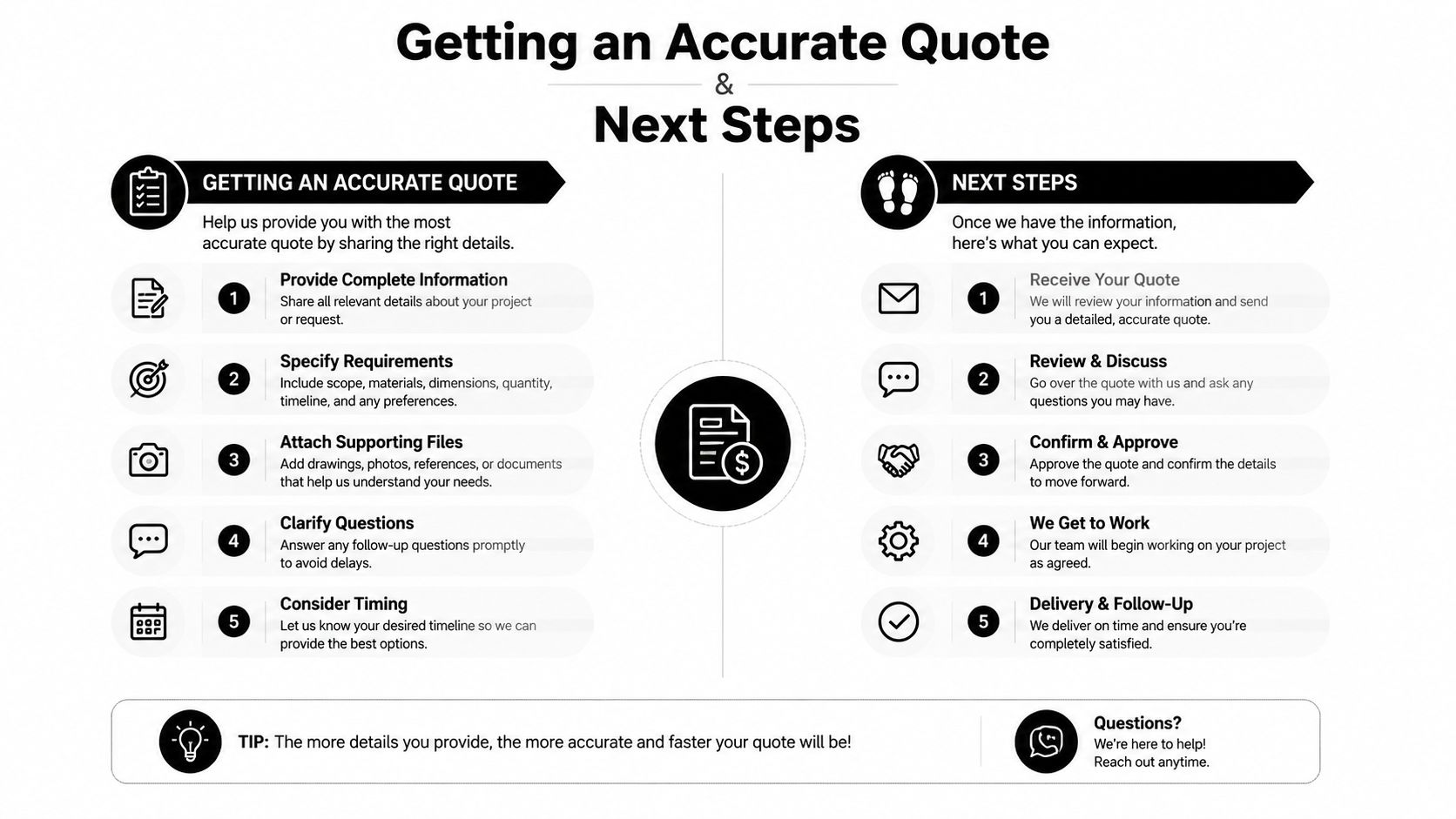
A good quote starts with a good water test. Without that, you're guessing about pretreatment, membrane life, and whether the system is sized correctly for your kitchen or whole home. In Central Florida, that guesswork is expensive because hard water and private wells change the equation fast.
What to ask before you sign
- Itemized scope: equipment, labor, and first-year filters should be separated.
- Install details: confirm the dedicated faucet, drain saddle, and pressure check.
- Membrane specifics: ask what model is being installed and how often it should be replaced.
- Startup documentation: request feed-water and permeate TDS readings at commissioning.
Financing can make sense if the job includes plumbing upgrades or pretreatment that you'd rather spread out over time. Cash is simpler, but paying in installments can be reasonable if the system solves a real water problem and replaces bottled water purchases, pitcher filters, or avoidable appliance wear.
If you want a real number for your home in Sebring, Avon Park, Lake Wales, Winter Haven, or Frostproof, the right move is a free on-site water test and a written scope built around your water, not a generic online price. Use the contact page, get the water tested, and compare a quote that reflects your actual conditions instead of a guess.
Florida Water Management helps Central Florida homeowners sort out RO pricing, installation, and long-term maintenance with water testing and system recommendations tied to the actual source water. If you want the accurate number for your house, visit Florida Water Management and schedule a free water test so you can compare a written quote against your water chemistry, not just a box price.