

You turn on the kitchen tap in Wauchula, fill a glass, and pause. The water looks a little cloudy. The sink has orange staining that keeps coming back. Someone in the house says the shower smells off, and the washing machine leaves rust-colored marks on light fabrics. That's usually the moment homeowners stop thinking about “maybe getting a filter” and start asking a more serious question.
What does well water treatment cost in Wauchula, Florida?
The answer isn't one flat number, because most private wells in this part of Central Florida don't have just one issue. A home might need help with sediment, hardness, iron, sulfur odor, and sometimes disinfection. That's why many estimates feel confusing. One quote may cover a basic unit. Another may include a full treatment stack. A third may bundle in labor, follow-up service, and replacement parts without making the pricing easy to compare.
This guide walks through cost considerations step by step, including where homeowners often overpay and how to think through your options clearly.
Table of Contents
- Introduction to Well Water Treatment Costs Wauchula FL
- Understanding Well Water Treatment Costs in Wauchula FL
- Factors Affecting Your Treatment Cost
- Installation and Maintenance Fees
- Sample Cost Scenarios
- Financing Options Warranty and Project Timeline
- Conclusion with Next Steps and Free Water Test
- Frequently Asked Questions
- Do Wauchula homeowners always need a full multi-stage system
- How often should private well water be tested
- Can seasonal changes affect well water quality
- Are permits always required for treatment equipment
- Is DIY installation a good way to save money
- What's the biggest mistake people make when comparing quotes
Introduction to Well Water Treatment Costs Wauchula FL
A lot of Wauchula homeowners start in the same place. They notice one symptom first, usually staining, odor, or bad taste. Then they learn that the water problem isn't isolated. Hard water leaves scale. Iron stains fixtures. Sulfur creates that rotten egg smell. Sediment can clog fixtures and make water look dirty. If bacteria is a concern, that adds another layer.
That's why the well water treatment cost in Wauchula FL can feel higher than expected at first glance. People often shop for one product when the water really needs a system. It's like trying to fix a leaking roof with only paint. The surface might look better for a moment, but the underlying issue is still there.
The good news is that the costs become easier to understand once you break them into categories. First comes the treatment equipment itself. Then installation. Then yearly upkeep. Finally, there's the question many homeowners miss entirely: whether the quote reflects fair pricing or a padded dealer markup.
Clear pricing starts with clear water testing. If you don't know what's in the water, every quote is partly guesswork.
Understanding Well Water Treatment Costs in Wauchula FL
A Wauchula homeowner might start with one complaint, such as orange stains in the shower, and end up getting quoted for three or four pieces of equipment. That can feel excessive until you look at how local well water behaves. In this part of Florida, the issue is often a mix of hardness, iron, sulfur odor, fine sediment, and sometimes disinfection concerns, so pricing usually reflects a treatment chain rather than a single device.
One regional Florida well treatment cost guide for residential systems places many installed well water treatment systems in a broad range of roughly a few thousand dollars, with higher totals when the setup includes multiple stages such as aeration, iron reduction, softening, and disinfection. Use that as a rough frame, not a shopping shortcut. The primary question is which stages your water requires.
Why Wauchula quotes often include several stages
A treatment system works like a relay team. Each part handles one job, and the next stage picks up what the first one cannot solve.
Sediment filtration protects valves and media from grit. Oxidation or aeration helps with sulfur odor and certain forms of iron. A softener addresses hardness minerals. UV treatment targets microbial risk after the water has already been clarified. If one stage is missing, the rest of the system may work poorly or wear out faster.
That is also where hidden dealer markup can creep in. Some quotes bundle equipment into one large number with little explanation, which makes it hard to tell whether you are paying for needed treatment, oversized equipment, or a premium brand label. A clearer quote breaks out each component and explains what problem it solves.
If iron is part of the problem, a homeowner comparing options should review how iron removal systems for well water in Wauchula FL are typically matched to staining levels and iron type, because that single issue can change the total system design.
Typical component ranges
| Component | Typical Cost Range |
|---|---|
| Sediment pre-filter | $100 to $300 |
| Oxidizing filter or air injection system | $800 to $2,000 |
| Water softener | $800 to $2,000 |
| UV sterilization | $400 to $800 |
| Aeration system | $2,500 to $4,000 |
| Iron filter | $1,500 to $3,500 |
Those numbers are useful for orientation, but they do not tell you what belongs in your home. Two houses in the same part of Wauchula can need different treatment because the raw water can change by well depth, pump setup, and mineral content.
Practical rule: If a quote does not show what each stage is treating, ask for a water test first. Florida Water Management offers a free water test, and that result gives you a better way to spot padded pricing before you sign.
Factors Affecting Your Treatment Cost
Two homes can sit on the same road in Wauchula and still need different equipment. That's why one family may need a straightforward setup while another gets quoted for a much bigger system. The water itself drives most of that difference.
Water chemistry changes the equipment list
If your water has visible sediment, the system usually starts with a pre-filter to catch grit before it reaches more expensive equipment. If the water smells like sulfur, an oxidizing stage may come first. If fixtures show orange or brown staining, iron treatment becomes more important. Hard water often means a softener joins the lineup.
When homeowners feel confused, it usually comes from mixing up symptoms with solutions. Bad taste doesn't automatically mean you need reverse osmosis everywhere in the home. Staining doesn't always mean the softener alone will solve it. Cloudiness doesn't tell you whether the issue is sediment, iron, or both.
For homeowners trying to understand the iron side of the problem, this guide to iron removal for well water in Wauchula FL is a useful starting point because iron often gets mistaken for “just hard water.”
Home size plumbing layout and well setup matter
Treatment cost also changes based on how the house uses water. A smaller home with lower flow demand may need a simpler configuration than a larger household with several bathrooms, irrigation tie-ins, or high simultaneous water use.
Plumbing layout matters too. If there's a clean, accessible spot near the pressure tank and main entry line, installation tends to be more straightforward. If space is tight or the piping needs rearranging, labor can become more involved.
A few practical details to gather before asking for quotes:
- Your water symptoms: Write down what you notice most. Odor, staining, scale, taste, cloudy water, or fixture buildup.
- Your household demand: Think in terms of daily use patterns. A home with more bathrooms and heavier laundry use often needs equipment sized differently.
- Your equipment history: If you already have a softener, filter housing, or UV unit, note the brand and condition.
- Your installation area: Take photos of the well equipment area, pressure tank, and main plumbing path.
Water treatment works best when it's sized to your actual water, your actual plumbing, and your actual usage. Generic quoting usually leads to either overspending or undersolving the problem.
Installation and Maintenance Fees
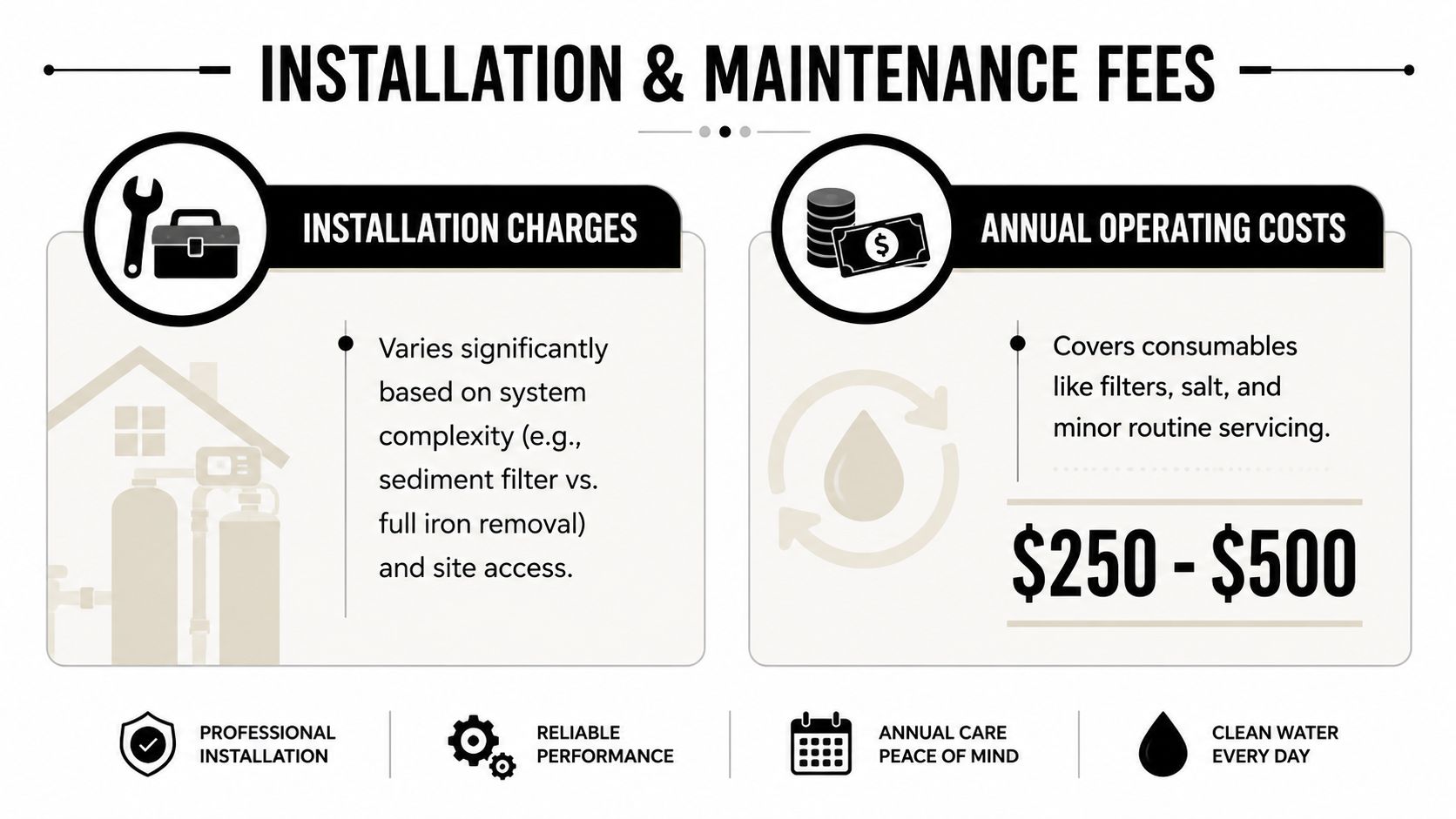
Installation cost is where many Wauchula homeowners get surprised. The equipment quote may look straightforward, then the final invoice grows once labor, plumbing changes, startup supplies, and follow-up service are added.
Startup cost versus running cost
A good way to budget is to split the project into two piles. One pile is the day-one cost to install and start the system. The other is the yearly cost to keep it working the way it should.
Day-one cost includes more than the treatment tank itself. In Wauchula homes, installers may need to reroute piping near the pressure tank, add a bypass, replace aging valves, install a drain line for backwashing equipment, or make room for larger tanks if iron, sulfur, and hardness all need treatment. That is one place local markup often hides. A low equipment number can turn into a much higher installed number once those line items appear.
Running cost is the ownership side. A treatment system works like a vehicle. Buying it is one decision. Keeping it supplied and serviced is another. As noted in this Florida well water treatment maintenance guide, homeowners often budget for annual operating costs such as softener salt, UV bulb changes, and replacement filter cartridges.
That distinction matters because Wauchula water chemistry often pushes homeowners beyond a simple one-tank setup. If your well has hard water plus iron or sulfur, each added treatment step can add both installation labor and future maintenance. If you are comparing systems that include softening, this guide to water softener installation cost helps show how one component fits into a larger whole-house package.
What homeowners usually replace over time
Some maintenance items are predictable. Salt gets added. Cartridges get replaced. UV lamps get changed on schedule if you have UV disinfection. Those are the routine costs that tend to show up first.
Other costs arrive less often, but they matter. The same guide noted earlier also discusses occasional bigger-ticket well system repairs, such as pump or pressure tank replacement over the life of the system. Those are not treatment-media costs, but they still affect the overall ownership budget for a private well home.
This is why free or very cheap dealer quotes can be misleading. One dealer may quote only the tanks and control heads. Another may include permits if needed, installation fittings, media loading, startup programming, first-year consumables, and a return visit to fine-tune settings after your family starts using the system. The second quote can look higher even if it is more honest.
A practical way to compare bids is to ask each company the same questions:
- What labor is included in the listed price?
- Are drain lines, bypass valves, and plumbing modifications included?
- Is startup media, salt, or the first filter set included?
- Is there a follow-up service visit after installation?
- What maintenance should I expect each year based on my actual water test?
- Are any added charges likely if the installer finds tight access or older plumbing?
That last question matters in older Wauchula-area homes. A house with cramped utility space or outdated plumbing can cost more to fit correctly, even with the same treatment equipment.
Before approving any install, get your water tested first. Otherwise, paying for treatment is a little like buying medicine before you know the diagnosis. Florida Water Management offers a free water test, which helps you separate real treatment needs from upsells and spot hidden dealer markup before you sign a contract.
Sample Cost Scenarios
A Wauchula homeowner can look at two houses on the same road and get two very different treatment quotes. The reason is simple. Well water here often behaves less like a single problem and more like a recipe with several ingredients, such as iron, hardness, sulfur odor, low pH, or fine sediment. The price changes based on how many of those ingredients show up in your test and how they interact.
Scenario one basic treatment needs
Start with a smaller home that has light sediment, moderate hardness, and no strong odor. That water profile often points to a simpler setup, usually sediment protection plus a softener.
This is the entry-level scenario many online price examples are really describing. It works like buying a standard air filter for one room instead of installing a whole-house HVAC upgrade. The treatment job is narrower, so the installed cost usually stays near the lower end of the ranges already discussed.
In Wauchula, this scenario is more common when the well test shows nuisance minerals but not a stack of overlapping problems.
Scenario two a common family setup
Now consider a family of four dealing with orange staining in sinks, sulfur smell in the shower, and scale on fixtures. That combination usually means the system needs multiple stages working in sequence, such as oxidation or air injection, iron filtration, and softening. If drinking water still has taste or dissolved solids concerns, some homeowners also compare reverse osmosis system cost for a single kitchen tap.
This is a common Central Florida pattern because one device rarely fixes everything. A softener helps with hardness, but it does not solve every iron or sulfur issue by itself. The final price rises because the equipment list gets longer and the sizing has to match real household water use, not a generic template.
Scenario three complex rural well water
The highest-cost projects usually show up on rural properties where the water test reveals several treatment needs at once. A home may need sediment control, iron treatment, pH correction, softening, carbon filtration, and UV disinfection in one lineup. That setup works like a relay team. Each stage handles one part of the job so the next stage can work properly.
This is also where hidden dealer markup can distort the picture. A video analysis comparing dealer pricing with direct equipment purchase reported that homeowners could save $10,000 to $15,000 by buying equipment directly and then hiring local installers, compared with some local dealer markups (https://www.youtube.com/watch?v=UbVVOjeBKLg). The same analysis reported a complete multi-stage system at about $9,500 shipped from a national distributor, compared with local dealer quotes of $20,000 to $25,000 for similar equipment in that case study (https://www.youtube.com/watch?v=UbVVOjeBKLg).
Those numbers should be treated as one sourced example, not a rule for every Wauchula home. Some homeowners want one company to handle design, installation, startup, and future service, and that added scope can justify part of the price difference. The practical lesson is to compare what each quote includes. If one proposal lists only tanks and another includes media, plumbing changes, startup, and follow-up adjustment, the totals will look far apart even before markup enters the picture.
A smart next step is simple. Match every quote against your water test line by line, so you can tell the difference between treatment you need and treatment you are being sold.
Financing Options Warranty and Project Timeline
Most homeowners don't plan a water treatment project the way they plan a kitchen remodel. The need often appears suddenly, after staining worsens, a smell becomes impossible to ignore, or a home inspection raises concerns. That makes planning and payment terms more important than many people expect.
How homeowners usually pay for a system
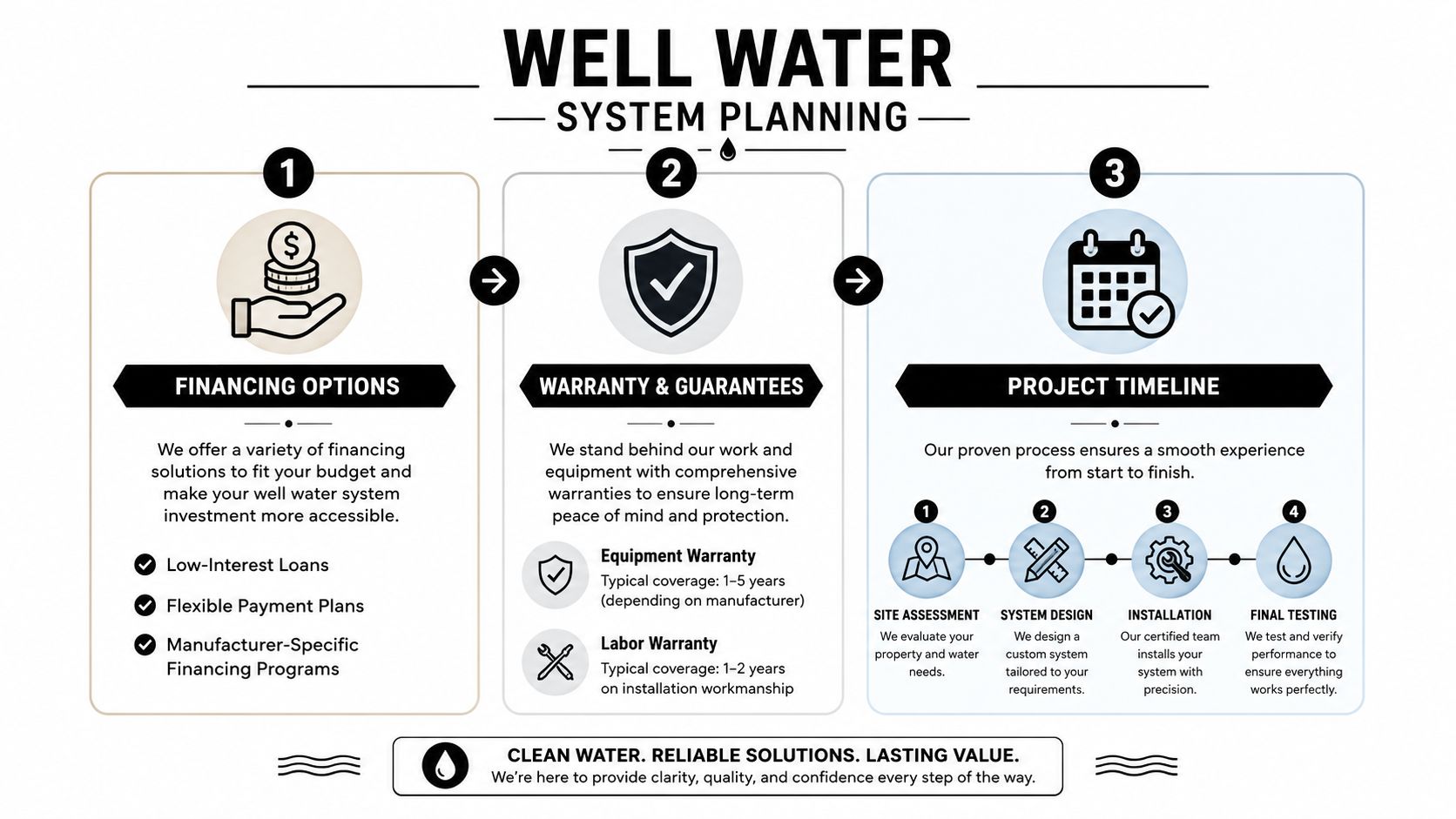
Payment options vary by company, so homeowners should ask directly about what's available instead of assuming every contractor handles financing the same way. Some providers offer payment plans. Others work through third-party financing. Some projects are paid in full, especially when the scope is smaller.
The more important point is to compare the full project cost, not just the monthly payment. A lower monthly number can still hide a more expensive overall package if the equipment is overpriced or the service terms are vague.
When reviewing payment options, ask these questions:
- What exactly is included: Equipment only, or equipment plus installation, startup, and follow-up adjustments?
- What service is covered after install: Initial calibration, scheduled maintenance, or emergency calls?
- What happens if the design changes after testing: Some proposals change once full water chemistry results come in.
What to review before you sign
Warranties deserve a close read because “system warranty” can mean very different things. One company may cover tanks and control valves differently than labor. Another may exclude consumable items entirely. That's normal, but it needs to be clear before installation day.
Project timing also depends on the same practical details that shape cost. Water testing comes first. Equipment selection comes next. Then ordering, installation scheduling, plumbing work, startup, and final adjustments. Weather, parts availability, and site conditions can all affect the calendar.
A good homeowner checklist includes:
- Get the water tested first. Don't choose equipment by guess.
- Ask for a written equipment list. Brand, stage, and function should be clear.
- Review warranty terms line by line. Separate equipment coverage from labor coverage.
- Confirm who handles follow-up service. Especially if you're comparing dealer install versus self-sourced equipment with local labor.
Conclusion with Next Steps and Free Water Test
The actual well water treatment cost in Wauchula FL depends on one thing above all else. Your water has to be identified correctly before the system can be priced correctly. Once you understand that, the rest becomes manageable. You can compare equipment stacks, separate installation from annual upkeep, and spot quotes that look inflated.
The smartest next step isn't guessing between products. It's starting with a proper water test so the treatment plan matches the actual chemistry coming from your well.
If you want a clear recommendation before spending money on the wrong equipment, schedule a free water test through the Florida Water Management contact page. That gives you a practical starting point for budgeting, planning, and choosing a system that fits your home.
Frequently Asked Questions
Do Wauchula homeowners always need a full multi-stage system
No. The right setup depends on what your well water contains. In Wauchula, one home may mainly battle hardness and sulfur odor, while another may also need treatment for iron, manganese, or bacteria. Water treatment works like matching the right tool to the right repair. A full equipment stack only makes sense when the water test shows each stage has a job to do.
How often should private well water be tested
A yearly test is a smart baseline for private wells. Test sooner if your water suddenly smells different, leaves new orange or black stains, tastes unusual, or looks cloudy. Those changes can signal a shift in water chemistry, and in Wauchula that can affect both system choice and cost.
Can seasonal changes affect well water quality
Yes. Rainfall patterns, groundwater movement, and changing mineral levels can all influence private well water over time. A system sized for old conditions can miss the current problem or add equipment you no longer need. That is one reason homeowners should be careful about quotes based on a past test or a quick guess.
Are permits always required for treatment equipment
Permit needs depend on the kind of work being done and local requirements. Swapping in treatment equipment may be treated differently than larger plumbing changes or work connected to the well system itself. Ask the installer to spell out what is included, what permits are needed, and who is paying those fees before you approve the job.
Is DIY installation a good way to save money
DIY can lower the upfront bill, but only when the system is chosen correctly and installed the right way. A treatment system is a lot like buying parts for an air conditioner. If the sizing or hookup is wrong, the mistake keeps costing you after the install day. Many Wauchula homeowners save more by avoiding the wrong equipment and using local installation help only where it adds real value.
What's the biggest mistake people make when comparing quotes
The biggest mistake is comparing final prices without comparing the scope line by line. One quote may only include the tank and basic hookup. Another may include media, a contact tank, injector parts, startup settings, permit handling, follow-up service, and warranty coverage. Dealer markup often hides inside those missing details, so the lower price on page one is not always the lower cost once the job is finished.
If your well water has staining, odor, buildup, or taste issues, Florida Water Management can help you start with the right first step. Schedule a free water test through Florida Water Management and get a clearer picture of what your water needs before you invest in treatment.