

If you're in Lakewood Ranch and you're thinking about a reverse osmosis system, you're probably already dealing with one of two situations. Your water is technically safe, but you don't like the taste, the smell, or the residue it leaves behind. Or you've started asking a more specific question: is an under-sink RO unit enough, or do you really need a broader treatment setup because of hardness, iron, sulfur, or well-water issues?
That second question matters more than most installers admit. A reverse osmosis system is excellent at producing high-quality drinking water, but it isn't automatically the right first step for every home. In Florida, what works well usually depends on the water coming into the system, the treatment sequence ahead of it, and whether you're solving a drinking-water problem or a whole-house water-quality problem.
Table of Contents
- Why Your Lakewood Ranch Water Needs an Upgrade
- How Reverse Osmosis Delivers Exceptionally Pure Water
- Under-Sink vs Whole-House RO Systems
- Is an RO System the Complete Solution for Your Home
- Installation Maintenance and Long-Term Costs
- Choosing a Qualified Installer in Lakewood Ranch
- Frequently Asked Questions About RO Systems
Why Your Lakewood Ranch Water Needs an Upgrade
You usually see the problem before you look it up. A glass comes out of the dishwasher cloudy. The faucet base starts collecting a white crust. Ice tastes off. Coffee never seems quite right, so bottled water starts showing up in the pantry even though tap water is already on the monthly bill.
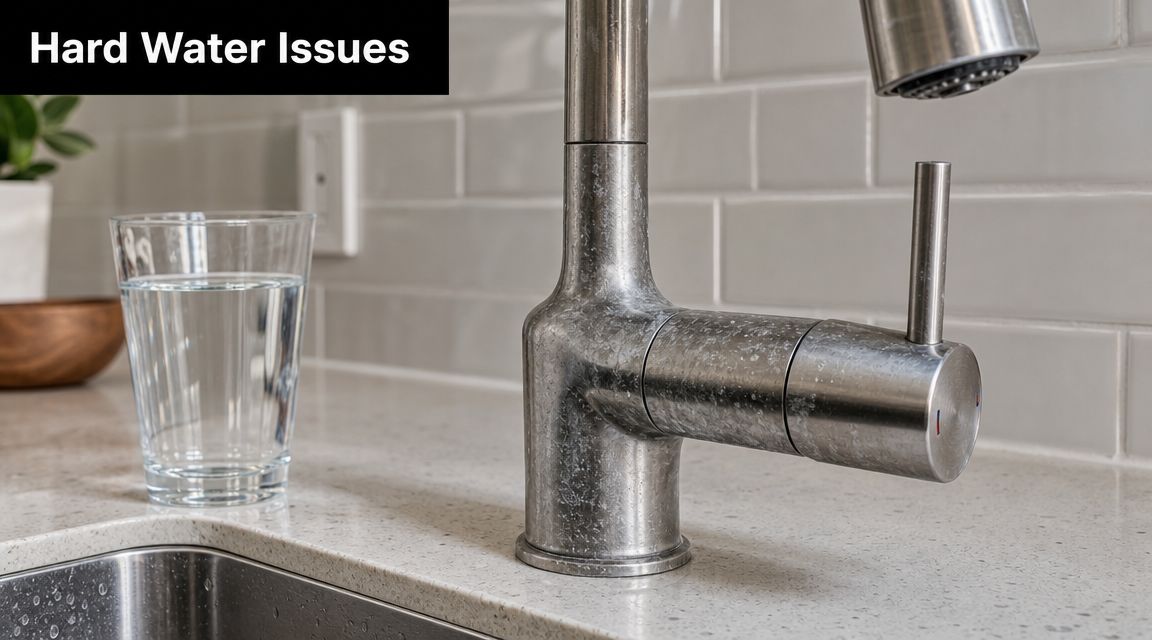
What homeowners usually notice first
In Lakewood Ranch, the complaint depends on the water source. Municipal customers usually bring up chlorine taste, odor, or scale on fixtures. Well-water homeowners often deal with iron staining, sulfur smell, sediment, or water that changes after heavy rain. Those are different problems, and they do not all call for the same fix.
That is the part many companies skip.
A reverse osmosis system in Lakewood Ranch, FL is often a strong choice for drinking water at the kitchen sink, especially when taste, odor, or dissolved contaminants are the concern. It is not usually the first tool I reach for when the main complaint is hard-water spotting on glass, scale in pipes, or iron stains in showers. Those point to conditioning or pretreatment issues, not just drinking-water purification.
Clean-tasting water and properly treated water are not always the same thing. Some homes need one solution. Plenty need two that work together.
Why legal compliance still leaves room for improvement
Water can meet federal standards and still leave a homeowner with good reasons to add treatment. The Environmental Working Group's tap water database for the local utility reports 3 contaminants above health guidelines while still showing the supply in compliance with legal limits, according to the EWG tap water database entry for Lakewood Ranch.
That gap matters in real life. Legal does not always mean ideal for taste, appliance protection, or personal comfort.
Homeowners are not overreacting when they ask harder questions about what is coming out of the tap. Analysts at Grand View Research reported that the global reverse osmosis systems segment was projected to generate USD 12,643.0 million in revenue in 2025 and reach USD 24,123.9 million by 2033, with an 8.6% compound annual growth rate from 2026 to 2033, according to Grand View Research's reverse osmosis systems market data. That growth does not prove every house needs RO. It does show that more homeowners are looking for more than minimum compliance.
A practical water review usually starts with the problems you can see, taste, and measure:
- Taste and odor complaints: Chlorine, flat taste, or off flavors in coffee, ice, and cooking water.
- Mineral buildup: Spots on dishes and scale on fixtures usually point to hardness. RO can help at a faucet, but it does not replace a whole-home softening strategy.
- Well-water swings: Iron, sulfur, sediment, and occasional microbial concerns need the right pretreatment before RO is even part of the conversation.
- Appliance trouble: Icemakers, kettles, espresso machines, and tankless heaters often show water problems early because they are less forgiving.
For many Lakewood Ranch homes, the right upgrade is not "an RO system" by itself. It is a matched treatment plan. RO may be the drinking-water piece, while a softener, carbon filter, iron filter, or disinfection step handles the rest of the house.
How Reverse Osmosis Delivers Exceptionally Pure Water
You notice it first at the kitchen sink. Tap water looks clear enough, but coffee tastes flat, ice carries a faint chlorine note, and the kettle keeps building scale. That is the point where many Lakewood Ranch homeowners start asking what RO does, and whether it belongs in the house at all.
RO uses household water pressure to force water through a semi-permeable membrane. The membrane allows water molecules through while blocking many dissolved salts, metals, and other impurities. The treated water goes to a storage tank or faucet. The rejected contaminants go out through a drain line.
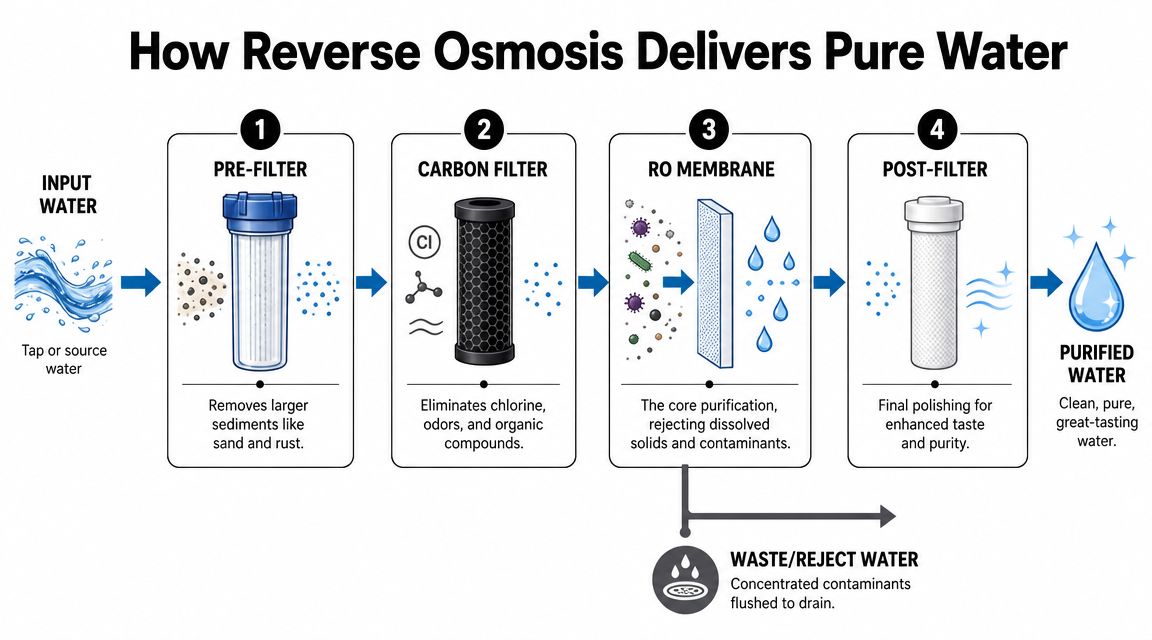
The short version of how RO works
A residential RO unit is usually a staged system, not a membrane working alone. Each stage has a job, and the system only performs well when those stages are matched to the incoming water.
- Sediment prefiltration removes sand, silt, and rust that can foul the membrane early.
- Carbon filtration reduces chlorine and organics that affect taste and can damage certain membranes.
- The RO membrane removes a large share of dissolved contaminants that basic filters leave behind.
- A polishing filter cleans up taste at the final faucet.
That setup is why RO water tastes different from water coming through a refrigerator cartridge or a pitcher filter. Those products can improve taste. RO goes further by reducing many dissolved solids, not just screening out larger particles.
Why reject water matters
RO always makes two streams. One is purified water. The other is reject water that carries concentrated contaminants to the drain. That is normal operation, not a defect.
What does vary is efficiency. Some systems waste far more water than others, and that matters in day-to-day ownership. It also matters in service calls, because low pressure, clogged prefilters, or poor system design can make a unit perform badly even if the membrane itself is fine.
My advice is simple. Compare RO systems on three things before you compare them on marketing claims. Look at drain ratio, pressure requirements, and how easy the filters are to change.
For many Lakewood Ranch homes, RO works best as the drinking-water part of a larger treatment plan. If the house also has hard water, RO will protect the faucet where it is installed, but it will not stop spotting on shower glass or scale in the water heater. That is where a home water softening system for hard water problems often supports the RO system instead of competing with it.
That is the piece many companies skip. RO is excellent at producing cleaner tasting water at the tap. It is not a substitute for every other form of treatment. The right setup depends on whether your main problem is taste, hardness, sediment, well-water contaminants, or some combination of them.
Under-Sink vs Whole-House RO Systems
Homeowners often get steered wrong. They ask for "an RO system" as if there's one category, when the core question is where you want RO-treated water and why.
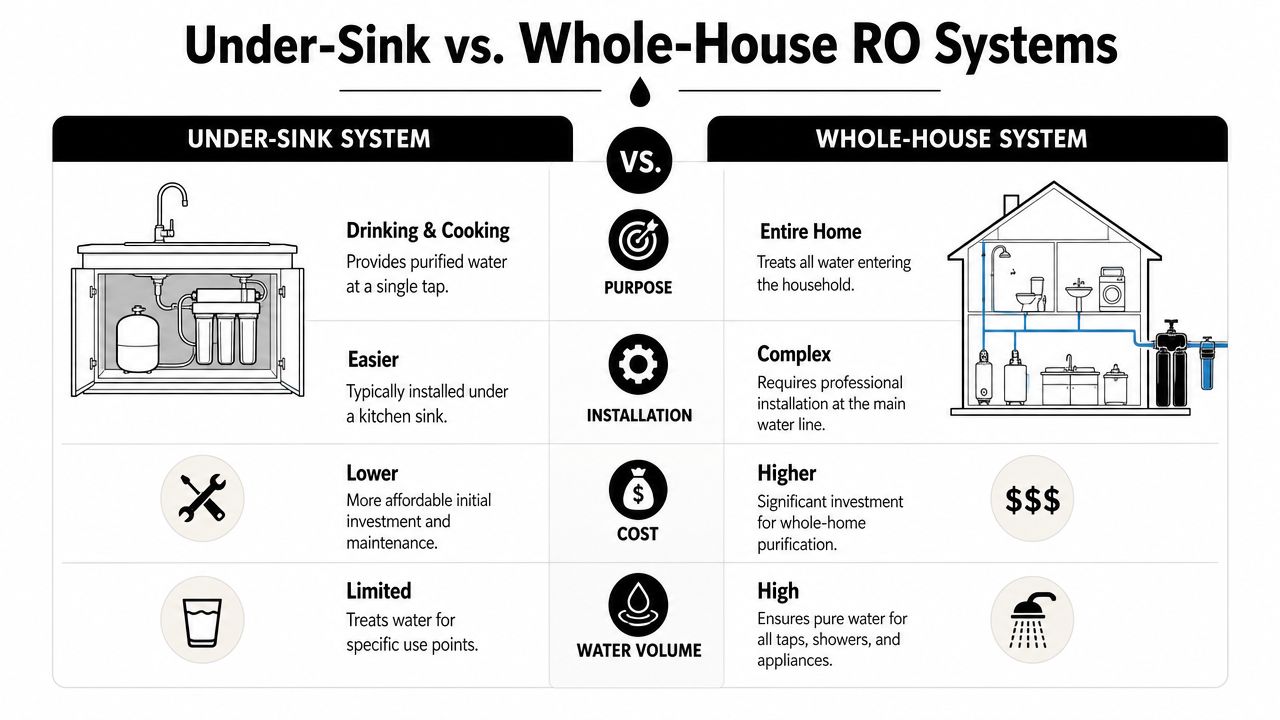
When under-sink RO makes sense
For most municipal-water homes, under-sink point-of-use RO is the practical starting point. It treats the water you drink and cook with, usually at a dedicated kitchen faucet. That keeps the footprint manageable and focuses purification where it matters most.
It's usually the right fit when the main complaints are:
- Drinking-water taste: You want better water for glasses, ice, coffee, tea, and cooking.
- A final barrier at one tap: You want an extra purification step at the sink rather than throughout the house.
- Limited space: The system needs to fit under a cabinet or in a nearby utility area.
- Simpler service: Fewer treatment points usually mean less complicated upkeep.
If your bigger issue is hard water scale throughout the house, under-sink RO won't fix spots on shower glass or mineral buildup on fixtures. For that, homeowners often look at broader conditioning, such as a home water softening system, and then decide whether to add RO at the kitchen sink for drinking water.
When whole-house RO enters the conversation
Whole-house RO is a different animal. It treats water at the point of entry so the entire home receives RO water. That can be useful in select situations, but it isn't the default recommendation for most Lakewood Ranch homes.
A quick side-by-side view helps:
| System type | Best use | Main advantage | Main drawback |
|---|---|---|---|
| Under-sink RO | Drinking and cooking water | Targets the water you consume most | Doesn't address whole-house water conditions |
| Whole-house RO | Entire-home purification in special cases | Delivers RO-treated water throughout the property | Requires more space, planning, and support equipment |
Whole-house RO becomes more realistic when raw water conditions are especially challenging, when a property has a specific treatment goal at every tap, or when other methods alone can't get the home where it needs to be. Even then, pretreatment and storage strategy matter.
A whole-house RO system isn't just a bigger under-sink unit. It needs a treatment train, proper sizing, and a home that can support it.
For most families, the smarter path is often a combination: condition the incoming water for hardness or nuisance contaminants, then use RO as the final drinking-water step where it adds the most value.
Is an RO System the Complete Solution for Your Home
No. Not by itself.
That's the part many homeowners need to hear before they spend money. RO is excellent for dissolved contaminant reduction at the point of use. It is not a cure-all for every Florida water problem.
What RO does well and what it doesn't
RO shines when the goal is purified drinking water. But if your actual problem is hard water, iron staining, sulfur odor, sediment, or broader well-water issues, an RO membrane can become the wrong first tool. In some homes, it becomes an expensive victim of poor pretreatment.
The FDA's guidance on RO makes this clear. Feed water should be prefiltered and adjusted to proper pH, with suspended solids controlled within design limits. The same guidance notes that higher feed TDS requires higher pressure, and practical recovery commonly falls in the 50% to 85% range depending on feed characteristics, according to the FDA's reverse osmosis inspection technical guide.
That has a direct Florida application:
- Hardness can scale membranes
- Iron can foul membranes
- Chlorine can damage components if the system isn't designed around it
- Sediment can plug prefilters and reduce output
- Sulfur and nuisance well contaminants often need separate treatment first
Why treatment sequence matters in Florida
A good design starts with the water test, not the product brochure. If a home has hard water, the right answer may include a softener ahead of RO. If it's on a private well with iron, sulfur, sediment, or microbial concerns, the treatment plan may need multiple stages such as filtration, conditioning, and possibly disinfection before a drinking-water RO unit is added.
The CDC notes that private wells aren't regulated under the Safe Drinking Water Act and should be tested regularly for contaminants. That's one reason well-water homes often need a more specific approach than city-water homes. If your property uses a well, a broader well water treatment approach may need to come first.
Florida Water Management offers free water testing and can use those results to recommend whether RO should stand alone as a point-of-use system or be paired with other treatment. That's the right order. Test first. Then size and sequence the equipment.
If an installer jumps straight from "You want better water" to "Here's the RO unit," they're skipping the most important part of the job.
The best setup is often less glamorous than the sales pitch. It's a properly sequenced system that matches the water you have.
Installation Maintenance and Long-Term Costs
A reverse osmosis system is not a set-it-and-forget-it appliance. It needs correct installation, periodic service, and realistic expectations about pressure and output.
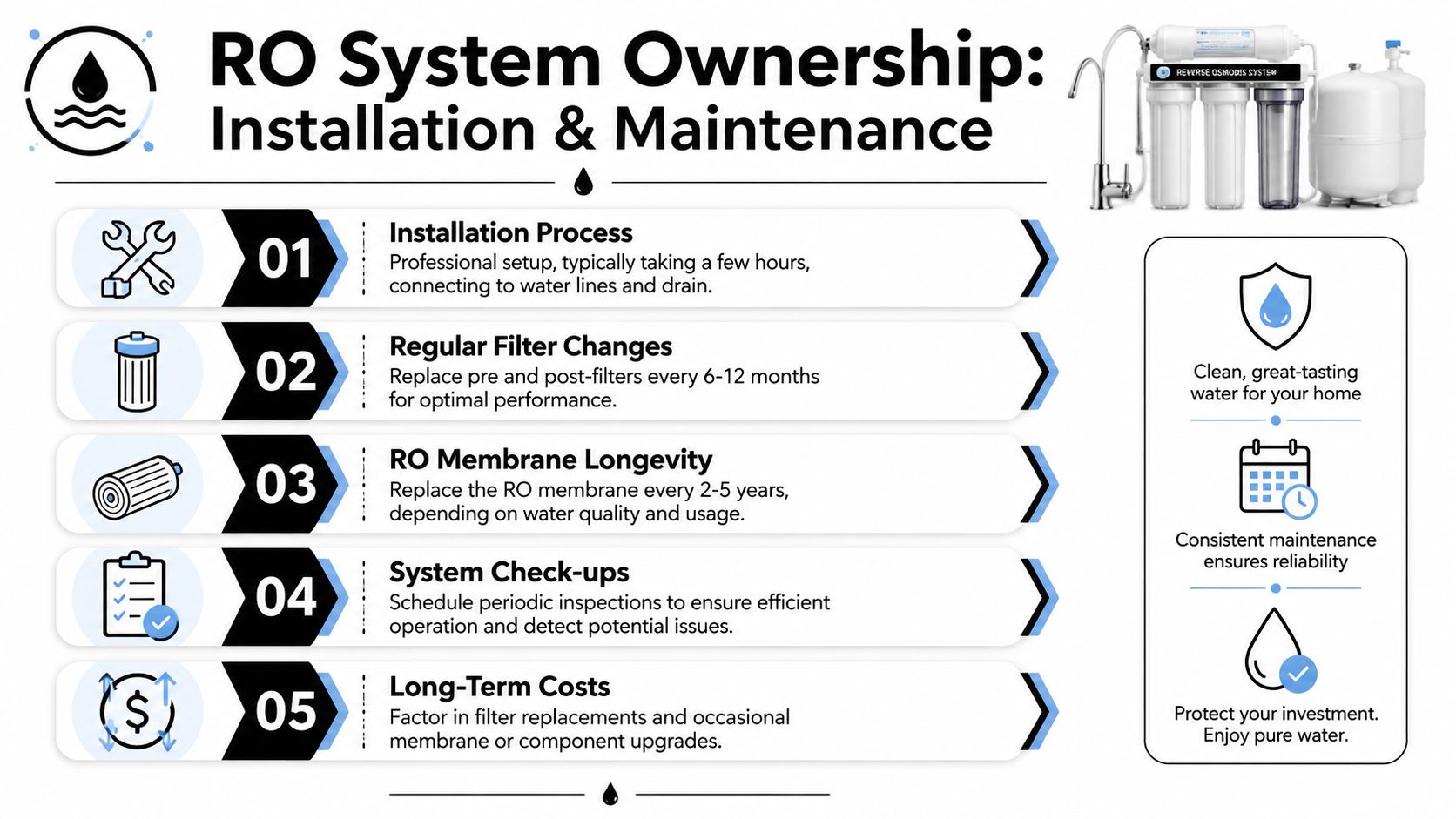
What installation usually involves
An under-sink installation generally means tying into the cold-water supply, setting the faucet, connecting the drain line, placing the filters and membrane, and verifying that the unit is producing and flushing correctly. Tankless systems can save cabinet space, but they tend to be more sensitive to steady pressure and proper setup.
A whole-house installation is much more involved. It usually requires pretreatment, space planning, drain strategy, and enough room to service components without turning every filter change into a project.
Most local content focuses on what RO removes. Homeowners usually ask more practical questions:
- How often do filters need to be changed
- What happens if water pressure is inconsistent
- Will a tankless unit keep up with family use
- How do you know the membrane is still performing
- What service calls should you expect over time
Recent industry coverage on tankless reverse osmosis maintenance and performance points to the same gap. Filter replacement schedules, pressure effects, and the maintenance needs of tankless units often get less attention than they should.
What homeowners should ask before buying
Instead of focusing only on the sticker price, ask for the ownership picture.
| Question | Why it matters |
|---|---|
| What pretreatment does my water need first? | Poor feed water shortens membrane life and hurts performance |
| Is this unit sensitive to pressure changes? | Output and convenience depend on stable operating conditions |
| How easy is it to service? | Hard-to-access systems get neglected |
| What parts will I replace regularly? | Consumables are part of the long-term budget |
| Is the system sized for how we use water? | A mismatch creates slow production and frustration |
For budgeting, it's smart to review a broader home water filtration system cost overview and then compare that with the expected maintenance needs of the specific RO setup being proposed.
Maintenance is where homeowners decide whether they still like their RO system two years later.
Tankless RO can be a strong option when space is tight and you want a compact footprint. Traditional tank systems can still make sense when steady reserve volume matters more than footprint. Neither is automatically better. The better choice is the one that matches the home's pressure, feed water, and daily use pattern.
Choosing a Qualified Installer in Lakewood Ranch
A qualified installer does more than hang equipment under a sink. They should be able to explain why a system belongs there, what pretreatment it needs, and how you'll maintain it without guesswork.
What to verify before you hire anyone
Use a short checklist:
- Local water experience: Ask whether they work with both municipal and private-well water in Florida.
- Real testing: A proper evaluation goes beyond a quick handheld reading.
- Treatment sequencing: They should explain what happens before and after the RO unit.
- Service clarity: Ask who changes filters, checks performance, and handles troubleshooting later.
- Written scope: You want a clear description of equipment, placement, and follow-up responsibilities.
A good installer should be comfortable telling you that RO isn't the whole answer if your main issue is hardness, iron, sulfur, or broader whole-house water quality. That's usually a sign you're getting advice instead of a canned pitch.
If you want a clear recommendation for your home, start with a free water test and request a plan through the Florida Water Management contact page. That's the fastest way to find out whether a reverse osmosis system in Lakewood Ranch, FL is the right solution by itself or one part of a better overall setup.
Frequently Asked Questions About RO Systems
Does RO remove beneficial minerals
Yes, RO reduces dissolved solids, which can include minerals in the water. Most homeowners choose RO because they want a cleaner-tasting, more purified drinking-water source. Whether that matters to you depends on your goals and the rest of your diet.
How is RO different from a pitcher or faucet filter
A standard pitcher or faucet filter usually focuses on basic taste and odor improvement. RO uses a membrane-based process with multiple treatment stages, so it's built for a much higher level of purification at the point of use.
Will an RO system lower water pressure at the sink
It can affect output if the system is poorly matched to the home or if incoming pressure is inconsistent. That's especially important with tankless units. Proper sizing, pretreatment, and installation make a big difference.
Is RO a good fit for private well water
Often yes, but well water usually needs more careful planning. If the well has iron, sulfur, sediment, hardness, or microbial concerns, those should be addressed in the right sequence so the RO system isn't asked to do a job it wasn't designed for.
If you'd like a clear answer for your own home, schedule a free water test with Florida Water Management. You'll get a practical recommendation based on your actual water, whether that means an under-sink RO unit, pretreatment ahead of RO, or a different treatment plan altogether.