

You notice it first in small ways. The dishes come out of the washer with a cloudy film. Towels feel rough again. Soap doesn't lather like it used to, and the shower door starts collecting that familiar haze. Around Central Florida, especially in homes on private wells, those signs usually mean your softener isn't keeping up.
Most water softeners don't fail all at once. They slip. A little salt crust forms in the brine tank. Iron starts coating the resin. The venturi gets dirty. Regeneration still happens, but not the way it should. That's why a good water softener maintenance schedule matters. It keeps a manageable chore from turning into a system problem.
Table of Contents
- Why Your Water Softener Needs Regular Attention
- Your Water Softener Maintenance Calendar at a Glance
- Essential How-To Procedures for Peak Performance
- Troubleshooting Common Water Softener Issues
- Special Considerations for Central Florida Well Water
- When to Skip DIY and Call Florida Water Management
Why Your Water Softener Needs Regular Attention
A softener can look fine from the outside and still be underperforming. That's what catches homeowners off guard. The tank is full of salt, the display is on, and the unit hasn't shown an obvious failure. Meanwhile, hard water signs creep back into the house.
In Central Florida, I've seen that happen most often when a system goes too long without simple upkeep. Salt can harden into a bridge above the water line. Fine salt can turn into mush at the bottom of the brine tank. On well water, iron can foul the resin and gradually rob the system of its ability to soften consistently.
Those aren't cosmetic issues. They change how the softener regenerates, how much salt it uses, and whether your home gets treated water at all.
Practical rule: If your water feels different before your system looks broken, assume maintenance is due before assuming the whole unit has failed.
A regular schedule protects three things at once:
- Water quality: Soft water stays consistent when regeneration happens properly.
- Equipment life: Clean components last longer than neglected ones.
- Repair costs: Small maintenance jobs are cheaper and easier than major valve or resin work.
Your local water conditions matter just as much as the machine itself. A home supplied by city water behaves differently from a home on a well with iron or sulfur. If you're not sure what hardness level you're dealing with, this guide to understanding water hardness levels is a useful place to start.
The biggest mistake I see is homeowners treating all softeners the same. They aren't. The right schedule depends on how hard your water is, how much water your household uses, and whether your supply brings extra trouble like iron staining or rotten-egg odor. A maintenance plan works best when it matches the water going through the system, not just the brand name on the tank.
Your Water Softener Maintenance Calendar at a Glance
A lot of Central Florida homeowners find out their softener needs attention on a Saturday morning. The shower starts feeling tacky, the glasses come out spotted, or the sulfur smell seems stronger than usual on a well system. By that point, the problem has usually been building for a while.
A calendar works better than guesswork, especially in homes dealing with hard water, iron, or sulfur. The goal is a routine you can realistically follow. Annual professional service, monthly salt checks, and brine tank cleaning every 3 to 6 months are widely recommended maintenance intervals for residential softeners (qualitywatertreatment.com water softener maintenance guidance).
Here's the version I'd keep on the wall in a garage or utility room.
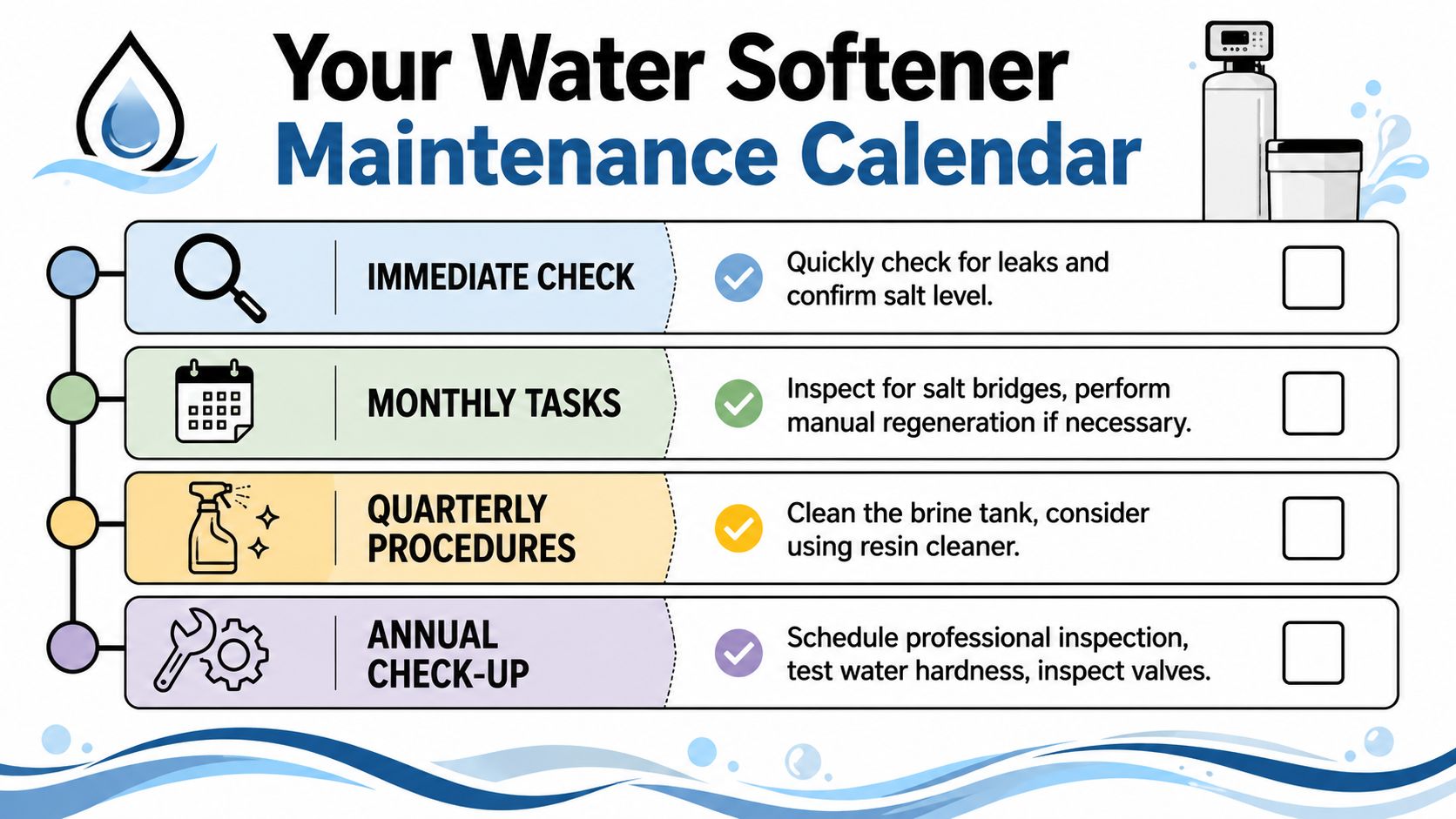
Immediate checks
Each time you pass the system, take half a minute and look at it.
- Check for leaks: Look at the floor, plumbing connections, and the base of the brine tank.
- Confirm the display is on: A blank screen, wrong time, or error code can throw off regeneration.
- Lift the lid: Salt should be loose and usable, not hardened into a crust.
These quick checks matter more on Central Florida well water. Iron and sulfur problems can push a struggling system from "mostly working" to obvious trouble fast.
Monthly tasks
Monthly attention prevents the service calls I see most often.
| Task | What to do | Why it matters |
|---|---|---|
| Salt check | Open the brine tank and check the level and texture | Low salt or hardened salt can stop proper regeneration |
| Bridge check | Probe the salt surface gently for hollow spots | A salt bridge can leave the system starved for brine |
| Exterior inspection | Look for corrosion, damp spots, or salt residue | Early leak detection protects flooring, valves, and fittings |
Most city water homes can stay on that schedule without much trouble. Homes with heavier water use, outdoor irrigation tied into household demand, or well water with iron often need closer attention. If you want to reduce wasted salt and regen cycles, it helps to understand the habits that improve water softener efficiency.
A softener rarely asks for attention loudly. Its signs are subtle, like spotting on fixtures, stiffer laundry, or soap that stops rinsing the way it did a month ago.
Quarterly procedures
Every few months, handle the work that goes beyond a quick inspection.
- Clean the brine area: Remove sludge, salt mush, and residue before they interfere with brine draw.
- Test hardness at a tap: This shows whether the softener is treating the water.
- Watch regeneration behavior: If the unit runs at odd times, skips cycles, or seems to use salt without improving water quality, something needs attention.
On Central Florida well systems, I would not stretch this interval if you already deal with iron staining or rotten egg odor. Those homes put more stress on the resin and control components than a typical city water setup.
Annual service
Annual service is where homeowners should stop guessing.
A proper visit should include inspection of the control valve and resin bed, because those are the parts that determine whether the unit is softening water or just cycling salt and water through the tank. Resin problems, injector fouling, and valve wear are easy to miss until the house starts showing hard water symptoms again.
Use this as your yearly checklist:
- Schedule a professional inspection: Have valve operation, settings, and system performance checked.
- Check resin condition: Resin can foul faster on well water with iron or sulfur.
- Confirm actual softening performance: Make sure the unit is regenerating on schedule and delivering treated water throughout the home.
For many Central Florida homes, especially on a private well, the annual visit is also the point where it makes sense to ask whether the softener is dealing with the water you currently have. Sometimes the underlying issue is not neglect. It is that the home needs iron or sulfur treatment ahead of the softener, and that is when a local pro like Florida Water Management can save you from chasing the wrong fix.
Essential How-To Procedures for Peak Performance
A homeowner in Ocala or Deltona usually notices the same pattern first. Soap stops rinsing clean, the shower door starts spotting again, or the sulfur smell creeps back after the softener seemed fine a month ago. In Central Florida, that often points to skipped maintenance in the brine side of the system, not an immediate equipment failure.
The safest homeowner work falls into three areas: keeping the salt in good shape, cleaning the brine tank before sludge builds up, and protecting the resin and brine-draw parts from iron fouling. Stay in that lane and you can prevent a lot of service calls without getting into valve programming or disassembly.
Manage Salt the Right Way
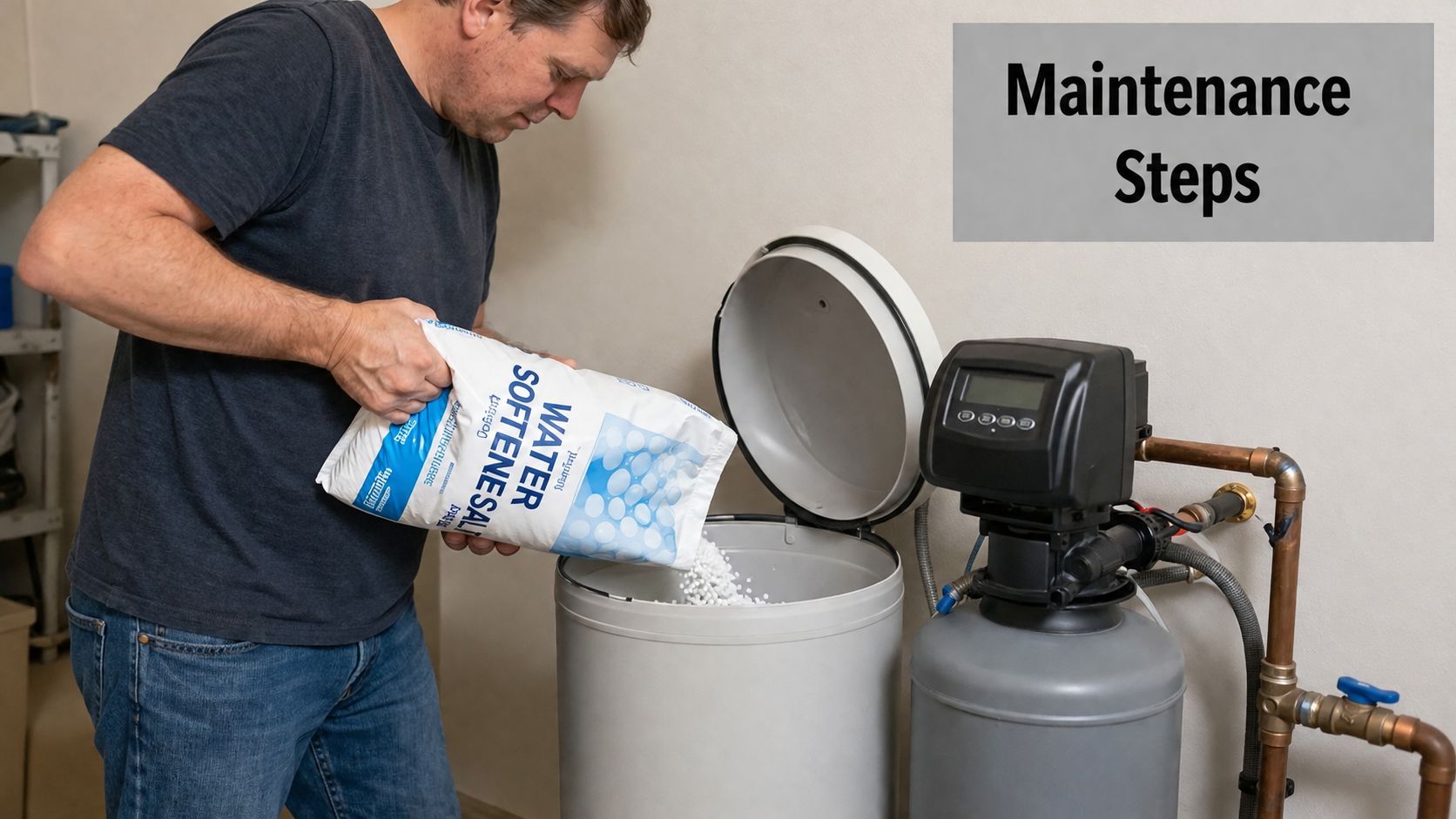
Salt level matters, but salt condition matters just as much. A tank that looks full can still fail to make brine if the salt has bridged into a hard crust or turned to mush at the bottom.
Check the tank regularly and keep enough pellet salt on hand so the system does not run low between visits. Do not fill it to the top. In Florida garages and utility rooms, extra humidity makes overfilled tanks more likely to cake up and form bridges.
Use this routine:
- Open the lid and look at the salt surface. Loose pellets are fine. A solid sheet or dome is not.
- Probe the salt gently with a broom handle. If you feel a hollow pocket under a hard top layer, the salt has bridged.
- Break the bridge carefully. Work slowly so you do not crack the tank or damage internal parts.
- Add clean softener pellets as needed. Stick with salt made for water softeners.
After fixing a salt problem, run a manual regeneration if your model allows it and the manufacturer instructions support it. If you want to reduce wasted salt and water, this guide to water softener efficiency is a useful reference for what proper cycling should look like.
Clean the Brine Tank Before Sludge Causes Trouble
Brine tanks do not need constant scrubbing, but they do need periodic cleaning. On city water, buildup tends to be slower. On Central Florida well water, iron, sediment, and humidity can turn the bottom of the tank into a sludge pit faster than many homeowners expect.
Clean it in this order:
- Shut off or unplug the unit if your model calls for that before service
- Remove loose salt so you can reach the bottom
- Scoop out salt mush, sludge, and debris
- Wash the tank interior with mild soap and water
- Rinse it well before adding new salt
A dirty brine tank can make the softener act like the valve or resin has failed when the underlying problem is poor brine production. I see that a lot on well systems with iron staining. The homeowner keeps adding salt, but the unit still cannot draw clean brine consistently.
Keep the tank clean enough that the softener can make brine reliably. A dirty tank can make a healthy control head look guilty.
Protect the Resin and Venturi
The resin bed does the actual softening. The venturi, sometimes called the injector, helps pull brine during regeneration. Both parts take a beating on Central Florida well water, especially where iron or sulfur shows up in the raw water.
Homeowners can help by using a resin cleaner approved for their softener and by inspecting the venturi on a regular schedule according to the manufacturer instructions. If iron is present, resin cleaner becomes more than a nice extra. It helps prevent fouling that ordinary regeneration may not remove.
A practical checklist looks like this:
- Use an approved resin cleaner as directed for your system
- Inspect and clean the venturi if your manual includes homeowner service steps
- Watch for repeat hard water symptoms soon after regeneration
- Pay attention to rust staining or sulfur odor returning quickly
Those last two points matter in this region. If soft water drops off again right after cleaning, or the unit keeps plugging up with iron residue, the softener may be treating water it was never meant to handle alone. In many Central Florida homes, that means the fundamental fix is upstream treatment for iron or sulfur, not more salt and more cleaning.
Troubleshooting Common Water Softener Issues
When a softener starts acting up, the symptom matters. “It's not working right” could mean no regeneration, poor brine draw, a bypass issue, resin fouling, or a valve problem. A smart first check saves time and keeps you from replacing parts that aren't the cause.
Hard Water Problems Are Back
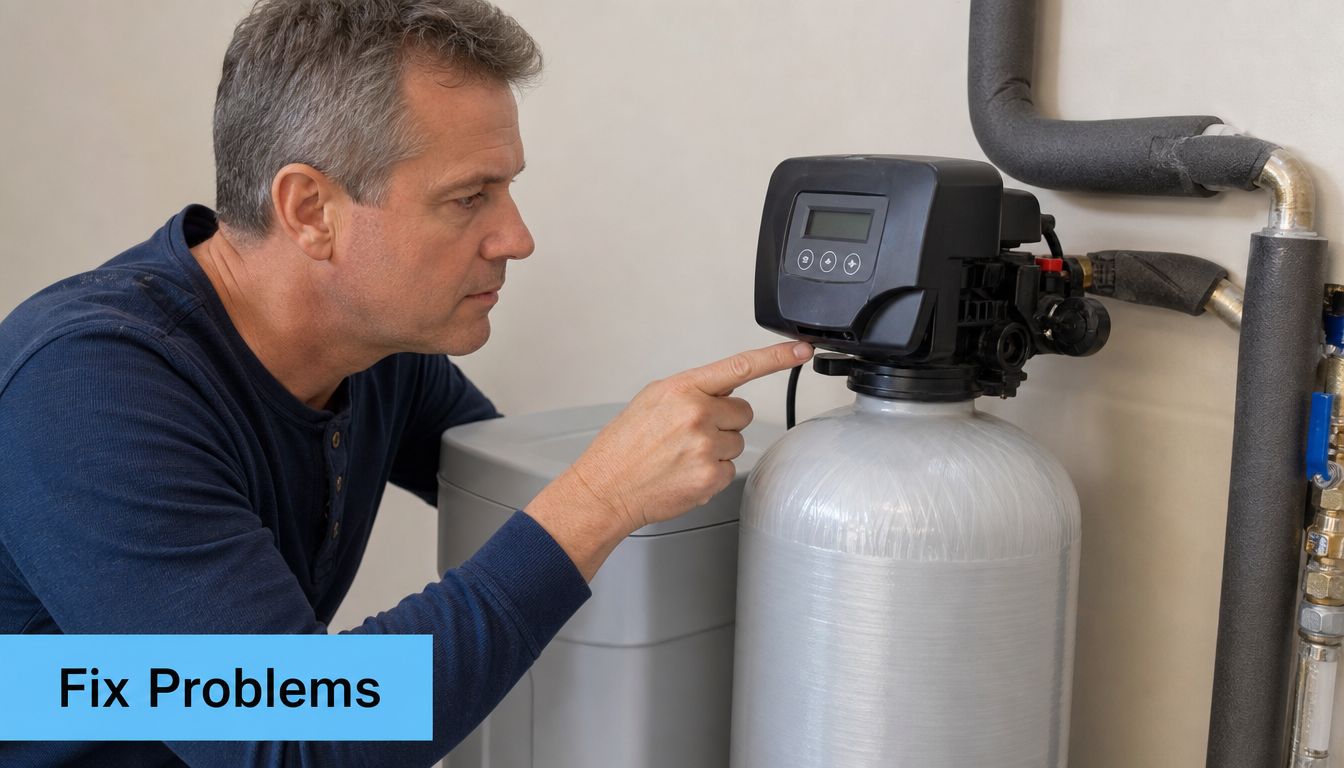
If dishes spot, soap stops lathering, or scale returns, start with the basics before assuming the whole system is done.
Check these first:
- Salt level: The tank may be low, bridged, or full of mush.
- Power and settings: A power interruption can reset timing on some units.
- Bypass position: It's common for a valve to be left in bypass after previous work.
- Recent regeneration: If it hasn't cycled properly, the resin may not be recharged.
If all of that looks normal and hard water remains, the issue may be resin fouling, injector blockage, or a control problem. At that point, a water softener repair service is the safer next step than random part swapping.
The System Sounds Wrong
Softener noises matter when they're new or unusual. A brief flow sound during regeneration is one thing. Grinding, repeated clicking, or extended buzzing is another.
Use a quick symptom guide:
| Symptom | Likely first check | When to stop DIY |
|---|---|---|
| Clicking that won't stop | Control head cycle position | If the cycle won't complete |
| Gurgling at odd times | Brine draw or drain line issue | If it repeats after cleaning |
| Humming with no action | Power or motor issue | If the unit won't respond to commands |
A homeowner can confirm power, inspect for clogs that are easy to access, and note when the sound occurs. A homeowner shouldn't tear into a motorized valve assembly without a clear diagnosis.
Strange noises during regeneration usually mean the system is trying to do its job and something is interfering. That interference may be minor, or it may be the early sign of valve trouble.
The Water Tastes Salty or Pressure Drops
These two symptoms deserve caution.
Salty-tasting water often points to a regeneration or valve issue, not a simple salt-level problem. If you notice this throughout the house, stop experimenting with settings and call for service.
A sudden drop in water pressure may mean sediment, fouling, a restriction in the treatment train, or a component that isn't flowing correctly. On well systems, pressure problems can also overlap with filters, pressure tanks, or pump-side issues.
Try these checks:
- Confirm the bypass isn't partially engaged
- Look for visible kinks or restrictions in accessible lines
- Check whether the issue affects the whole home or only certain fixtures
If pressure is low everywhere, or if salty taste appears house-wide, that's not the time for trial and error. Those symptoms point to problems that can affect both performance and water quality.
Special Considerations for Central Florida Well Water
You add salt on schedule, the softener runs, and the water still smells like sulfur or leaves orange stains in the toilet. That happens in Central Florida all the time, especially on private wells. The problem is often bigger than hardness alone.
Many national maintenance guides assume city water. That advice falls short on local wells where iron, hydrogen sulfide, and fine sediment show up together. A standard softener can handle hardness well, but iron can foul the resin, sediment can clog small passages, and sulfur odor usually points to a treatment need outside the softener itself.
That is why two homes on the same street can have very different maintenance needs. One may only need routine salt checks and occasional cleaning. Another may need regular resin cleaner, prefiltration, or a separate system for iron or sulfur control.
Culligan notes that softeners usually need periodic salt refills based on water hardness and household use, and that resin has a limited service life over time, according to Culligan's maintenance overview. On Central Florida well water, iron and sulfur can shorten the gap between service tasks even if the softener itself is working as designed.
The better approach is to match maintenance to the water, not to a generic calendar. In the field, that usually means paying attention to what the water is telling you.
- Orange or brown staining often means iron is loading the softener and fouling resin faster than normal.
- Rotten-egg odor usually means sulfur is present, and a softener alone is rarely the full fix.
- Frequent injector or venturi clogs often point to sediment or iron buildup upstream of the valve.
- Soft water that comes and goes can mean the unit is being overwhelmed by water conditions, not just a missed salt refill.
There is a real trade-off here. Asking one piece of equipment to handle hardness, iron, odor, and sediment keeps the setup simple, but it usually leads to more cleanings, more inconsistent results, and a shorter lifespan for parts that should last longer. A system built around the actual well chemistry takes more planning upfront, but it usually runs cleaner and needs fewer repeat service calls.
Homeowners in Central Florida get the best results when they treat local well water like a specific water quality problem, not a standard appliance maintenance task. That mindset prevents a lot of repeat trouble.
When to Skip DIY and Call Florida Water Management
A good water softener maintenance schedule gives homeowners a lot of control. You can check salt, break a bridge, clean a brine tank, and watch for early warning signs. That kind of routine prevents a lot of trouble.
What it can't do is replace diagnosis when a system has crossed from maintenance into repair. That's the line many homeowners wait too long to recognize.
Problems You Can Usually Handle Yourself
These are usually fair DIY territory when you're comfortable and careful:
- Low salt level
- A minor salt bridge
- Routine brine tank cleaning
- Basic visual leak checks
- Confirming the system isn't stuck in bypass
If the problem clears and stays cleared, you likely handled the right issue.
Problems That Need a Technician
These should move out of the DIY column quickly:
- Persistent hard water after normal maintenance
- Salty taste in household water
- Visible leaking from the unit or valve assembly
- Repeated error codes or display problems
- Motor, valve, or regeneration failures
- Sudden whole-home pressure loss connected to the treatment system
The smart move isn't to push DIY as far as possible. It's to protect the equipment, the plumbing, and the water quality in your home. If your system is fighting Central Florida well water, or if the same issue keeps returning, service is usually cheaper than repeated guesswork.
If your softener needs service, or you want a clearer picture of what's really in your water, contact Florida Water Management for professional help and a free water test through the contact page.