

You're probably reading this because something about your water already feels off.
Maybe your glasses come out of the dishwasher spotted. Maybe the shower leaves your skin tight and your hair dull. Maybe your well water smells like sulfur, or your city water tastes like a swimming pool. And when you start searching for the best water treatment company in Lake Wales, FL, every company seems to say the same thing: softeners, filters, reverse osmosis, great service, free estimate.
That's not enough. The key difference isn't the sales pitch or even the hardware. It's the process. A good company proves what's in your water, explains what matters, and matches the system to your actual water profile. A bad one jumps straight to a package deal.
If you want straight answers before you spend money, start by learning how to reduce water contamination at home and then get your water properly tested.
Table of Contents
- Why Safe Water Isn't Always Good Water
- Decoding Lake Wales Water Common Contaminants
- Matching the Right System to Your Water Problem
- How to Vet and Choose a Reputable Company
- The On-Site Consultation What to Expect and Ask
- Making Your Decision and Getting Started
Why Safe Water Isn't Always Good Water
A lot of Lake Wales homeowners get tripped up by one simple misunderstanding. Safe and pleasant to live with are not the same thing.
If you're on city water, that distinction matters. From April 2019 to March 2021, the City of Lake Wales water utility maintained 100% compliance with federal health-based drinking water standards. That means the municipal supply met federal health requirements during that period. It does not mean every home gets water that tastes great, feels good on skin, or leaves fixtures spotless.
What homeowners usually notice first
Homeowners often don't start with a lab report. They start with annoyance.
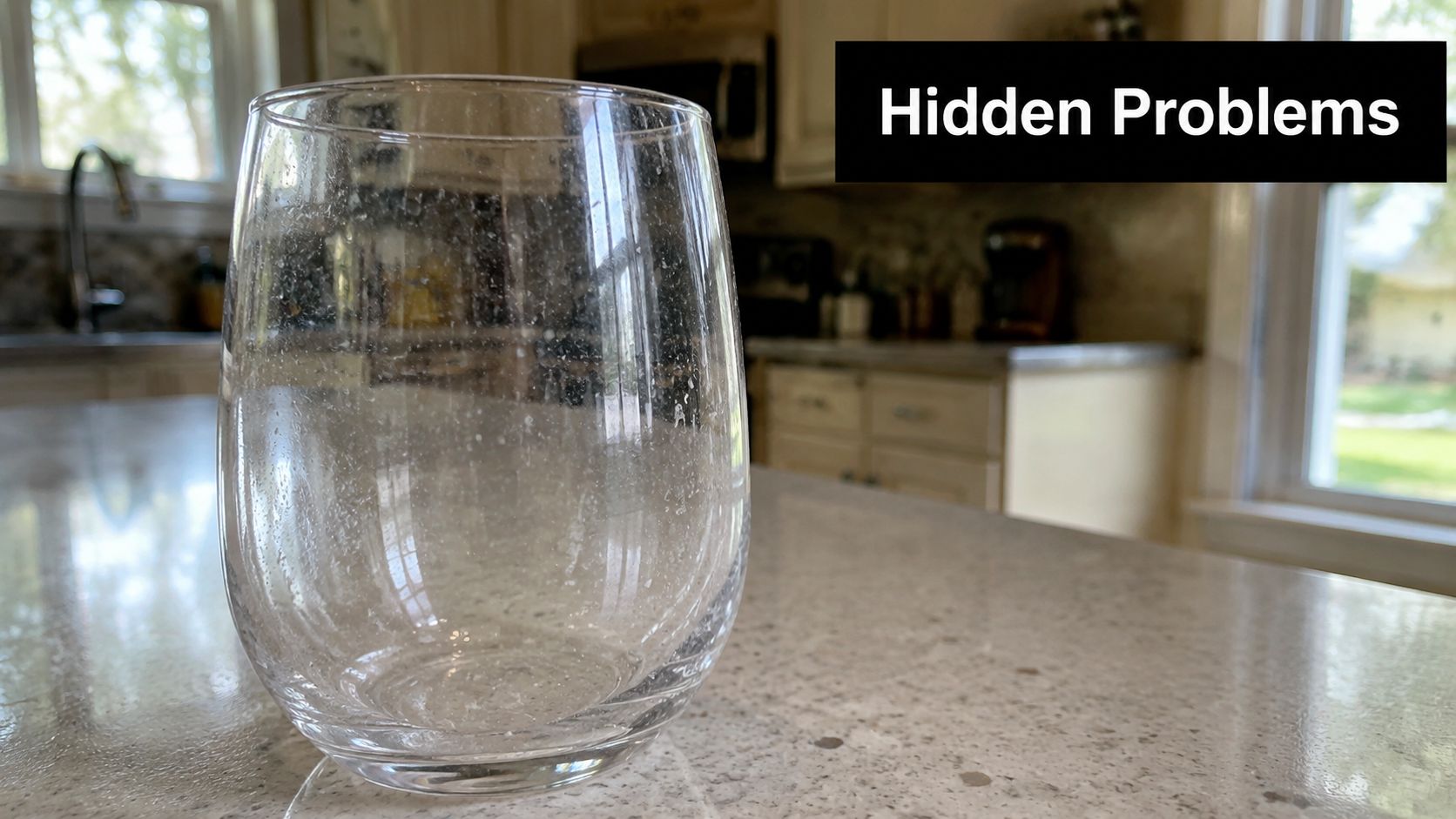
- Spots on dishes and glassware: Hard water leaves a chalky film that makes clean dishes look dirty.
- Dry skin and stubborn soap scum: Mineral-heavy water changes how soap behaves.
- Chlorine taste or smell: Water can meet standards and still be unpleasant to drink.
- Appliance wear: Scale buildup in water heaters, dishwashers, and fixtures creates daily frustration.
That's why people treat water that already passes the basic regulatory bar. They're not being paranoid. They're solving practical household problems.
Practical rule: Federal compliance tells you the water met health-based standards. It doesn't tell you whether that water is ideal for your plumbing, appliances, coffee maker, ice cubes, shower, or drinking taste.
Why that matters when choosing a company
The wrong company will use fear. The right company will use facts.
If a salesperson walks in and talks like your water is automatically dangerous without testing it, that's a red flag. If they also ignore the everyday issues that pushed you to look for help in the first place, that's another one. Water treatment should solve the problem you have, whether that's hard water scale, chlorine taste, iron staining, sulfur odor, or a combination.
A good consultation starts with your symptoms and verifies them. It doesn't skip straight to equipment.
For most homeowners, the smartest first step is simple: get a free water test from a company willing to show you what they found, explain it in plain English, and tie every recommendation to those results.
Decoding Lake Wales Water Common Contaminants
Before you can pick the right company, you need to know what that company should be looking for. In Lake Wales, the usual water problems aren't mysterious. They show up in your sinks, laundry, shower, and drinking glass.
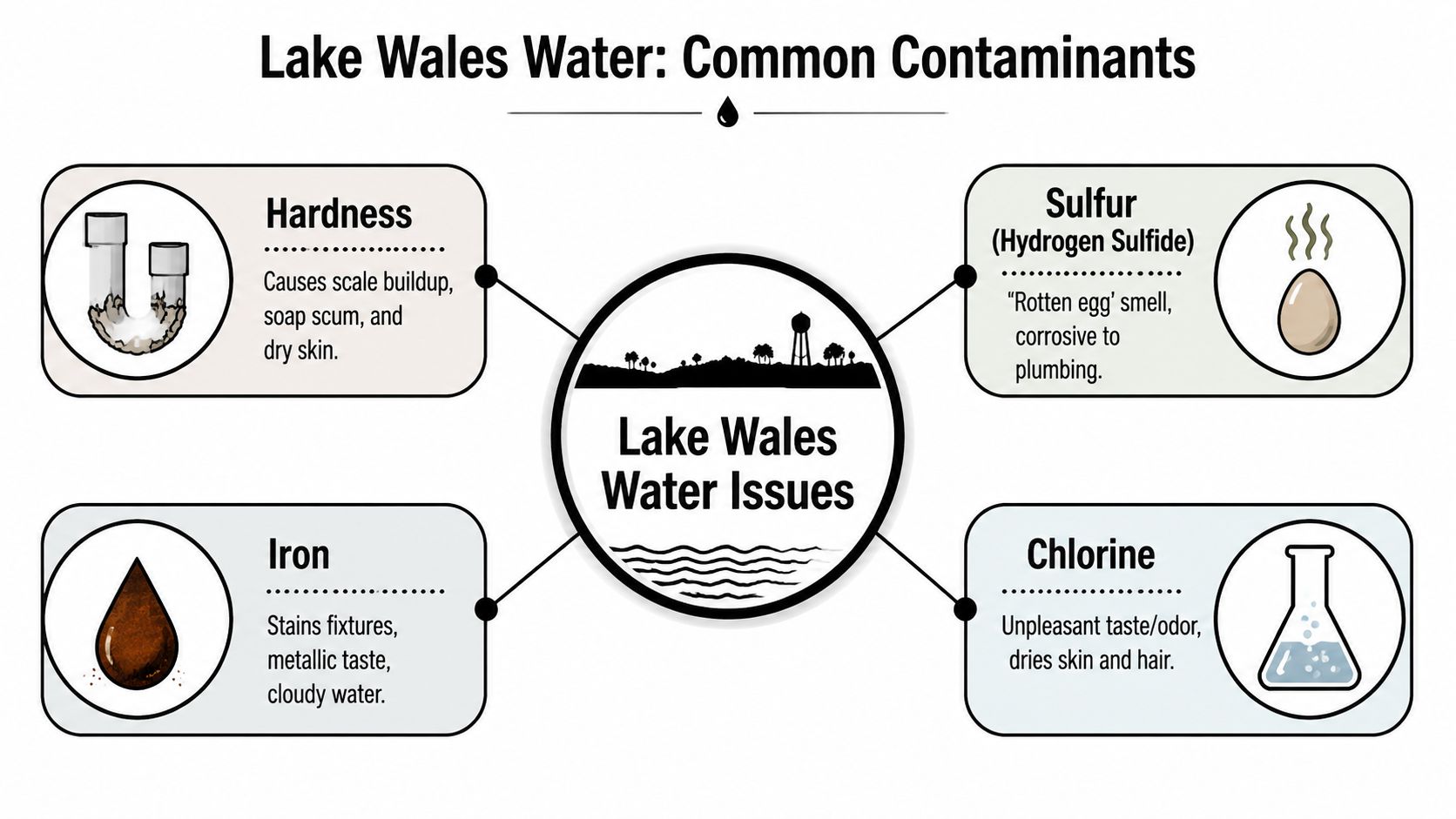
Hardness leaves clues all over the house
Hard water is one of the most common complaints in Central Florida. You'll usually notice it before anyone says the word “hardness.”
Look for these signs:
- White scale on faucets and shower glass: Minerals dry on the surface and build up fast.
- Soap that won't rinse clean: Your shower can feel filmy even when you just cleaned it.
- Stiff laundry: Towels feel rough instead of soft.
- Shorter appliance life: Mineral buildup is rough on anything that heats water.
If these symptoms sound familiar, it helps to understand your local water hardness levels and what they mean for your home.
Sulfur and iron are classic well-water headaches
If you're on a private well, two problems come up again and again in Polk County. Private well water systems in Polk County show a 42% incidence of sulfur (hydrogen sulfide) contamination and a 28% incidence of elevated iron levels, and both require specialized filtration not addressed by standard carbon filters.
That matters because too many homeowners buy the wrong filter first.
Sulfur
Sulfur usually announces itself with a rotten egg smell. It can make cold water unpleasant, hot water worse, and the whole house feel like there's a plumbing problem when the problem lies with the water itself.
Common signs include:
- Rotten egg odor at the tap
- Bad-smelling showers
- Corrosive effects on plumbing over time
Iron
Iron tends to leave visible evidence.
- Orange or brown staining in sinks, tubs, and toilets
- Metallic taste
- Cloudy or discolored water
Standard carbon filtration is not the answer for sulfur or iron. If a company tries to solve those problems with a simple basic carbon unit, keep looking.
Chlorine is different from a well-water problem
Municipal water issues usually look different from private well issues. City-water homeowners often complain about taste, odor, or dry skin rather than rust stains or sulfur smell. Chlorine and chloramine residuals are common reasons people say their water is technically fine but unpleasant.
That's the difference homeowners need to understand. Not every bad water experience points to the same fix. Hardness, chlorine, sulfur, and iron each behave differently. If the company you're talking to treats them like the same problem, you're talking to a seller, not an advisor.
Matching the Right System to Your Water Problem
Many people often waste money. They buy a piece of equipment they've heard of instead of the system their water truly needs.
If you have hard water, you need a softener
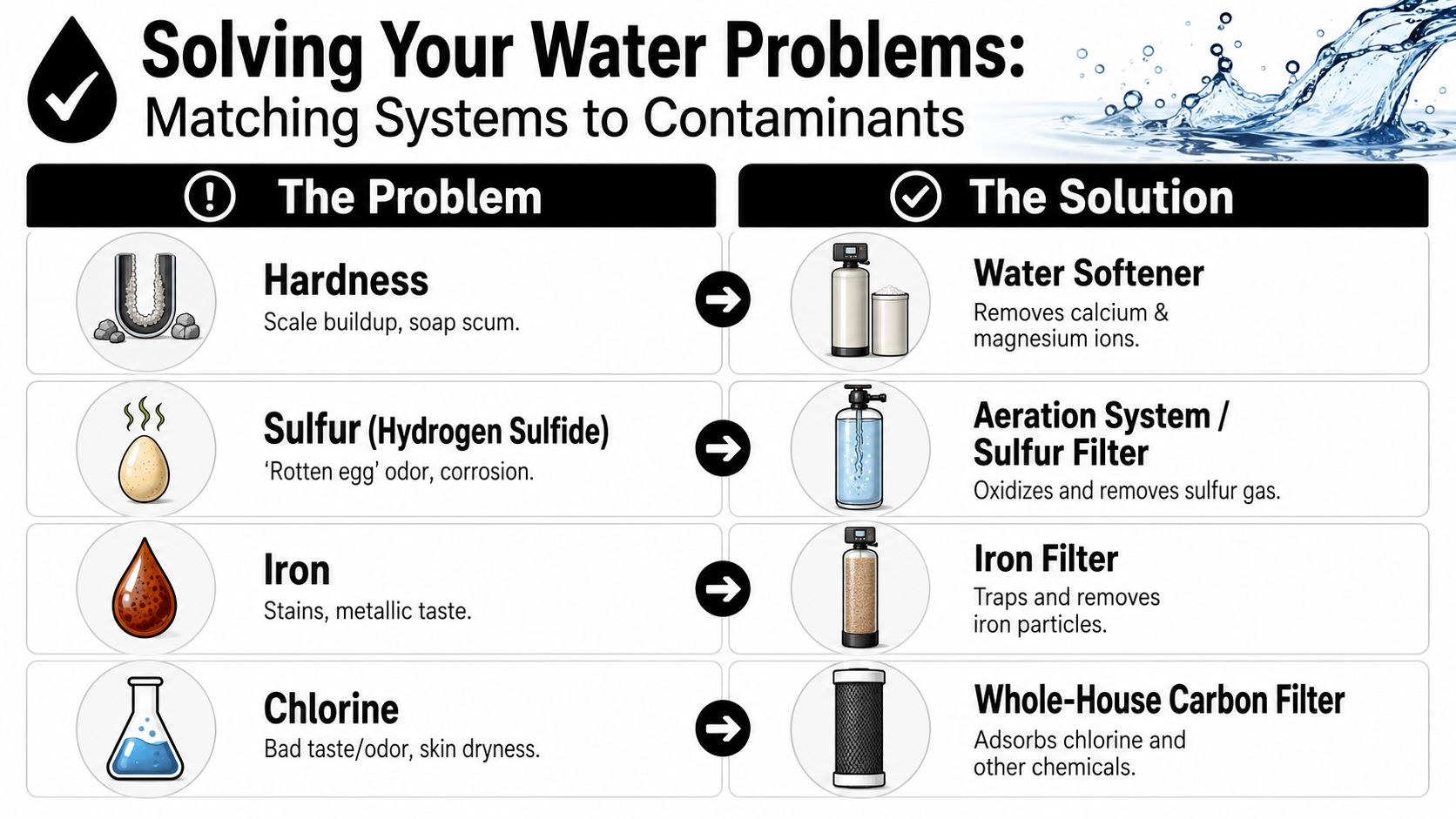
Hardness is a mineral problem. The standard solution is a water softener, which removes calcium and magnesium ions that cause scale buildup and soap scum.
A softener is the right fit when you have:
- Scale on fixtures
- Cloudy glassware
- Dry skin after bathing
- Reduced soap performance
A softener is not a catch-all drinking water purifier. It targets hardness.
If chlorine taste is the issue, use carbon filtration
When the main complaint is taste, odor, or that “treated” smell from municipal water, a whole-house carbon filter usually makes more sense than a softener alone. Carbon media is designed to reduce chlorine-related taste and odor problems.
That's a comfort and quality-of-life solution. It's especially popular with homeowners who want better shower water and better tap water throughout the home, not just at the kitchen sink.
Sulfur and iron need specialized treatment
Sulfur and iron are where bad recommendations show up fast. These contaminants usually require oxidation, aeration, or specialty filtration designed for those exact issues.
Here's the blunt version:
| Water problem | Usually the right type of solution | What not to expect |
|---|---|---|
| Hardness | Water softener | Won't handle sulfur odor by itself |
| Chlorine taste and odor | Whole-house carbon filter | Won't fix iron staining |
| Sulfur odor | Aeration system or sulfur filter | Basic carbon alone usually won't solve it |
| Iron staining | Iron filter | A softener alone may not be enough |
| Drinking water polish | Reverse osmosis at the sink | Not a whole-house replacement |
If you're comparing point-of-use and whole-home options, it helps to understand how reverse osmosis works for well water and where it fits. RO is excellent for drinking water at a dedicated tap. It is not the default answer for every water issue in the house.
Microbial concerns require a separate conversation
If your concern involves bacteria, don't let anyone bury that issue under a generic filtration quote. Recent county health assessments for Central Florida private wells documented 15% occurrence of total coliform bacteria and 6% for E. coli, and safe treatment calls for UV sterilization or chemical disinfection systems capable of 99.99% (4-log) reduction of pathogens.
That's a different category of problem. Odor, hardness, staining, and microbes are not interchangeable. The company you hire should know the difference immediately and explain it without hand-waving.
Buy the system that matches the water. Don't buy the system that happens to be on the truck.
How to Vet and Choose a Reputable Company
The best water treatment company in Lake Wales, FL isn't the one with the slickest ad. It's the one with the most disciplined process.
A lot of homeowners make the same mistake. They compare products before they compare how the company diagnoses the problem. That's backwards. Good equipment installed off a bad test still gives you a bad result.
Start with the test, not the pitch
This is the first filter you should apply to any company. Ask how they test, what they test for, and whether they explain the results in writing.
If a company tests your water for two minutes at the kitchen sink and then jumps to a one-size-fits-all package, don't reward that behavior with your money.
What a solid company should be able to show you
You don't need a chemistry degree. You do need a checklist.
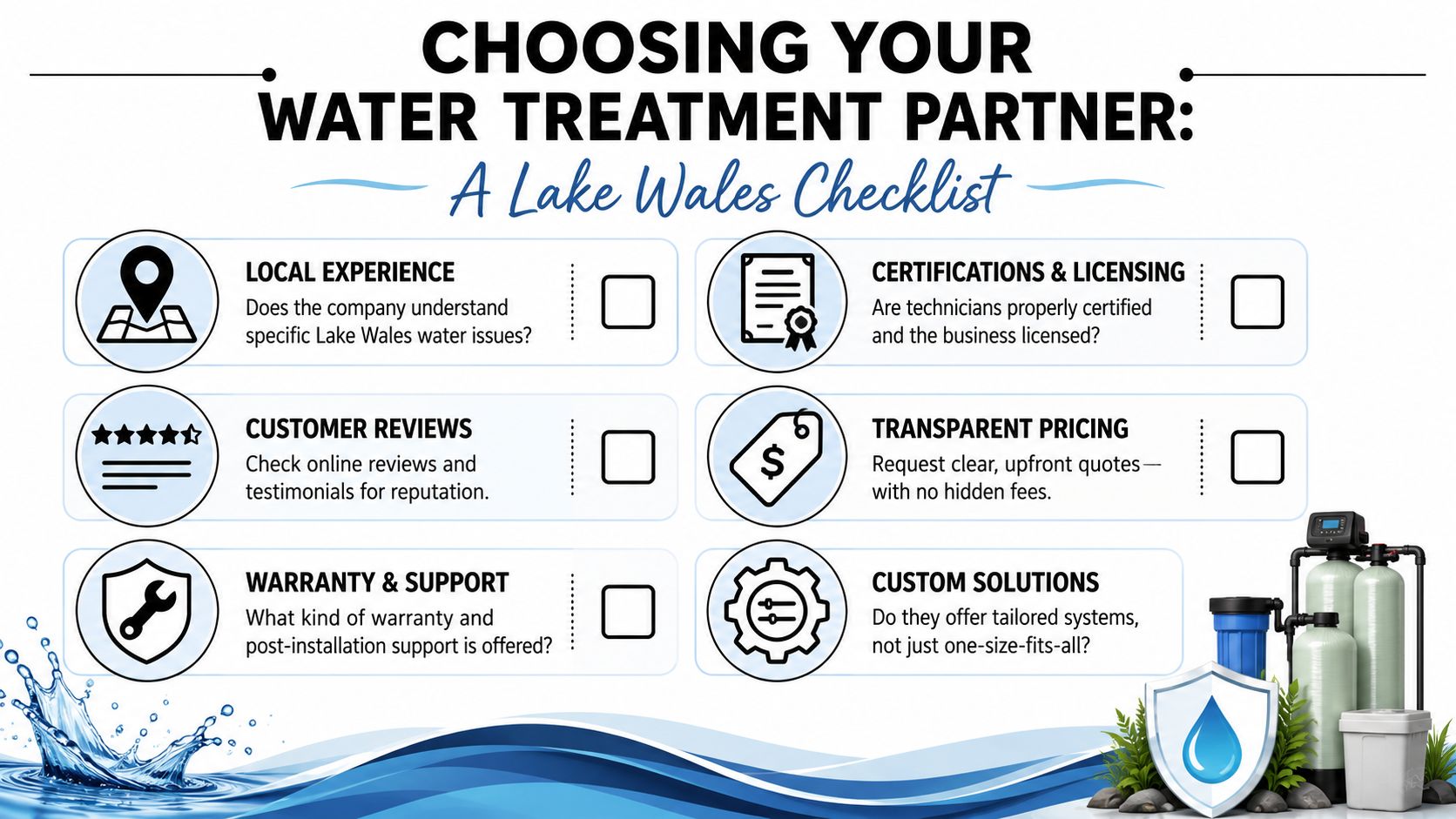
- Clear testing method: They should explain what they sampled, where they sampled it, and what those results mean.
- Local experience: Lake Wales and the surrounding area have recurring issues. A company should recognize the patterns quickly.
- Licensing and insurance: If they can't provide business basics, stop there.
- Equipment logic: Every recommendation should map to a specific water problem.
- Service plan: Installation is just the beginning. Ask who handles maintenance and follow-up.
Red flags that should end the conversation
Some sales tactics are easy to spot once you know what to watch for.
| Red flag | Why it matters |
|---|---|
| Recommends equipment before meaningful testing | They're selling inventory, not solving your water issue |
| Uses scare tactics instead of measured explanation | Fear closes deals fast, but it doesn't build a proper system |
| Can't explain why this system fits your water | You'll likely overpay or get the wrong setup |
| Avoids maintenance details | Future service costs and headaches are part of the real price |
| Pushes one package for every house | Water treatment should be customized |
Local rule of thumb: If two homes on the same street can have different water symptoms, one generic recommendation for everybody doesn't make sense.
The company should educate you, not corner you
You want a company that answers questions calmly, not one that acts offended when you ask for details. Good professionals don't mind scrutiny. In fact, they expect it.
A reputable team will walk you through contaminant findings, explain where a softener helps and where it doesn't, discuss filter media openly, and be clear about routine upkeep. They won't pretend every homeowner needs the most expensive setup.
That's the standard. Anything less is a sales appointment disguised as a consultation.
The On-Site Consultation What to Expect and Ask
A proper on-site consultation should feel like an inspection, not a performance. The technician should look at the home, ask how the water behaves, test the water, and connect the findings to real solutions.
If they don't inspect where the system would go, don't ask about plumbing layout, ignore your water heater and fixtures, or skip questions about whether you're on city water or a private well, they're cutting corners before the job even starts.
What a good consultation looks like
A competent visit usually includes several parts that work together.
First, they ask about symptoms. You tell them whether you're seeing spots, odors, staining, taste issues, or skin irritation. Then they inspect the entry point, available installation space, drain access, and the general plumbing setup. After that, they test and explain the results in plain language.
Good companies also discuss what a system will require after installation. Salt replenishment, media replacement, filter changes, sanitization, and service intervals should all be part of the conversation.
A consultation should leave you more informed than when it started. If you leave confused but pressured, that's a bad consultation.
Essential questions for your water treatment consultation
| Question to Ask | What a Good Answer Sounds Like |
|---|---|
| What exactly did you test for today? | A clear list tied to my water source and symptoms |
| Why are you recommending this system? | A direct connection between test results and equipment choice |
| What problem will this system solve, and what won't it solve? | Honest limits, not exaggerated promises |
| Who handles installation and future service? | A specific process with named responsibilities |
| What routine maintenance will I need? | Straight answers about filter changes, salt, cleaning, or annual service |
| How often does the media or filter need replacement? | A realistic expectation based on water conditions and usage |
| What warranty comes with the equipment and labor? | Written terms, not vague reassurance |
| What brand or components are you installing? | Exact equipment names, not “commercial grade” fluff |
| What happens if my water changes later? | A plan for retesting, adjustment, or service support |
| Can I get the proposal in writing? | Yes, with system details and pricing explained clearly |
What you should listen for
The best answers are simple. They're specific without sounding rehearsed.
Listen for a technician who can say, in plain terms, “You have this issue, this system addresses it, and this is what maintenance looks like.” Be cautious if every answer loops back to urgency, financing, or “today only” pricing.
One more thing. Ask whether they'll give you the test results and recommendations in a form you can review after they leave. A strong company won't hide behind speed. They'll want you to understand the decision.
Making Your Decision and Getting Started
If you remember only one thing, remember this: the best water treatment company in Lake Wales, FL starts with the right diagnosis.
The system matters. The installer matters. Ongoing service matters. But the foundation is still the water analysis. If that step is weak, the rest of the project wobbles.
The decision should come down to four things
- Accurate testing: The recommendation should begin with verified water conditions.
- A matched solution: Hardness, chlorine, sulfur, iron, and microbial risks don't call for the same equipment.
- A company with a transparent process: You should know what they found and why they recommended a specific setup.
- A clear maintenance plan: If service expectations are vague now, they'll be a problem later.
That last point gets overlooked. Water treatment isn't a box you bolt to the wall and forget forever. Good systems need proper upkeep, and good companies say that upfront.
Don't buy on personality alone
A friendly rep isn't the same thing as a qualified process. You're making a long-term home investment, not buying a countertop gadget.
That's why the testing step is non-negotiable. A rigorous water treatment methodology begins with a comprehensive water chemistry analysis, and neglecting that step is a common pitfall leading to 30-40% of system failures due to mismatch between the technology and the actual water profile.
So if you're comparing quotes right now, strip away the marketing and ask the hard question: which company has proven what's in your water and matched the system to that evidence?
Choose that company.
If you want a no-pressure next step, get a free water test from Florida Water Management and use their contact page to schedule it. You'll get a clearer picture of what's in your water, what kind of system fits your home, and how to avoid paying for equipment you don't need.