

You're probably asking this after dealing with the same annoyances over and over. Your glasses come out of the dishwasher cloudy. The shower door never looks fully clean. Towels feel rough. Soap doesn't lather the way it should, and your skin feels dry after a shower even when you just changed products.
That's a familiar pattern in Central Florida homes. It shows up in city water and on private wells, and many homeowners don't realize the problem may have less to do with cleanliness and more to do with hard water.
If you've been wondering, do I need a water softener, the most honest answer is: maybe, but you shouldn't guess. In this part of Florida, the right answer depends on what's in your water, its hardness level, whether you're on a well, and whether your home is already showing signs of scale and mineral buildup.
Table of Contents
- The Unseen Problem Hiding in Your Pipes
- Understanding Hard Water in Central Florida
- How a Water Softener Solves the Problem
- Weighing the Pros and Cons of a Water Softener
- Exploring Alternatives to Salt-Based Softeners
- Your Next Step for Better Water in Central Florida
The Unseen Problem Hiding in Your Pipes
A lot of hard water complaints start small. A homeowner notices white crust around a faucet. Then the dishwasher leaves a film on glasses. Then the water heater doesn't seem to perform as well, or the showerhead starts spraying unevenly.
At first, those issues seem unrelated. They're not.
Hard water leaves mineral deposits behind little by little. You see some of it on fixtures and dishes, but some of it builds up where you can't see it, inside plumbing lines, water-using appliances, and the parts of your home that depend on steady water flow.
What daily life looks like with hard water
In practical terms, homeowners usually notice hard water in ordinary routines:
- In the kitchen: glasses look spotted, pots develop residue, and sink fixtures get a chalky ring.
- In the laundry room: fabrics can feel stiff or look dull after washing.
- In the bathroom: soap scum sticks to tile, shower doors haze over, and skin may feel tight after bathing.
- At the fixtures: faucets and showerheads collect crusty buildup that keeps coming back.
Hard water often feels like a cleaning problem, but it's really a mineral problem.
That distinction matters because cleaning harder doesn't solve the root cause. If the water itself is carrying enough dissolved hardness minerals, those minerals keep showing up everywhere water goes.
Why Central Florida homeowners ask this so often
Central Florida homeowners ask this question for good reason. The region's water conditions can vary from one neighborhood to the next, and private well water can add another layer of uncertainty. Two homes on the same street can have different water issues depending on source water, plumbing setup, and household water use.
That's why the best way to answer “Do I need a water softener?” isn't by guessing from one symptom. It's by matching the symptoms to a real water test and then deciding whether a softener, a conditioner, filtration, or a combination makes sense.
Understanding Hard Water in Central Florida
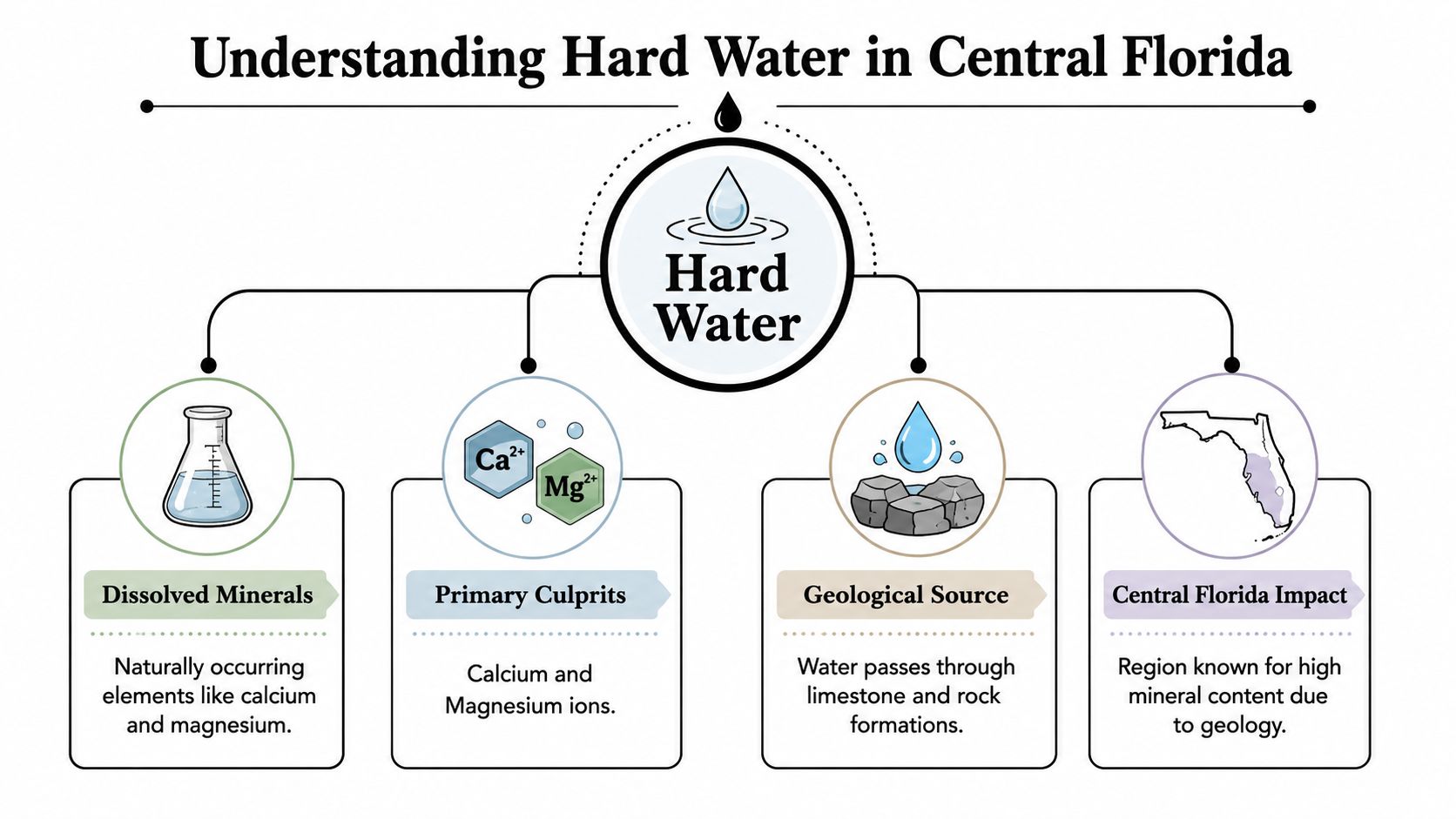
Central Florida water often picks up minerals before it ever reaches your tap. That is especially true in areas where groundwater moves through limestone and other mineral-rich formations, and it can be even more noticeable on private wells because one property's water can differ quite a bit from the next.
What hard water actually is
Hard water is water with a heavier load of dissolved calcium and magnesium. Those minerals are naturally occurring. The problem is not that the water looks dirty. The problem is that mineral-rich water behaves differently inside your plumbing and around your home.
A technician usually measures hardness in grains per gallon (gpg) or milligrams per liter (mg/L). If those terms sound too technical, here's the practical version. Higher hardness means minerals are more likely to cling to metal, glass, fixtures, and heating surfaces, much like a fine mineral dust that keeps settling every time water evaporates or gets heated.
That sticking behavior is why a proper diagnosis matters. A quick look at spots on a faucet can point you in the right direction, but it cannot tell you whether hardness is mild, severe, or mixed with other issues such as iron, sulfur, or low pH from a well. If you want to see how whole-home treatment equipment is typically set up, this overview of water softening systems for Florida homes gives helpful background.
Why Central Florida homes can be tricky to diagnose
Two homes in the same Central Florida neighborhood can have different water conditions. One may be on city water with moderate hardness. The house next door may be on a private well with hardness plus iron staining. That difference changes what equipment makes sense.
Well water adds another layer because it comes straight from your local aquifer conditions. In plain terms, your house gets the water your property sits on top of. That is why guessing based on one symptom often leads homeowners to buy the wrong system.
Signs that point to hardness, not just a cleaning issue
Hard water leaves a pattern. You may notice it in several places at once, even if each symptom seems minor by itself.
| Symptom | What it usually suggests |
|---|---|
| White spots or cloudy film | Minerals drying on glass, dishes, and shower doors |
| Chalky buildup on fixtures | Scale collecting on faucets, showerheads, and sink edges |
| Soap that seems weak | Hardness minerals interfering with lather and rinsing |
| Dry-feeling skin or flat hair | Soap residue and minerals left behind after bathing |
| Towels that feel rough | Minerals affecting how fabric rinses clean |
| Slower flow at fixtures | Scale narrowing openings in showerheads and aerators |
| Appliance residue or scale | Mineral buildup where water is heated or repeatedly used |
One symptom alone does not prove you need a softener. A pattern usually does.
Why a water test should decide the answer
Hardness gets confused with chlorine, sediment, iron, old plumbing, and general “bad water” complaints. Central Florida homeowners on wells run into this often. The water may have hardness, but it may also have iron or sulfur that a softener alone will not fix.
Practical rule: Use your symptoms as clues, then confirm them with a professional water test. That is the most reliable way to decide whether you need a softener, a filter, a different treatment setup, or a combination of systems.
How a Water Softener Solves the Problem
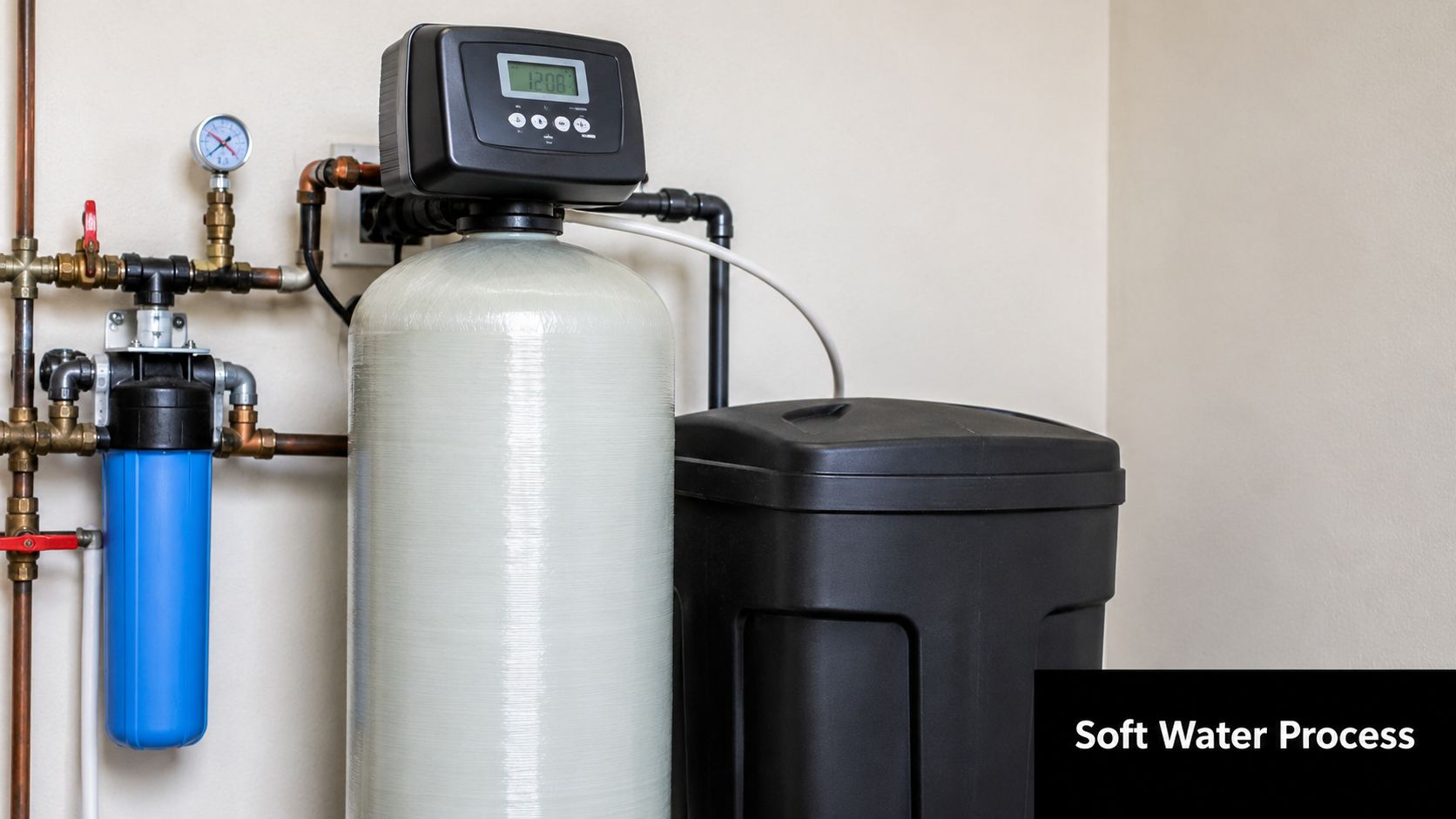
A water softener solves a very specific problem. It changes the calcium and magnesium in hard water before those minerals can keep coating pipes, fixtures, water heaters, and anything else that uses water in your home.
That matters in Central Florida because the same home can have more than one water issue at once. City water may have hardness with chlorine. A private well may have hardness along with iron, sulfur, or sediment. A softener helps with hardness. It does not replace the other treatment equipment you may need.
What a softener actually does
Inside the mineral tank are small resin beads that carry sodium. As water passes through, the beads grab onto hardness minerals and release sodium in their place. The result is softened water moving into the house instead of hard water continuing through your plumbing.
A simple way to picture it is a row of seats that start out filled with sodium. Calcium and magnesium have a stronger pull, so they take those seats as water flows by. After enough hard water passes through, the seats fill up. Then the system has to clean and recharge itself.
That cleaning cycle is called regeneration. During regeneration, the system uses brine from the salt tank to wash the hardness minerals off the resin beads and load them back up with sodium so they can keep working.
If you want a closer look at common setups, this guide to water softening systems for the home shows how the equipment is typically arranged.
Why this solves the problems you notice around the house
Hardness acts like dust that never stops settling, except it hardens into scale when water dries or gets heated. A softener cuts off that mineral supply before it can keep building up.
In practical terms, homeowners usually notice:
- less crusty buildup on faucets and showerheads
- fewer spots on dishes and glass
- soap that rinses off more easily
- laundry that feels less stiff
- less mineral stress on appliances that heat water
The change is often most obvious in the bathroom and kitchen first. Shower doors stay cleaner longer. Faucets wipe down with less scrubbing. Water heaters, dishwashers, and washing machines are not handling the same mineral load every day.
Why sizing and testing matter in Central Florida
A softener only works well if it matches the house and the water. A home with heavier hardness, a larger family, or high daily water use needs a different setup than a small household with moderate hardness. That is one reason two neighbors can get very different recommendations and both be correct.
For Central Florida well owners, professional testing matters most. If the water also contains iron or sulfur, those problems can foul softener resin or pass through untreated. In that case, the right fix may be a softener paired with another treatment stage, not a softener by itself.
The best outcome comes from matching the equipment to the actual water test, not guessing from spots on the shower door alone.
Weighing the Pros and Cons of a Water Softener
You move into a Central Florida home, and within a few weeks the clues start stacking up. The shower door clouds over faster than you expect. Soap seems stubborn. The kitchen faucet gets a pale crust around the base. If you are on a private well, you may also wonder whether the problem is only hardness, or hardness mixed with iron, sulfur, or something else.
That last part matters. A water softener can be an excellent fix for the right water, but it is not a cure-all for every water problem a Florida home can have.
Where a softener helps most
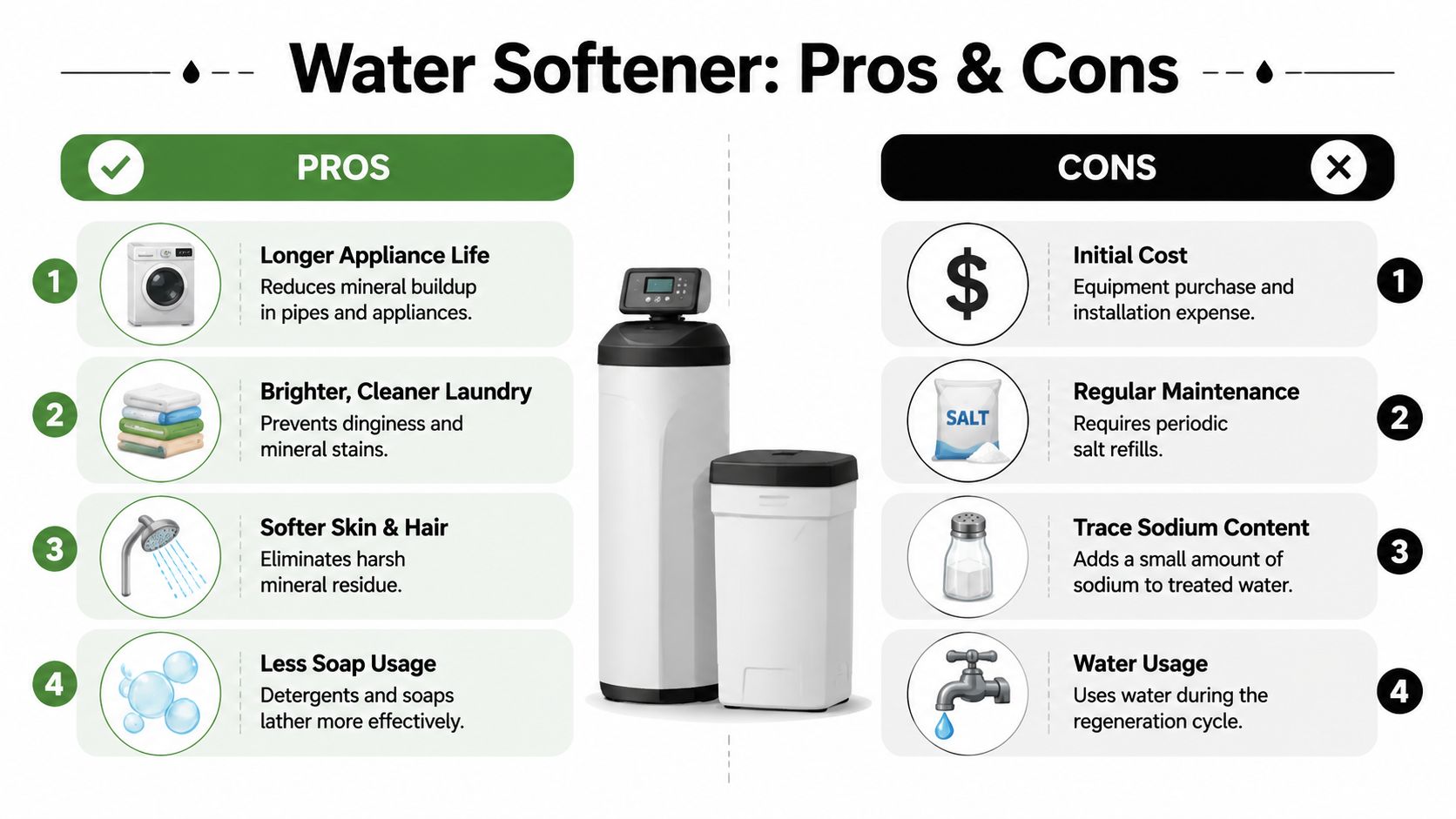
A softener is built to remove hardness minerals. In plain terms, it targets the calcium and magnesium that leave scale behind and make soap work poorly. If a professional water test shows meaningful hardness, a softener usually solves a daily annoyance at its source instead of asking you to keep cleaning up after it.
For many Central Florida homeowners, the benefits show up in routine chores first. You may spend less time scrubbing fixtures, wiping spots from glass, or fighting that stiff, rough feel in towels and laundry. Bathing can feel different too, because soap rinses more cleanly in softened water.
There is also a long-term side to the decision. Appliances and plumbing that regularly handle hard water are like a coffee maker that never gets descaled. They can still run, but scale makes them work harder over time. That is one reason many homeowners look closely at the benefits of a home water softening system after testing confirms hardness.
What you give up in return
A softener adds another piece of equipment to the house, and equipment needs attention.
You will need to keep salt in the system if it is a standard ion-exchange softener. The unit also uses water during regeneration, so there is an operating cost along with the upfront purchase and installation cost. Some homes have plenty of room for a softener and brine tank. Others do not, especially if the garage or utility area is already crowded.
Maintenance is usually straightforward, but it is still maintenance. The system has to be set correctly, checked occasionally, and kept supplied so it can keep doing its job.
Why testing matters more in Central Florida
This is the part many homeowners get wrong. They assume every spot, smell, or stain means they need a softener.
In Central Florida, especially on private wells, that guess can send you in the wrong direction. A softener helps with hardness. It is not designed to be the main answer for sulfur odor, sediment, tannins, or every form of iron problem. In some well-water homes, hardness is only one part of the puzzle, and the right setup includes another treatment stage before or after the softener.
That is why the best decision starts with a professional water test. The test tells you whether hardness is the main issue, how strong it is, and whether other contaminants could affect performance or require a different treatment plan.
A practical way to decide
A water softener makes sense when testing shows clear hardness and your household is dealing with the usual effects of it. In that case, the pros are concrete. Less scale, easier cleaning, better soap performance, and less mineral stress on water-using equipment.
If testing shows only mild hardness, or shows that the bigger issue is iron, sulfur, or another well-water contaminant, a softener alone may not be the smartest buy.
A softener is not a lifestyle upgrade. It is a tool. For Central Florida homes, the question is not whether soft water sounds nice. The question is whether your water test shows a problem that a softener is meant to solve.
Exploring Alternatives to Salt-Based Softeners
A lot of confusion comes from the phrase “salt-free water softener.” In most cases, that term isn't technically accurate.
What salt-free systems are really for
Salt-free systems are generally conditioners, not true softeners. They typically use template-assisted crystallization to reduce scale, but they do not remove calcium and magnesium from the water. That means they can help with scale control, but they won't produce the same result as ion exchange softening for soap performance, skin feel, or the full removal of hardness minerals (salt-free systems explained).
That distinction matters because homeowners often expect a conditioner to make the water feel soft, improve lather, and eliminate the effects of hard water in the shower and laundry. Usually, that's not what it does.
When a conditioner can make sense
A salt-free conditioner can still be a reasonable choice in the right situation. Some homeowners are mainly concerned about scale on plumbing and fixtures. Others want to avoid salt handling or want a system with a different maintenance profile.
That can make a conditioner attractive if your priority is scale reduction rather than true soft water.
A simple way to compare them:
- Choose a salt-based softener if your goal is to remove hardness minerals from the water.
- Choose a salt-free conditioner if your goal is mainly to reduce scale formation and you understand the water is still chemically hard.
- Choose based on a water test if you're not sure what problem you're solving.
The biggest mistake homeowners make is buying a “salt-free softener” expecting soft-water shower, laundry, and soap results.
For Central Florida homes, especially those on private wells, this matters even more. A home may have hardness plus other water issues at the same time. If you install the wrong type of equipment first, you may still be left with the problem that bothered you most.
Your Next Step for Better Water in Central Florida
You move into a Central Florida home, run the first few loads of laundry, and within a week you start noticing clues. White spots on glasses. A rough film on the shower door. Soap that never seems to rinse the way it should. If you are on a private well, you may also notice that your water has its own personality from one street to the next.
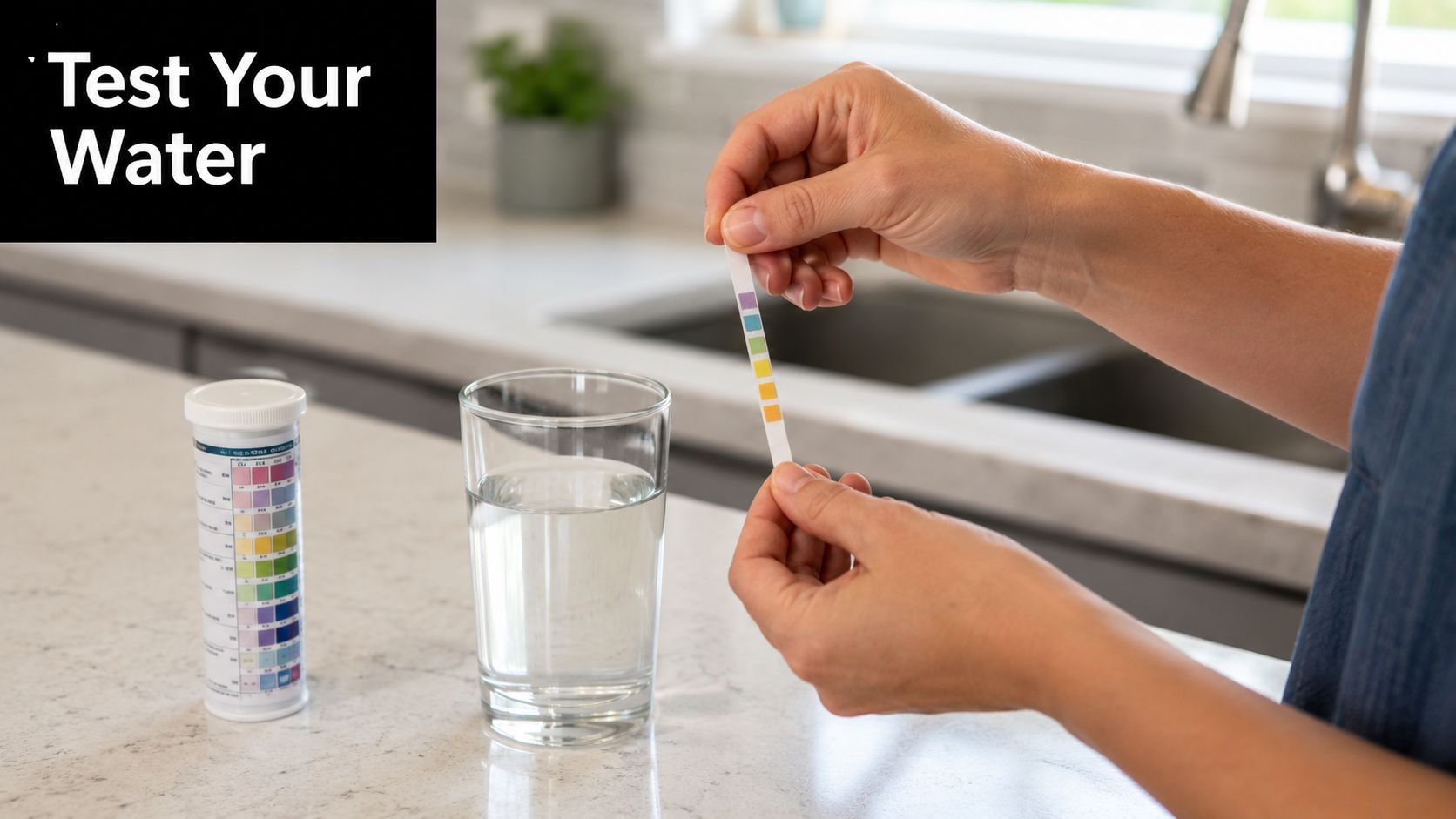
The smartest next step is a professional water test.
Why testing matters more in Central Florida
Central Florida water is not uniform. City water can still leave scale and spotting. Well water can change from one property to the next because the source water, plumbing, and local mineral content are different. Two homes in the same neighborhood can need two different treatment plans.
That is why guessing from symptoms only goes wrong so often. Hardness may be the main issue, but it is not always the only one. On private wells especially, hardness can show up alongside iron, sulfur odor, sediment, staining minerals, or pH issues. A softener can solve one part of the problem and leave the rest untouched if the water has not been tested first.
A proper test works like a checkup for your plumbing. It measures what is in the water, shows how severe the hardness is, and helps you avoid buying equipment for the wrong problem.
A better way to decide
A good test should answer practical questions like these:
- How much hardness is present?
- Are your shower, laundry, or spotting problems really caused by hardness?
- If you have a well, are iron, sulfur, or sediment affecting the treatment plan?
- What system size matches your household's water use?
If you want a local example of what that process can look like, this page on water softener installation in Lake Wales shows how homeowners in the area often approach the decision.
The goal is not to win a debate about whether every home needs a softener. The goal is to solve your home's water problem with the right equipment, in the right order.
When the test results match the symptoms, the decision usually becomes clear.