

You see the signs before you ever think about water treatment. Glasses come out of the dishwasher spotted. Soap does not rinse clean. Towels feel rough. In some Central Florida homes, the shower carries a chlorine smell. In others, especially on well water, it is sulfur, iron staining, or grit in the lines.
That pattern matters because the problem usually is not at one sink. It is in the water coming into the house.
More homeowners are looking past pitchers and faucet filters for that reason. A 2022 consumer survey from Aquasana found that home water filtration use continued to rise, and that tracks with what I see across Sebring, Winter Haven, Lakeland, and nearby areas. People often start with taste or odor. Then they realize the bigger cost is scale on fixtures, staining in bathrooms, dry skin, short appliance life, and laundry that never feels quite right.
A whole house purification system can solve those issues, but only when it is built for the water in that home. Central Florida water is not one problem with one fix. City water may need chlorine or chloramine reduction and hardness treatment. Well water often needs a different combination, such as iron removal, sulfur treatment, sediment filtration, or disinfection. A one-size-fits-all filter usually misses at least one of those jobs.
That is why a water test comes first. The right system is based on hardness, iron, sulfur, pH, sediment load, and whether the property is on municipal supply or a private well. Get that part wrong and you can spend good money on equipment that leaves the smell, the stains, or the scale behind.
If you want a clear starting point, schedule a free water test through the contact page and choose a system based on your water, not a generic sales package.
Table of Contents
- Your Guide to Pure Water in Every Central Florida Tap
- What Does Whole House Purification Actually Mean
- Identifying Common Central Florida Water Problems
- Your Purification System Options Explained
- Designing the Right System for Your Home or Business
- Installation Costs and Long-Term Maintenance
- Frequently Asked Questions
Your Guide to Pure Water in Every Central Florida Tap
You step into the shower in a Central Florida home and catch a rotten-egg smell. At the kitchen sink, the glasses come out spotted. A few weeks later, orange staining shows up around a tub drain, and the water heater starts acting older than it is. That is how these problems usually show up here. Not one clear symptom, but a mix of hardness, sulfur, iron, chlorine, and sediment showing up in different places around the house.
I see homeowners lose time and money when they try to solve all of that with one filter from a big-box store. Central Florida water does not cooperate with one-size-fits-all equipment. A home on city water in Lakeland or Winter Haven usually needs a different setup than a well-water property outside town. Hardness needs one kind of treatment. Sulfur odor needs another. Iron staining often needs its own step too.
A faucet filter can help the taste of drinking water at one sink. It does nothing for scale inside the water heater, mineral film on glass, odor in the shower, or staining in toilets and tubs. If the problem shows up across the house, the fix usually starts at the main water line with equipment matched to the actual water chemistry.
The goal is simple. Water should stop causing extra work.
- Laundry should come out cleaner: less stiffness, less mineral residue, fewer odd odors.
- Bathrooms and kitchens should stay easier to clean: fewer spots, less crust around fixtures.
- Showers and sinks should smell normal: no heavy chlorine smell, no sulfur odor.
- Plumbing and appliances should last longer: less scale, less sediment, fewer water-quality headaches.
The right starting point is a water test. That is how you separate hard water from iron, sulfur, chlorine, or a combination of problems and avoid buying equipment that only fixes part of the issue. Florida Water Management offers free water testing through its contact page, which helps match the system to the water instead of guessing.
What Does Whole House Purification Actually Mean
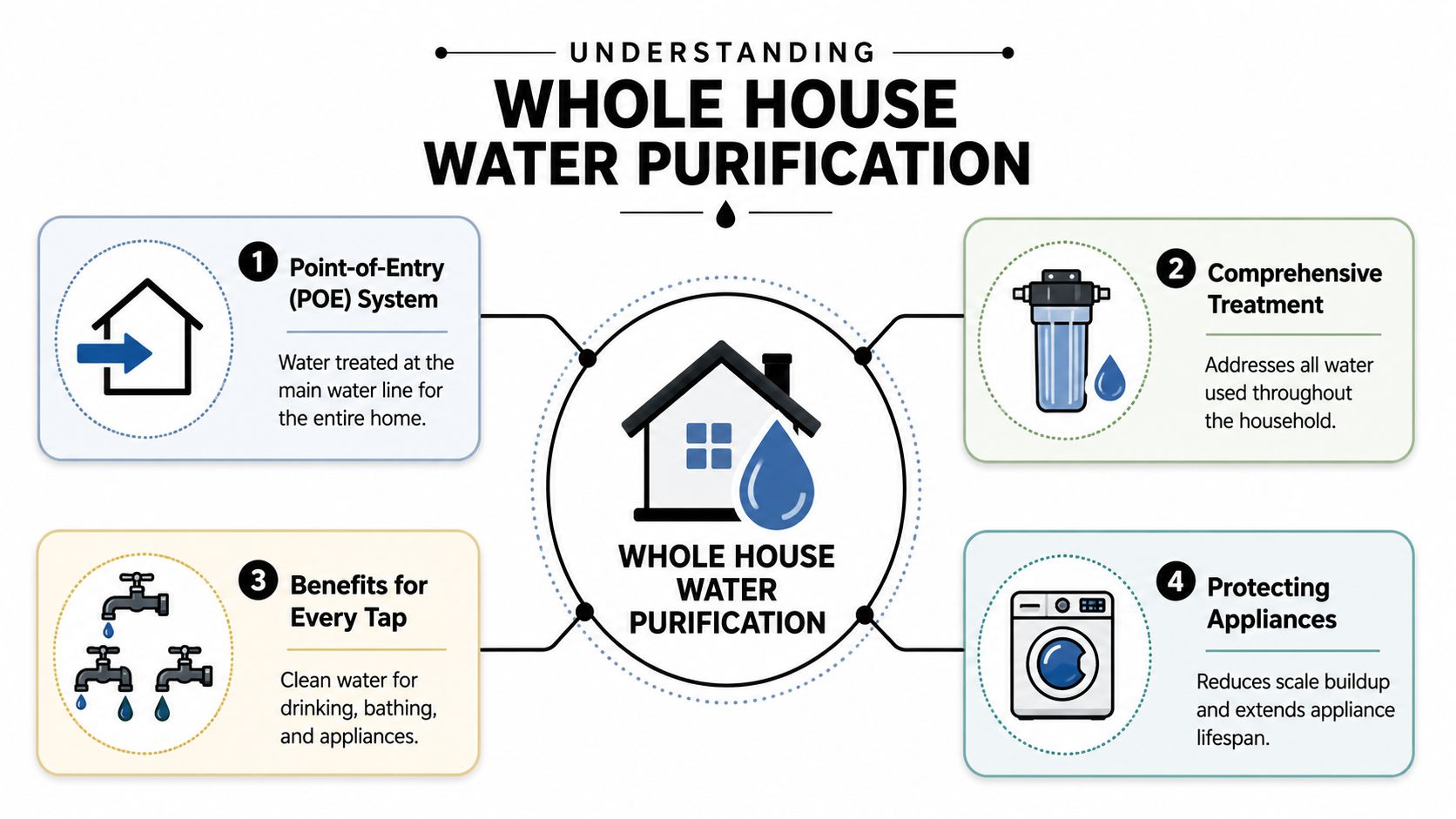
Whole house water purification means the treatment system is installed at the main entry point to the home, not at a single faucet. The NSF describes these as point-of-entry systems that treat water where it enters the residence, so every tap receives treated water and the plumbing infrastructure benefits too, as explained in NSF's guide to home water treatment.
It's like a gate at the property line. If the gate works, everything coming in gets screened before it reaches the house. A pitcher filter or under-sink unit is more like checking one room after the rest of the building has already been supplied.
What that changes in daily use
With point-of-entry treatment, the water at the kitchen sink, shower, laundry line, hose bib, and water heater all comes through the treatment train first. That's important when the goal isn't only drinking quality, but also:
- Reducing chlorine taste and odor
- Handling sediment or particulates
- Protecting plumbing and fixtures
- Supporting additional treatment stages such as softening or UV
NSF also notes that whole-house treatment isn't one single product category. It can include filters, water softeners, and UV microbiological systems. In practice, that's how most properly designed systems work. They combine technologies based on the water report.
What whole house purification does not mean
It doesn't mean one tank solves every water issue. It also doesn't mean “purification” is automatically the same thing in every home. One property may need sediment and carbon. Another may need iron reduction, softening, and UV. The label matters less than the design.
Practical rule: If someone recommends equipment before testing the water, they're guessing.
Maintenance matters too. Even a well-designed system needs regular service, media changes, or filter replacement to keep doing its job. Good water treatment is never just about installation day.
Identifying Common Central Florida Water Problems
The same county can have very different water from one neighborhood to the next. Municipal supply, private wells, older plumbing, and fixture count all change what you're dealing with. But in Central Florida, a few issues show up again and again.
Hard Water and Scale Buildup
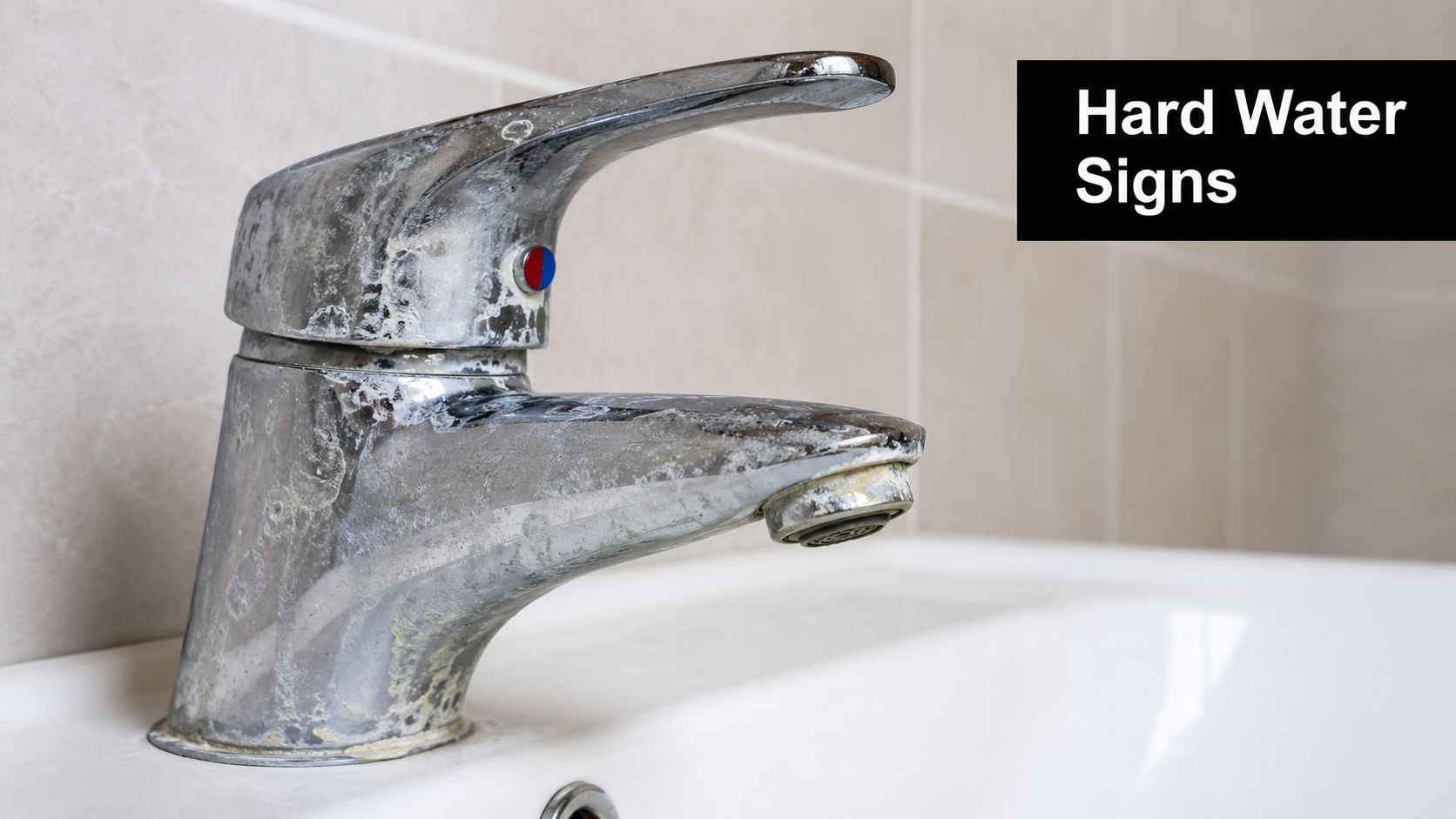
If you see white crust on faucets, spots on dishes, soap that doesn't rinse well, or scale inside coffee makers and water heaters, hard water is usually part of the picture. This is one of the most common points of confusion in our area because many homeowners assume a whole-house filter will take care of it.
It usually won't.
Consumer guidance on this topic is clear. A standard whole-house filter can address issues like sediment, chlorine, and odors, but it doesn't remove the calcium and magnesium minerals that cause hard-water scale, as explained in Consumer Reports' comparison of whole-house and under-sink filters. Hardness is a separate treatment problem, and it usually calls for a water softener.
That distinction matters in Central Florida because scale doesn't stay on the faucet. It collects in water heaters, dishwasher components, showerheads, valves, and plumbing lines.
Municipal Chlorine and Chloramines
City water often arrives with a smell or taste people don't like, even when it meets utility standards. Around the house, that can show up as water that smells chemical at the sink, showers that feel less pleasant, and ice or beverages that just don't taste right.
Homeowners often describe this as “the water tastes like the pool” or “the shower smells bleached.” In those cases, activated carbon is often part of the answer, but the final design still depends on the full water profile and the home's flow needs.
Well Water Iron Sulfur and Sediment
Private well water creates a different set of headaches. The biggest clues are usually visual or smell-related:
- Iron: orange or rust-colored staining on toilets, tubs, irrigation, and sinks
- Sulfur: a rotten-egg odor, especially noticeable in hot water or after water sits in the pipes
- Sediment: grit, cloudy water, or debris that fouls fixtures and filters
These problems often come stacked together. A home can have sediment plus sulfur plus hardness, which is exactly why one-size-fits-all equipment disappoints so many people.
If the water leaves stains, scale, and odor, that's usually not one problem. It's a layered treatment job.
Quick self-check around the house
Before a professional test, homeowners can often identify the likely category by what they see every day:
- Scale on fixtures and glassware points toward hardness.
- Chemical taste or smell points toward municipal disinfectants.
- Orange staining or rotten-egg odor points toward common well-water issues.
- Low fixture performance over time can signal buildup in plumbing or appliances.
The important part isn't naming the problem perfectly on your own. It's recognizing that different symptoms call for different treatment methods.
Your Purification System Options Explained
Good water treatment works like a toolbox. Each technology handles a different job, and some homes need one tool while others need several working together. The mistake is shopping for a magic box instead of matching the equipment to the water.
How the Main Technologies Compare
Here's a simple side-by-side look at the most common system types used in Central Florida.
| System Type | Primary Target | Best For | Maintenance |
|---|---|---|---|
| Sediment filter | Dirt, sand, grit, visible particles | Well water or any supply with particulate load | Periodic cartridge replacement or media service |
| Activated carbon filter | Chlorine, some taste and odor issues | Municipal water homes bothered by chemical taste or smell | Regular media or cartridge replacement |
| Water softener | Hardness minerals that cause scale | Homes with spotting, buildup, stiff laundry, and appliance scale | Salt refill and scheduled service |
| Iron and sulfur filter | Iron staining and sulfur odor | Well water with rust stains or rotten-egg smell | Media service and routine system checks |
| UV sterilizer | Microbiological concerns | Private wells where disinfection is part of the treatment plan | Lamp replacement and ongoing service |
| Reverse osmosis | Fine drinking-water polishing at a specific tap | Homeowners who want an added drinking-water stage at the kitchen sink | Filter and membrane maintenance |
A whole-house system may include more than one of these. That's normal. In fact, it's often the only way to solve the full set of symptoms in a Central Florida home.
Why drinking water sometimes needs a second stage
Some families want whole-house treatment for bathing, plumbing, and appliances, then add a dedicated drinking-water stage at the kitchen sink. That setup can make sense when the house needs broad treatment but the homeowner also wants polished drinking water for cooking, coffee, and ice. If you want to compare that option, Florida Water Management also explains reverse osmosis systems for drinking water.
A practical example helps. A city-water home may use carbon plus softening for the entire house, then use reverse osmosis at the kitchen sink for drinking water. A well-water home may need sediment handling, iron or sulfur treatment, softening, and possibly UV.
One tank is rarely the right answer for Florida water. The right combination is.
There's also a sizing issue. Performance isn't only about what the media can remove. It's also about whether the system can keep up when multiple fixtures run at once. A setup that looks good on paper can still disappoint if it's undersized for the property.
Designing the Right System for Your Home or Business
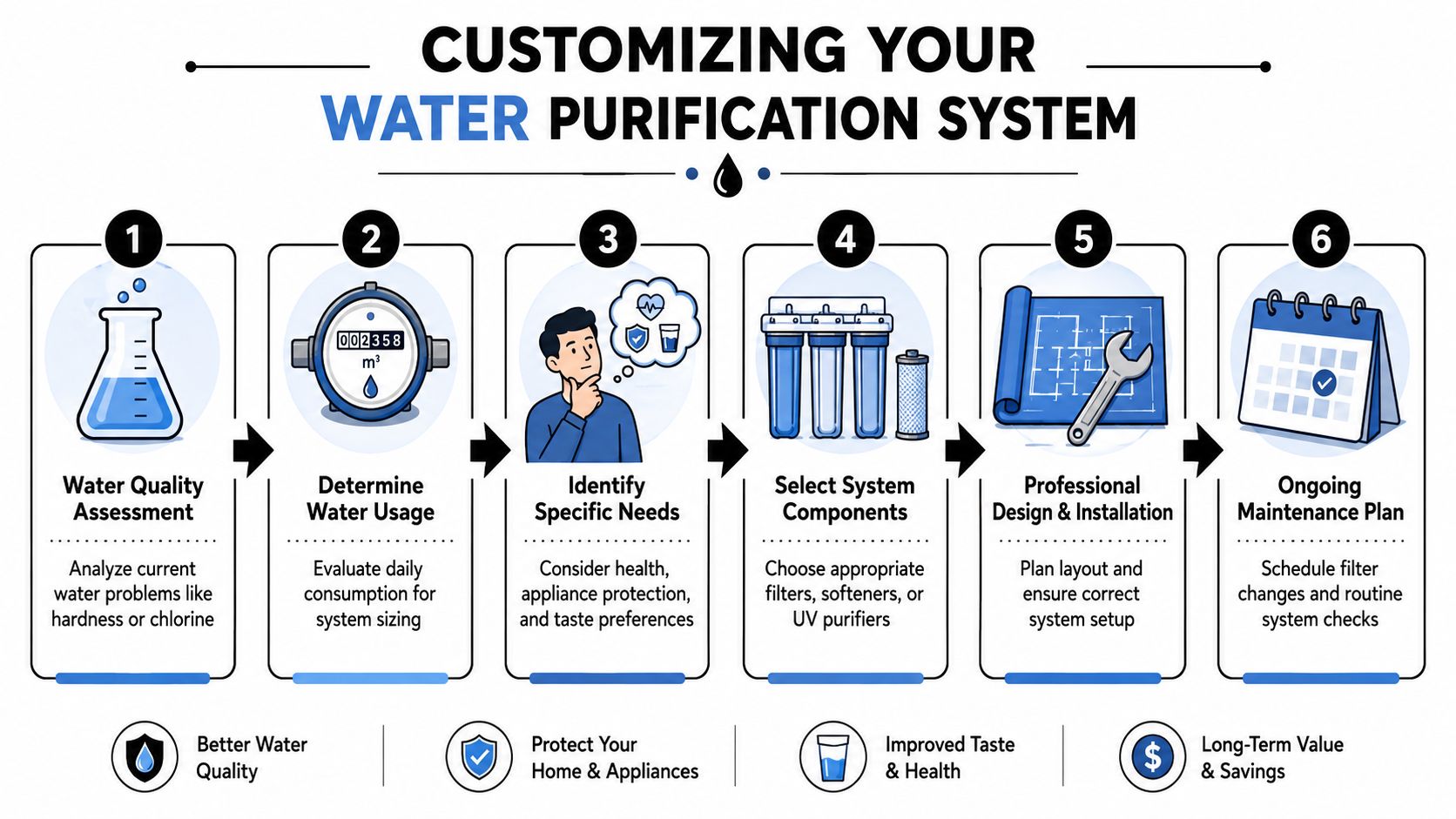
A real system design starts with two things. First, what's in the water. Second, how the building uses water. Both matter, and either one can ruin the result if ignored.
A Sebring Home with Hard Chlorinated Water
A typical city-water home in Sebring might have two separate complaints that feel unrelated to the homeowner. The first is scale on fixtures and poor soap performance. The second is chlorine taste and odor.
Those are different treatment targets. In that case, a water softener handles hardness, while a whole-house carbon stage handles chlorine and odor. If the family also wants high-quality drinking water at the sink, that can be added as a separate point-of-use stage.
For homeowners comparing local installation options, Florida Water Management outlines its Sebring-area water filtration system service, which includes testing, equipment selection, installation, and maintenance for home systems.
A Lake Wales Business on Well Water
A small business on a private well usually needs a more layered design. Think about a salon, café, or rental property near Lake Wales. If the well water has sulfur odor, iron staining, and hardness, one carbon filter won't fix the operation.
That property may need a sediment stage, an iron or sulfur treatment stage, a water softener, and possibly UV if microbiological protection is part of the water plan. The order of those components matters, and so does service access. If the system is hard to maintain, it won't stay effective for long.
Why Sizing Matters as Much as Media
A lot of people focus on contaminant removal and forget demand. But a system has to handle the home or business at peak use, not only during a quiet moment. Aquasana's whole-house guidance notes that sizing depends on household demand and fixture count, and a system for a 3-bathroom home must handle more peak flow than one for a 1-bathroom home to avoid pressure drop and maintain performance, as shown on Aquasana's whole-house water filter page.
That lines up with what installers see in the field. If a system is too small, people notice it in the shower first. Then they notice it when the washing machine and a bathroom are running together. If it's oversized without a reason, the homeowner may spend more than necessary.
A proper design usually looks like this:
- Test the water to identify hardness, chlorine, sulfur, iron, sediment, or microbial concerns.
- Measure the demand based on bathrooms, fixtures, occupancy, and business use.
- Build the treatment train in the right order so each stage supports the next.
- Plan the maintenance before installation, not after the system starts acting up.
Installation Costs and Long-Term Maintenance
The honest answer on cost is that it depends on the water and the equipment needed to correct it. A simple setup for chlorine reduction is a different project from a well-water system that needs sediment handling, iron or sulfur treatment, softening, and UV. The installation conditions matter too, including where the main line enters, available space, drain access, and how easy the system will be to service later.

What Changes the Price
A few things drive the investment more than anything else:
- Water complexity: one issue is simpler than several stacked together.
- System size: larger homes and higher-demand properties need more capacity.
- Treatment type: softeners, UV, and specialty media add components and service needs.
- Installation layout: tight equipment rooms or awkward plumbing take more labor.
That's why online estimates can only go so far. A useful quote has to come after water testing and a look at the property. If you want a closer look at what affects pricing, this guide on home water filtration system cost walks through the main variables.
What maintenance really looks like
Water treatment isn't install-and-forget equipment. It works well when the service plan matches the equipment.
A homeowner with a softener may need to keep up with salt. A carbon or sediment system needs periodic media or filter replacement. UV systems need lamp service. Well-water systems especially benefit from routine inspections because iron, sulfur, and sediment loads can change how equipment performs over time.
The cheapest-looking system on day one can become the expensive system if nobody planned for maintenance.
The good news is that maintenance is predictable when the system is designed correctly. The wrong system creates constant frustration. The right one creates a schedule.
Frequently Asked Questions
Do I need whole house water purification if I only care about drinking water
Not always. If your only concern is the water you drink and cook with, a point-of-use system may be enough. But if you're dealing with scale, chlorine smell in showers, staining, sulfur odor, or appliance wear, treating only one faucet won't solve the broader problem.
Will a whole-house filter fix hard water
No. A filter and a softener do different jobs. If the main issue is calcium and magnesium scale, you need a water softener as part of the design. A standard whole-house filter by itself won't stop hard-water buildup.
How long does installation take
That depends on the complexity of the system and the plumbing layout. A straightforward installation moves much faster than a multi-stage well-water setup. The right expectation is that testing and design happen first, then installation is scheduled around the equipment and the site conditions.
Can a small business use the same kind of system as a house
Sometimes yes, sometimes no. Small businesses often need the same treatment categories, but they usually have different peak demand, service schedules, and water-use patterns. A restaurant, salon, rental property, or office should be sized and configured for how that business uses water.
What's the smartest first step
Get the water tested before choosing equipment. That prevents the most common mistake in this industry, which is buying treatment for the symptom you notice first instead of the full water profile.
If your water leaves scale on fixtures, smells off in the shower, stains sinks, or just doesn't taste right, the next step is a real water analysis. Florida Water Management provides free water testing for homes and small businesses across Central Florida, so you can find out what's in your water and get a system recommendation that fits the problem.