

If you're in Apollo Beach and your shower smells like a public pool, your coffee tastes flat, or your ice cubes look cloudy, you're not imagining it. Your water likely carries a disinfectant residual by design, and the fix isn't grabbing the first filter you see at a big-box store.
Most homeowners searching for a chlorine removal water filter in Apollo Beach, FL are asking the right question but often buying the wrong equipment. The reason is simple. What people call “chlorine” is not always just free chlorine. In many Florida systems, chloramines are the bigger issue, and standard filters often don't handle them well.
You need a solution sized for your house, your plumbing, and your actual water chemistry. That starts with testing, not guessing. If you're dealing with odor, taste, skin irritation, or just want cleaner water at every tap, look at a whole-house water purification setup and get your water checked before you spend money on the wrong filter.
Table of Contents
- Your Guide to Clean Water in Apollo Beach
- Why Your Tap Water Smells and Tastes Like Chlorine
- Comparing Chlorine and Chloramine Filtration Methods
- Whole-Home Systems vs Point-of-Use Filters
- Installation Maintenance and Costs in Apollo Beach
- Your First Step to Pure Water A Free Water Test
- Frequently Asked Questions About Chlorine Removal
Your Guide to Clean Water in Apollo Beach
Apollo Beach homeowners usually notice the same pattern first. The shower has that sharp chemical smell. The water tastes better cold than it does at room temperature. Laundry doesn't feel as fresh as it should, and the house never quite feels like it has clean water, even though the utility water is treated.
That's where the mistake is often made. There's an assumption that any “chlorine filter” will solve it.
It won't.
Start with the real problem
If your home has free chlorine, one type of filtration may work well. If your home has chloramines, the wrong filter can leave you disappointed for months while you keep replacing cartridges and wondering why the smell never fully goes away.
Apollo Beach homeowners need a practical approach:
- Test the incoming water so you know whether you're dealing with free chlorine, chloramines, sediment, hardness, or a mix.
- Match the filter media to the disinfectant, not to the marketing on the box.
- Treat the whole house first if the odor shows up in showers, laundry, and multiple taps.
- Add drinking water polishing only where it makes sense.
Practical rule: If you can smell it in the shower, a kitchen-only filter won't solve the real problem.
What usually works in Florida homes
For city water in this area, the most reliable setup is usually a whole-home system built around carbon media that can handle municipal disinfectants properly. In many homes, a point-of-use drinking water system makes sense as a second layer, not as the primary fix.
A properly selected system does more than improve taste. It addresses the water before it moves through the house, which means your bathrooms, kitchen, laundry, and fixtures all benefit.
That matters in Apollo Beach because water treatment decisions should be based on local conditions, not generic national advice. A homeowner in another state can get away with a basic filter. You may not.
The smartest next move is simple. Get your water tested by a professional and stop guessing.
Why Your Tap Water Smells and Tastes Like Chlorine
The chlorine smell is there for a reason. Municipal systems use disinfectants to keep water biologically safe as it moves through the distribution system. That's normal. It's also why your water can arrive at your house with an odor or taste you don't want.
Florida requires public water suppliers to maintain disinfectant residuals. According to the Florida Department of Environmental Protection drinking water residual requirements, Florida municipal drinking water suppliers are legally required to maintain a free chlorine residual between 0.2 mg/L and 4.0 mg/L, or a combined chlorine residual (chloramine) between 0.6 mg/L and 4.0 mg/L, to ensure pathogen control in public distribution systems.
Disinfection is intentional
That smell doesn't mean the utility is doing nothing. It means disinfection is present. The issue for homeowners isn't whether treatment exists. The issue is what type of disinfectant reaches the house and how aggressively it affects taste, odor, and daily use.
You notice it most in hot water. Steam carries the smell up fast in the shower, and that's usually when homeowners decide they've had enough.
Chlorine and chloramines are not the same thing
This is the distinction too many articles miss.
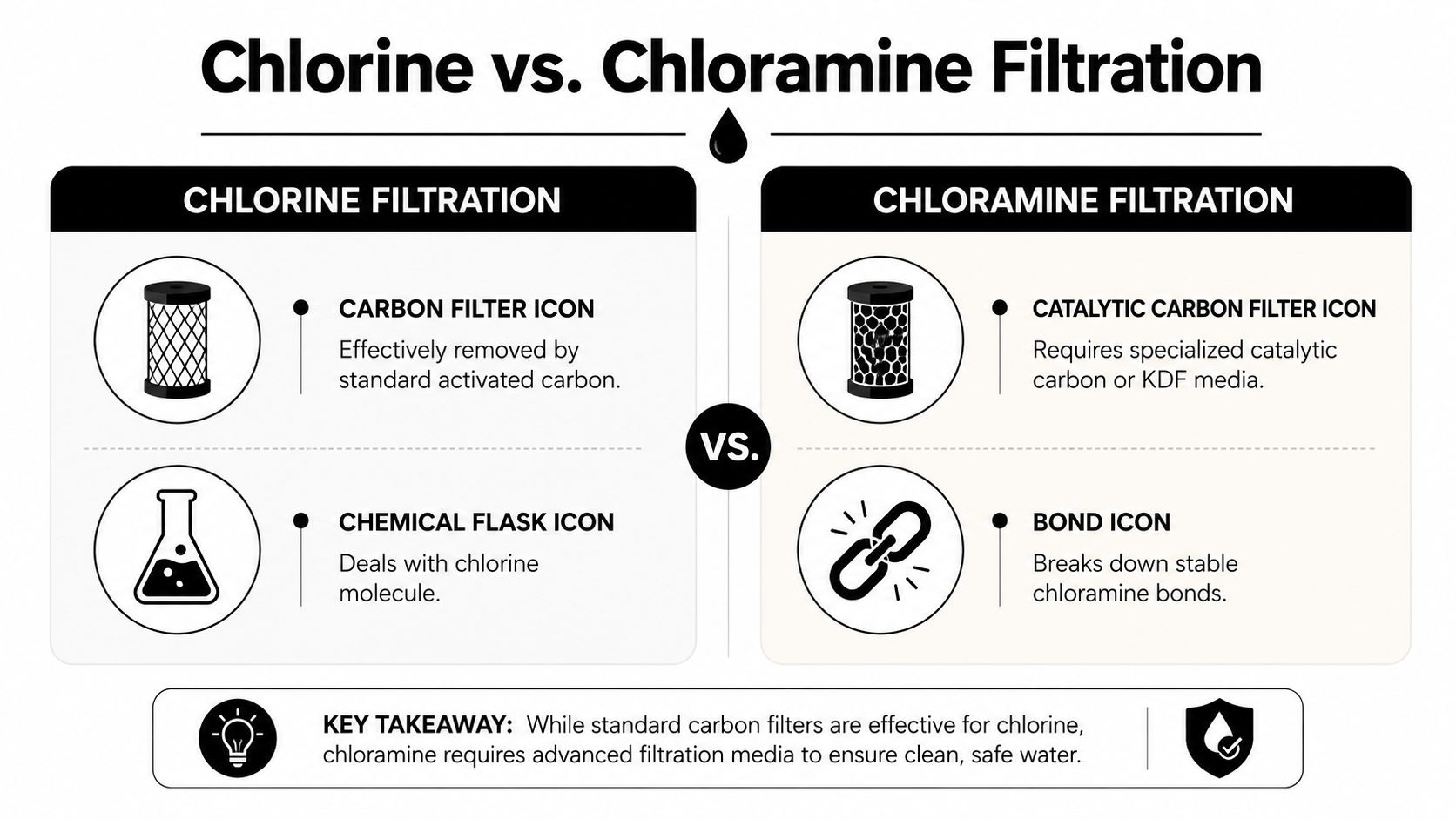
Free chlorine is easier to remove. Chloramines are more stable and stick around longer in the plumbing system. To a homeowner, both can get called “chlorine.” To a filtration system, they are not the same job.
That difference matters because a filter that handles one can struggle badly with the other. If you install a standard filter designed around free chlorine and your water contains chloramines, you can still end up with odor, taste, and bathing exposure throughout the house.
Many Apollo Beach homeowners don't have a water problem. They have a filter-selection problem.
If you've been replacing fridge filters, faucet cartridges, or shower heads and still getting that chemical smell, that's the clue. The technology probably doesn't match the disinfectant in the water.
Comparing Chlorine and Chloramine Filtration Methods
Filter labels cause more confusion than they solve. “Reduces chlorine” is not enough information for an Apollo Beach homeowner. You need to know whether the media is built for free chlorine or chloramines, because those are two different treatment jobs.
Standard carbon works for some homes
Standard activated carbon does a good job on free chlorine taste and odor. That is why pitcher filters, faucet filters, and many basic whole-house units can seem fine at first.
The problem shows up when the disinfectant is chloramine instead of free chlorine. Then the same filter media can leave behind the chemical smell and that dry, harsh feel in shower water. Homeowners blame the brand. The underlying problem is usually the wrong carbon.
Catalytic carbon is the right tool for chloramines
Catalytic carbon is the media to look for if your water supply uses chloramines or if your water test confirms them. It is designed to break down chloramines more effectively than standard activated carbon, which is why it belongs in a properly sized whole-house chlorine filtration system for Florida homes when the goal is source-level treatment.
For drinking water at one sink, reverse osmosis is a strong finishing step. For bathing, laundry, and water throughout the house, reverse osmosis is too limited because it treats one point of use, not the incoming supply.
Here is the practical comparison Apollo Beach homeowners should use before buying anything.
| Filter Type | Chlorine Removal | Chloramine Removal | Best For | Key Drawback |
|---|---|---|---|---|
| Pitcher filter | Often improves taste and odor | Usually limited | Basic drinking water improvement in small volumes | Does nothing for showers, laundry, or whole-home exposure |
| Standard activated carbon | Good choice for free chlorine | Often inconsistent or weak | Homes dealing mainly with chlorine, not chloramines | Commonly underperforms if chloramines are present |
| Catalytic carbon whole-home system | Strong whole-house treatment | Stronger choice for chloramines | Homes that want one system at the main line | Must be sized for the home and flow rate |
| Reverse osmosis | Strong at the kitchen sink | Strong at the kitchen sink | Drinking and cooking water | Does not treat the rest of the house |
One bad assumption costs homeowners a lot of money. They buy a “chlorine filter,” install it, and still smell disinfectant in the shower because the home needed chloramine-specific media.
If you are shopping for a chlorine removal water filter Apollo Beach FL homeowners can count on, focus on the media first. Standard carbon for free chlorine. Catalytic carbon for chloramines. Then confirm it with a professional water test before you spend a dollar.
Whole-Home Systems vs Point-of-Use Filters
You smell disinfectant when the shower warms up, the guest bath has the same sharp odor, and the laundry never seems to rinse clean. That is a whole-house problem, not a sink problem.
Why the main line matters
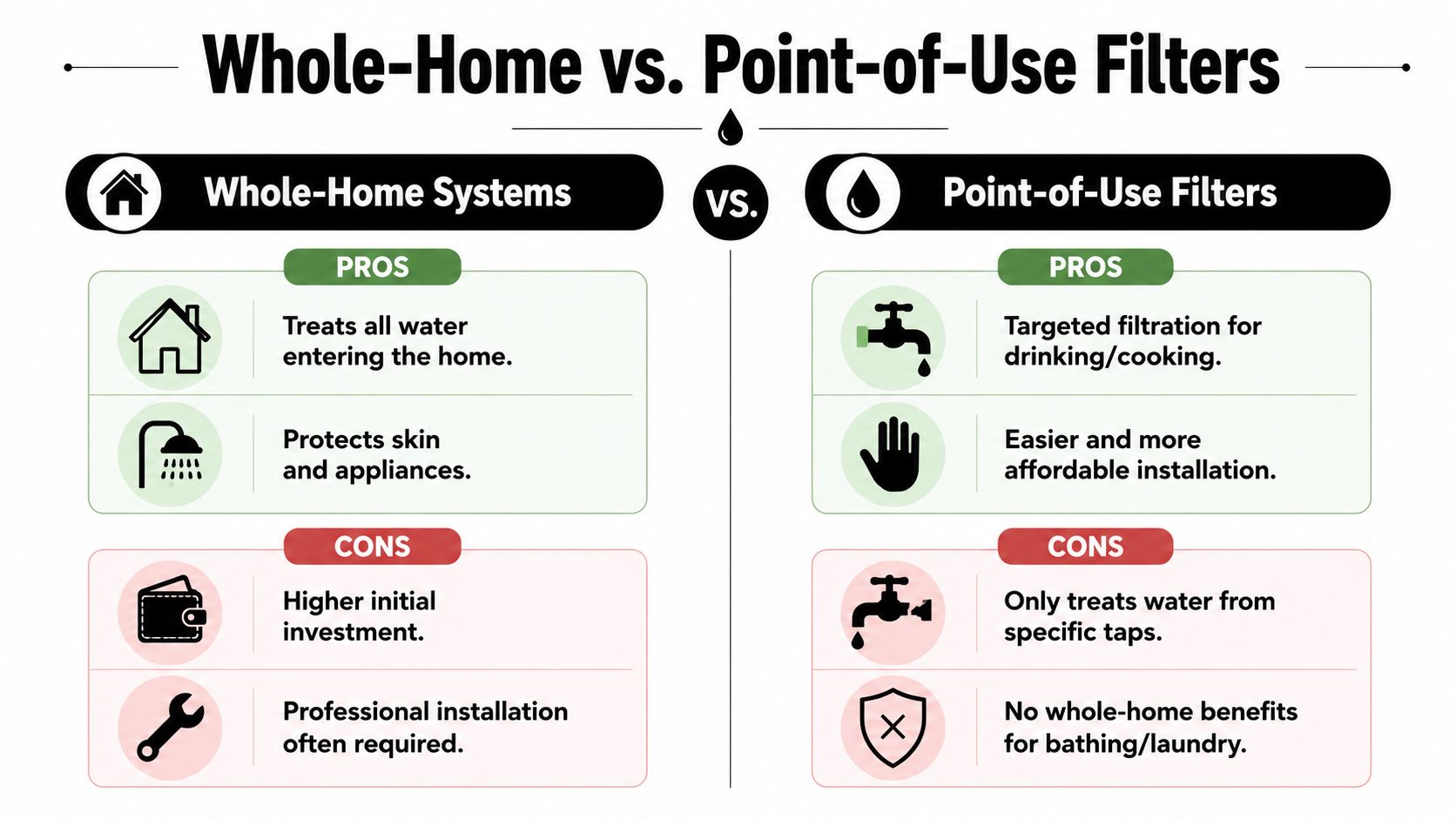
A filter at the main incoming line treats the water before it reaches your showers, water heater, ice maker, washing machine, and every faucet in the house. If your complaint shows up in more than one room, this is the right place to fix it.
As noted in this whole-house filtration overview, properly designed whole-house systems using catalytic carbon or activated carbon can reduce chlorine and chloramines before water moves through the home's plumbing. That same overview also describes the kind of setup homeowners should ask about: sediment protection, the right carbon media, and enough flow capacity for normal household use.
The media choice matters more than the label on the tank. In Apollo Beach, that distinction gets missed all the time. A standard carbon system can do a good job on free chlorine, but it often falls short if the water contains chloramines. That is why a whole-house water filter for chlorine needs to be matched to the disinfectant in your water, not picked off a shelf because the marketing sounds good.
Where point-of-use still makes sense
Point-of-use filters have a job. It is just a smaller job.
Use them when:
- You want better-tasting drinking water at the kitchen sink.
- You want lower dissolved solids for drinking and cooking, which is where reverse osmosis fits.
- You already have whole-home treatment and want an extra finishing stage for beverages or infant formula.
That approach works well when each device has a clear purpose. Whole-home treatment handles house-wide chlorine or chloramine exposure. Point-of-use treatment fine-tunes the water you drink.
Florida Water Management installs both whole-home and point-of-use systems as separate layers when test results show that combination makes sense.
The expensive mistake is buying a small under-sink unit or shower filter to solve a disinfectant problem in the entire home. If Apollo Beach water bothers you at the tap, in the shower, and in the laundry room, start with a professional water test and identify whether you are dealing with chlorine, chloramines, or both.
Installation Maintenance and Costs in Apollo Beach
A chlorine filter fails in Apollo Beach for predictable reasons. The tank is too small, the media is wrong for the disinfectant, or the installer ignores peak household flow. Then the water smells fine at one sink and harsh in the shower when the house is busy.
What proper installation looks like
Whole-home treatment belongs on the main incoming line, before water branches to bathrooms, the kitchen, laundry, and the water heater. Placement matters, but sizing matters more. If your house can draw more water than the system can treat, contact time drops and chlorine or chloramine removal drops with it.
That problem shows up fast in larger homes and busy households. Two showers, a dishwasher cycle, and a washing machine can push an undersized carbon tank past its effective flow range. The result is simple. You paid for treatment across the whole house and got partial treatment under ideal conditions.
Apollo Beach homeowners also need to stop treating chlorine and chloramines like the same job. Standard carbon is often enough for free chlorine. Chloramines usually need different media, more contact time, or a different system layout. If you are comparing options, start with a best water filtration system for Apollo Beach homes that is sized to your plumbing demand and matched to the disinfectant in your water.
What you should expect to maintain
Maintenance is straightforward if the system was selected correctly in the first place.
Sediment pre-filters need regular checks because Florida municipal water can carry enough particulate matter to load them up before the carbon media is anywhere near spent. Carbon media lasts longer, but not forever. Homes with higher disinfectant levels, heavier water use, or poor sizing will burn through media faster.
Keep these rules in mind:
- Wrong media means poor performance from day one. This is the biggest chloramine mistake.
- Higher water use shortens service life. A larger household will reach media capacity sooner.
- High flow cuts removal efficiency. Water moving too fast through the tank gets less treatment.
- Pre-filtration protects the main tank. Sediment control helps the carbon do its job.
Florida Water Management handles this by matching the system to the house, then setting clear service intervals based on the test results and your water use.
What systems usually cost
Installed cost in Apollo Beach depends on four things. The media type, the tank size, the plumbing layout, and whether you need whole-home treatment alone or whole-home plus drinking water polishing.
A basic chlorine setup costs less than a chloramine-capable system because chloramine removal usually demands more from the equipment. Installation also costs more when access is tight, the main line location is awkward, or the home needs extra pre-filtration to protect the carbon.
Do not shop by tank price alone. Shop by total fit for the house. The cheap mistake is replacing media too soon, fighting low performance, or buying a standard carbon unit for water that needed chloramine-specific treatment from the start. The smart next step is a professional water test before anyone quotes equipment.
Your First Step to Pure Water A Free Water Test
Most water filter mistakes happen before installation. Homeowners buy hardware first and ask questions later. That works for an air filter. It doesn't work for municipal water chemistry.
Why testing comes before equipment
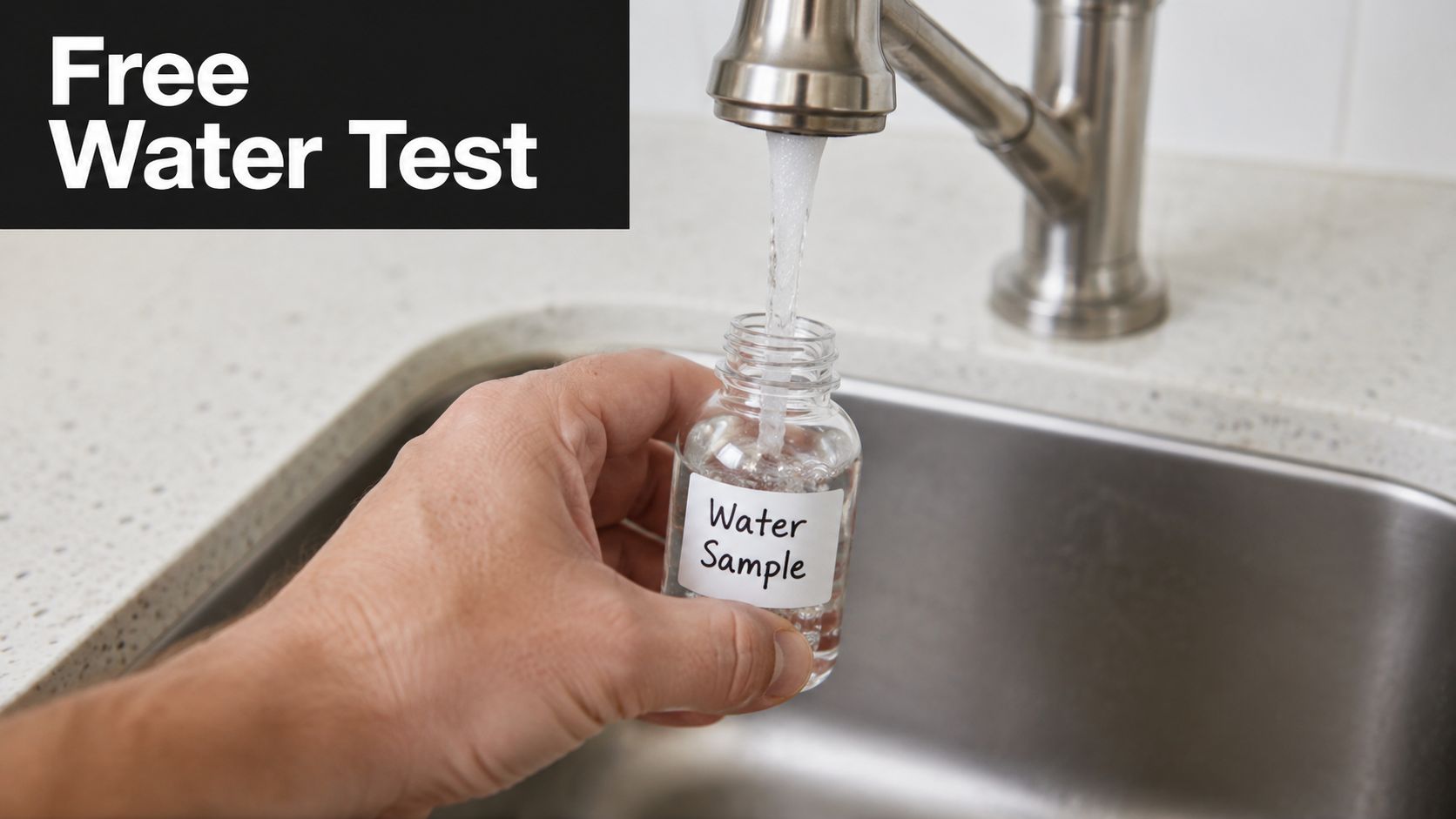
A proper water test tells you what you're treating and helps prevent two common mistakes. First, installing standard carbon when chloramines are the main issue. Second, overspending on equipment you don't need.
You don't need a guess. You need a diagnosis.
A professional test helps answer practical questions:
- Is the house dealing with free chlorine, chloramines, or both?
- Is there sediment that should be handled before carbon media?
- Would a whole-home system solve the complaint, or do you also need point-of-use polishing?
- How should the system be sized for the house?
Buy the test result first. Buy the equipment second.
What happens during the visit
A good in-home water test should be straightforward. A technician checks the incoming water, reviews what you're noticing in daily use, and connects the results to a treatment plan that fits the house.
That gives you a far better answer than online reviews or product labels ever will. You get a recommendation based on your water, not someone else's.
If you're ready to stop dealing with chemical odor, bad taste, or trial-and-error filter purchases, schedule a consultation through this Apollo Beach water filtration page. It's the fastest way to find out what your home needs.
Frequently Asked Questions About Chlorine Removal
Do I still need a filter if I already have a softener
Yes.
A softener handles hardness. It does not remove disinfectants from city water. If your water still smells like a pool, tastes chemical, or leaves that sharp odor on your skin after a shower, you need treatment aimed at chlorine or chloramines.
That distinction matters in Apollo Beach. A standard setup can leave homeowners frustrated because the softener is doing its job while the primary complaint stays in the water.
Will a whole-home filter hurt water pressure
A correctly sized system should not create noticeable pressure problems. Pressure loss usually points to bad sizing, neglected prefiltration, or a low-quality install.
This is one of the biggest mistakes I see. Homeowners buy a tank online, match it to a sales label, and assume it will work for every house. It will not. A house with multiple bathrooms, a larger family, or high simultaneous water use needs equipment sized to actual flow, not marketing copy.
What about drinking water at the kitchen sink
A reverse osmosis system is the right finishing step for drinking water. It improves taste at the tap and gives you better water for coffee, cooking, and ice.
Keep the roles clear. RO treats one faucet. It does not solve chlorine odor in showers, laundry, or every tap in the house. If your goal is whole-home chlorine or chloramine reduction, RO is a useful add-on, not the main system.
Do I need a different filter for chloramine than for chlorine
Often, yes.
This is the part many Apollo Beach homeowners miss. Standard carbon can work well on free chlorine, but chloramines are harder to remove and usually require catalytic carbon, more contact time, and proper system sizing. If you install the wrong media, the odor may improve a little and still keep showing up in shower steam and drinking water.
Buy equipment based on a test result, not a box label.
Do well-water homes need the same setup
No. Well water is a different job.
Most chlorine complaints in Apollo Beach come from municipal water. Private wells usually need treatment for issues like iron, sulfur, sediment, or bacteria instead. Some well owners disinfect their systems from time to time, but that does not mean they need the same chlorine-removal setup as a city-water home.
Is certification worth paying attention to
Yes, but read it carefully.
A filter can claim chlorine taste and odor reduction without being the right answer for chloramines or whole-home use. Ask what the system is designed to reduce, what media it uses, and how long that performance lasts under your household's flow rate. If the company cannot answer those questions clearly, keep shopping.
If you're still dealing with chemical odor and you want a straight answer on whether your home has chlorine, chloramines, or both, book a free water test with Florida Water Management. That gives you a diagnosis first and a properly matched treatment plan second.