

If you're in Apollo Beach and you're tired of white crust on faucets, chlorine taste in a glass of water, or odd smells from a private well, you're not dealing with a mystery. You're dealing with Florida water. The mistake most homeowners make is shopping for a product before they know what their water is doing.
That's why the best water filtration system in Apollo Beach, FL isn't a single box you order online. It's a setup built around your water test. Hardness needs one solution. Chlorine needs another. Iron, sulfur, and well bacteria concerns take a different path entirely. If you skip testing, you're guessing. And guessing is how people end up with the wrong equipment, extra maintenance, and water that still doesn't feel right.
Table of Contents
- Your Guide to Better Water in Apollo Beach
- Understanding Apollo Beach Water Quality Issues
- An Explainer on Water Filtration System Types
- Tailoring Solutions for Municipal vs Private Well Water
- How to Choose the Right System Configuration
- Hiring a Professional Installer in the Apollo Beach Area
- Take Control of Your Home's Water Today
Your Guide to Better Water in Apollo Beach
A lot of Apollo Beach homeowners start looking for water treatment after the same few warning signs show up. New fixtures already have chalky buildup. Soap doesn't rinse clean. Drinking water smells like a pool. If you're on a well, maybe the water has staining, odor, or that off-putting smell that makes you question every shower and load of laundry.
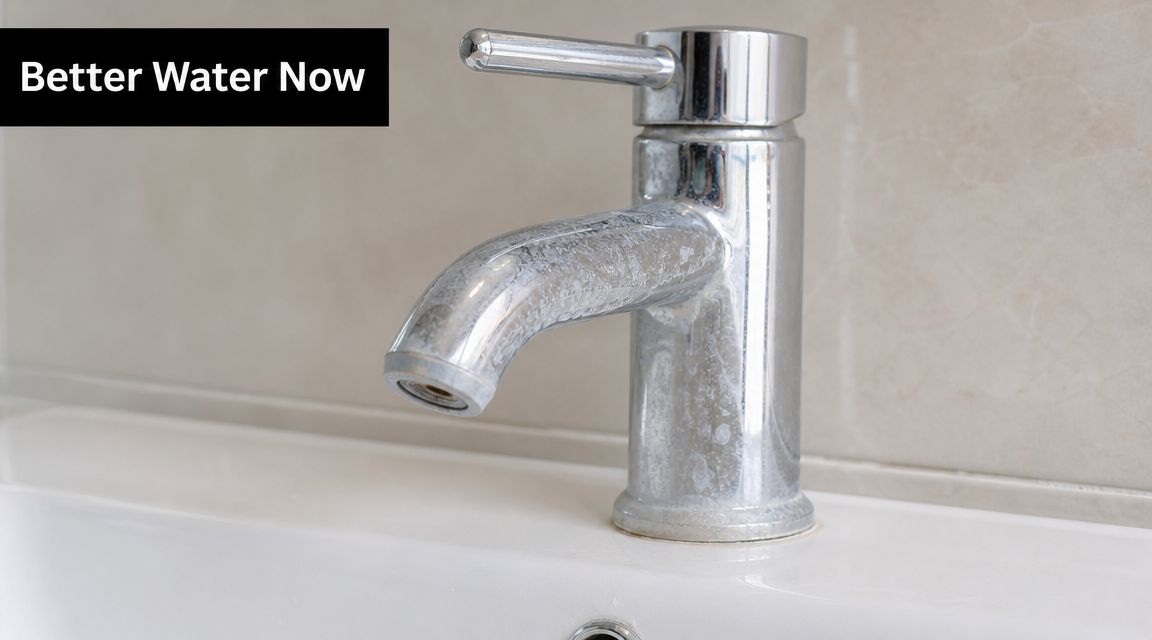
Those symptoms matter because they point to different causes. Scale points to hardness. Chemical taste usually points to disinfectants such as chlorine. Rust-colored staining often points to iron. Rotten egg odor usually needs a completely different fix than either one. One system won't solve every problem well.
Why guessing goes wrong
Homeowners often ask for the “best water filtration system Apollo Beach FL” as if there's one universal answer. There isn't. The best system is the one matched to your home's water source, plumbing demands, and actual contaminants.
Practical rule: If nobody has tested your water first, nobody knows what system you actually need.
A whole-home carbon filter can be a great choice for chlorine and odor. It won't act like a proper softener. A softener is excellent for hardness. It won't replace reverse osmosis for drinking water purification. UV can help with microbial concerns. It won't remove hardness, chlorine, or iron by itself.
The right first move
Before you compare equipment, get a professional water test. That's the starting line. It tells you what's in the water, what's causing the visible problems, and whether you need treatment at every tap, only at the kitchen sink, or both.
That approach saves time and prevents expensive mistakes. It also gives you a clear answer instead of a sales pitch wrapped around generic equipment.
Understanding Apollo Beach Water Quality Issues
A homeowner in Apollo Beach usually calls after the signs start stacking up. White crust around faucets. Shower glass that never looks clean. Water that smells like chlorine at one tap and tastes flat at another. Those are local water chemistry problems, and you do not solve them by buying the same filter a national roundup recommends.
Apollo Beach water has to be judged at the house level. Municipal reports matter, but they do not tell you what is happening inside your plumbing, your water heater, or your kitchen sink after the water reaches your property. A compliant utility supply can still leave you with hard water scale, strong disinfectant taste, or nuisance contaminants that make daily use frustrating.
What city water results do and don't tell you
The most recent public reporting for the Apollo Beach system shows the utility meets EPA standards overall, according to Apollo Beach water system reporting. That is useful baseline information. It means the conversation should shift from panic to diagnosis.
It also does not answer the question most homeowners are asking, which is simple. Why does my water look, smell, or behave like this in my house?
Utility data is broad. Treatment decisions are specific. A neighborhood can be on the same water system and still have different real-world complaints because plumbing age, water heater condition, fixture buildup, and household water use all change what you notice at home.
What Apollo Beach homeowners usually deal with
In this area, the problems that show up first are usually easy to spot and expensive to ignore.
- Hardness and scale: Mineral-heavy water leaves white buildup on faucets, spots on dishes, and scale inside heaters, valves, and appliances.
- Chlorine taste and odor: Disinfection can leave a chemical smell in showers and an unpleasant taste at the kitchen sink.
- Iron staining on private wells: Orange, brown, or reddish stains on tubs, toilets, and laundry usually point to iron.
- Sulfur odor: Rotten egg smell is common in some well systems and needs a targeted fix, not a generic filter.
- Well-water bacteria risk: Private well owners need to verify water safety with testing because the responsibility sits with the homeowner, not a utility.
One symptom does not prove one cause. Scale usually points to hardness, but staining can come from iron, manganese, or old plumbing. Bad taste might be chlorine, sulfur compounds, or something else entirely. That is why a professional test comes first.
If you have not tested the water, you are still guessing.
Why local testing beats generic buying advice
Most national advice skips the part that matters in Apollo Beach. It treats water treatment like a product category instead of a diagnosis. That is how homeowners end up with a carbon filter when they needed a softener, or a softener when the underlying complaint was poor-tasting drinking water.
The right approach is more disciplined. Test the water. Confirm the source of the problem. Then match the equipment to the result.
For example, hardness calls for a softener. Chlorine taste and odor often call for whole-home carbon filtration. If your main concern is cleaner drinking water at the sink, a professionally selected reverse osmosis system for drinking water may be the right add-on. Those systems do different jobs. Lumping them together as the “best water filtration system Apollo Beach FL” leads to wrong purchases.
The best system is the one that matches your actual water, your water source, and the way your home uses water every day. A professional water test is how you get that answer.
An Explainer on Water Filtration System Types
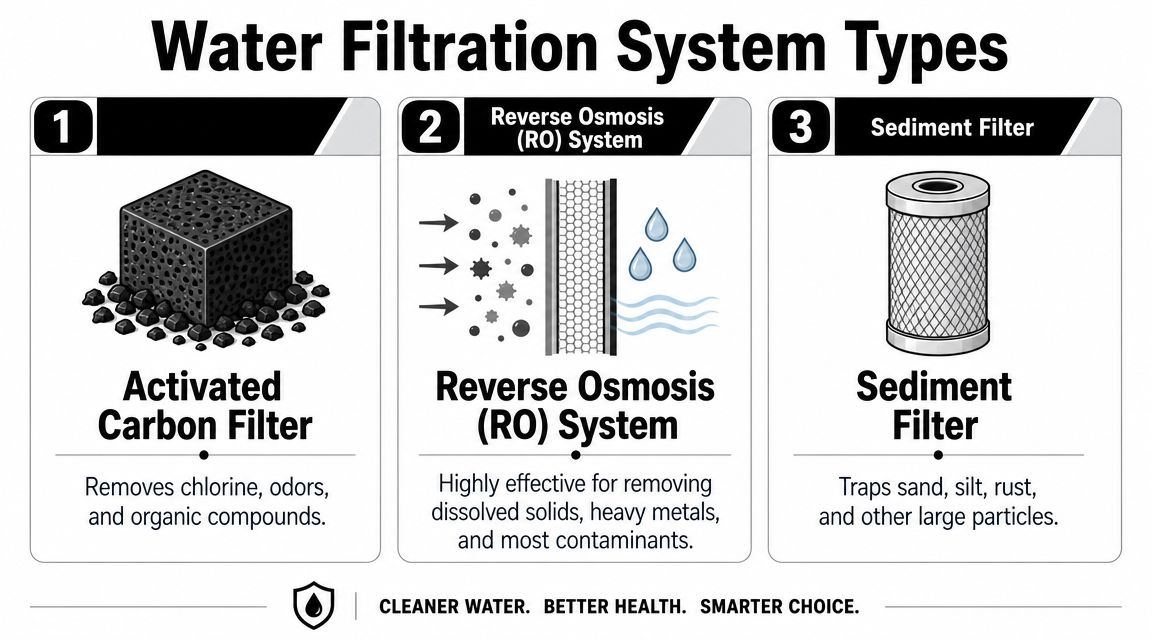
Choosing the best water filtration system in Apollo Beach starts with a simple fact. One piece of equipment will not solve every water problem in this area. Hard water, chlorine, sulfur odors, iron staining, and drinking water concerns all call for different treatment methods. The right setup comes from matching the equipment to the test result.
What each system does
A water softener removes hardness minerals through ion exchange. If your real problem is scale on fixtures, spotting on glass, stiff laundry, and mineral buildup in plumbing, this is usually the correct tool. It fixes a specific Apollo Beach complaint. It does not improve chlorine taste or purify drinking water at the sink.
A whole-home carbon filter reduces chlorine, chemical taste, and odor across the house. For many municipal water homes in Apollo Beach, this is what makes showers smell better and tap water taste cleaner. It improves the water experience at every faucet. It does not remove hardness, and it should not be sold as a substitute for a softener.
A reverse osmosis system is built for drinking water. It belongs at the kitchen sink or another dedicated drinking tap where you want a higher level of purification for water and ice. If you want to see how that fits into a home setup, review these reverse osmosis systems for drinking water.
A UV purifier treats microbial risk. It is typically used on private well systems when bacteria or other biological contamination is a concern. UV does one job well. It does not remove minerals, staining metals, or bad taste by itself.
The Florida Department of Environmental Protection groups common residential treatment into point-of-entry carbon filtration, point-of-use reverse osmosis, and ion exchange treatment in its Florida DEP water filtration guidance. That aligns with what works in the field. Different technologies handle different contaminants.
Which technology fits which problem
Use this as a practical starting point:
| System type | Best use in the home | Common Apollo Beach problem it addresses | What it does not do well alone |
|---|---|---|---|
| Water softener | Whole home | Hardness and scale | Does not remove chlorine taste or provide sink-level drinking water purification |
| Whole-home carbon filter | Whole home | Chlorine taste, odor, and general water smell improvement | Does not solve hardness |
| Reverse osmosis | Kitchen sink or drinking tap | Drinking water purification | Does not treat the whole house |
| UV purifier | Whole home or targeted use | Microbial concerns, usually on wells | Does not remove minerals, odors, or staining contaminants |
Flow rate matters too. So does how much water your family uses at one time. A system that looks good on paper can still disappoint in a real house if it is undersized or paired with the wrong equipment.
The mistake that wastes the most money
Apollo Beach homeowners often buy a single product because the label sounds broad enough to cover everything. That is how people end up disappointed.
A softener will not remove chlorine. A carbon filter will not stop iron staining. An under-sink RO unit will not protect the shower, water heater, or washing machine. Good treatment is specific, and Apollo Beach water is too variable for guesswork.
Get the water tested first. Then choose the system type, or combination of system types, that matches the result.
Tailoring Solutions for Municipal vs Private Well Water
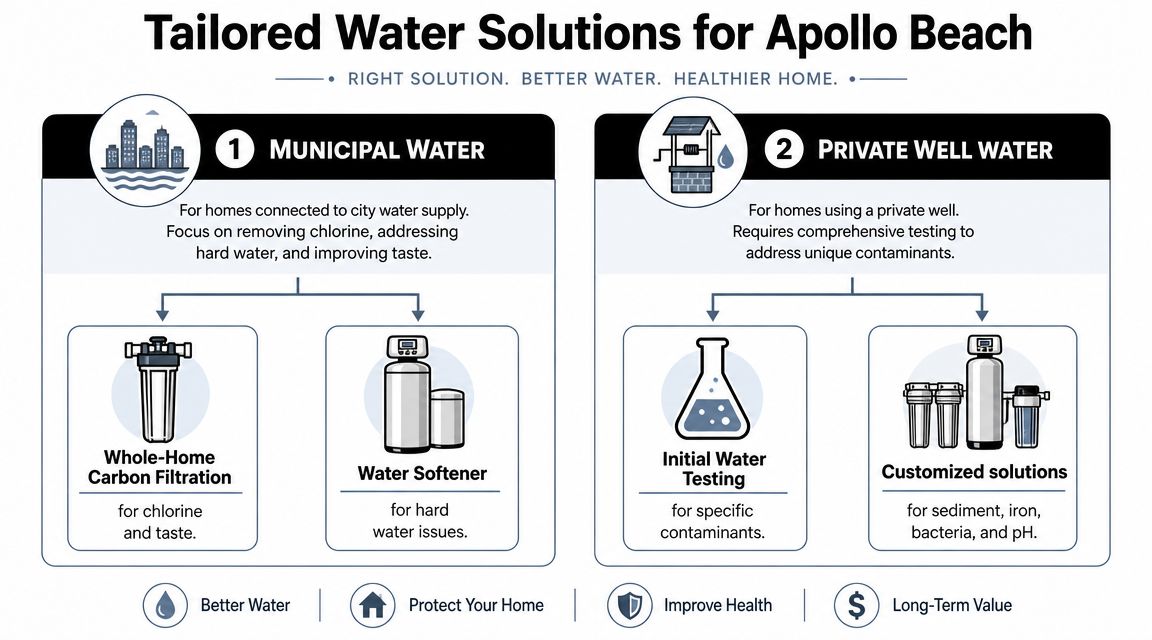
Apollo Beach homes split into two very different categories. You're either on municipal water or you're on a private well. The treatment path changes immediately based on that one detail.
A practical path for city water homes
If your home is on municipal water, the usual priorities are straightforward. Common objectives include stopping scale, improving taste, reducing chlorine smell, and protecting plumbing and appliances. In that situation, a water softener plus a whole-home carbon filter is often the strongest overall setup.
That combination handles the two complaints city-water homeowners bring up most often. The softener tackles mineral buildup. The carbon filter handles chlorine-related taste and odor issues. If drinking water quality at the kitchen sink matters even more, many homeowners add a point-of-use RO system after that.
This is the path for homeowners who want better water at every tap, not just a nicer glass of water from one faucet.
A smarter path for private well homes
Private well water is different because the water profile can vary widely from one property to the next. One home may need iron treatment. Another may need sulfur treatment. Another may need sediment reduction, pH correction, or UV protection. That's why private well treatment should always start with thorough testing and diagnosis.
For homes using a well, a custom setup often includes staged treatment rather than one standalone unit. If you're evaluating what that can look like, this overview of well water treatment options is a useful reference.
Here's the practical split:
- Municipal water homes: Usually need treatment focused on hardness, chlorine, taste, and fixture protection.
- Private well homes: Usually need treatment focused on the exact contaminants found in the well, with odor, staining, sediment, and microbial protection considered case by case.
Private well water should never be treated with a one-size-fits-all recommendation. The water source decides the equipment.
The right setup for city water is often predictable. The right setup for well water is almost always custom.
How to Choose the Right System Configuration
Choosing the right system isn't complicated if you follow the right order. Most bad decisions happen because homeowners skip steps. They start by shopping. They should start by diagnosing.
Start with a real water test
This is not optional. If you want the best water filtration system in Apollo Beach, FL, you need to know what's in the water first. That means testing for the issues that drive treatment decisions.
Independent Florida service providers report that they first measure hardness, chlorine, iron, and other source-specific contaminants before recommending the final configuration, and they note that for Apollo Beach properties with hard water or mixed contaminant profiles, the technically strongest whole-home setup is usually softening plus targeted filtration, not filtration alone, as described by Titan Water Solutions.
That makes sense. A single media bed cannot optimize for hardness, chlorine, and iron at the same time. Different problems need different media and different sizing.
Set the goal before you pick equipment
Not every homeowner wants the same result. Some want better tasting drinking water. Others want whole-home protection for fixtures, water heaters, and plumbing. Some want both.
Use this checklist:
- Whole-home comfort: You're trying to improve showers, laundry, faucets, and appliance protection.
- Drinking-water quality: You care most about the kitchen sink and cooking water.
- Well-water correction: You need to solve odor, staining, sediment, or biological concerns tied to a private source.
- Low-maintenance performance: You want equipment that's properly sized so it works without constant attention.
If you don't define the goal, you can't choose the right configuration.
Build the system around the dominant problem
Once test results are in, the right layout usually becomes obvious.
If hardness is the main issue, start with a softener. If chlorine and odor dominate, add carbon filtration. If iron is present, iron treatment needs to be handled with the right media before expecting the rest of the system to perform well. If drinking water purity is the top priority, point-of-use RO belongs at the sink.
Here's the short version:
- Scale problem first: Softener.
- Taste and odor issue across the home: Whole-home carbon.
- Well staining or smell: Targeted well treatment.
- High-purity drinking water goal: RO at the point of use.
A lot of homeowners also want to understand the ownership side before they commit. This guide on what a home water filtration system can cost helps frame the long-term decision.
Don't ask, “What system is best?” Ask, “What configuration solves my water's main failure point?”
Think about maintenance before you buy
A system isn't a good fit if you won't keep up with it. Filter changes, salt replenishment, UV lamp service, media replacement, and periodic checkups all matter. That's another reason testing and professional sizing matter so much. Properly matched equipment is easier to maintain because it's doing the job it was designed to do.
Homeowners get in trouble when they oversize the wrong technology or buy equipment that targets the wrong issue. The better move is a staged system that solves the core problem and stays serviceable over time.
Hiring a Professional Installer in the Apollo Beach Area
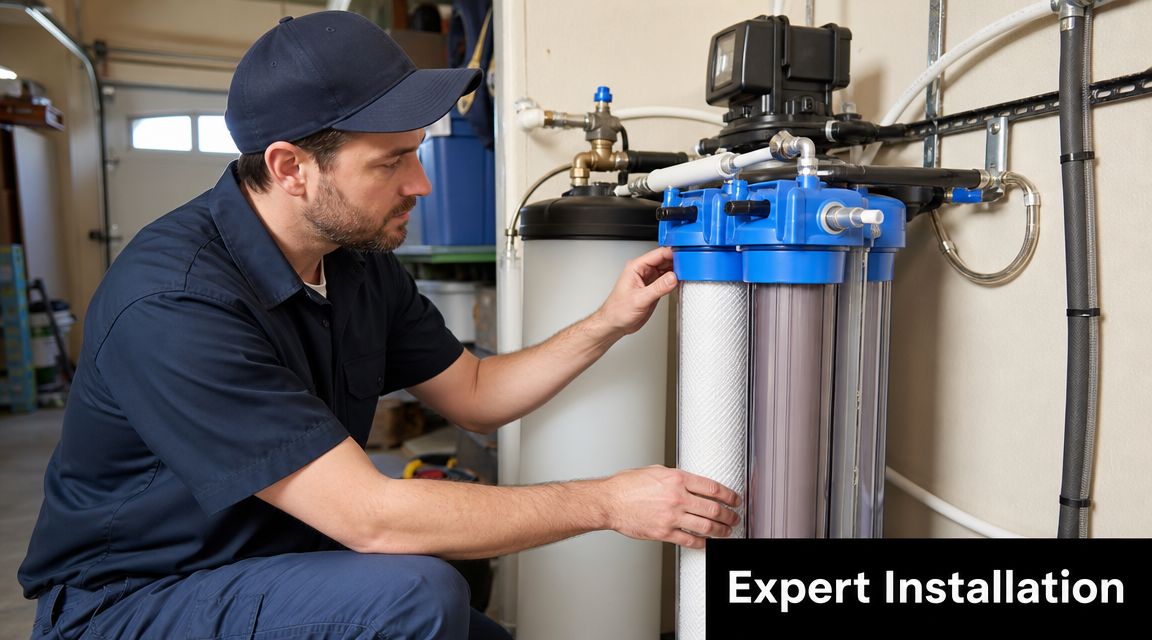
The equipment matters. The installer matters just as much. A strong system can underperform when it's poorly sized, badly plumbed, or installed by someone who treats every house the same.
What a good installer does differently
A quality installer doesn't start by pushing a brand. They start by diagnosing your water and your home's actual demand. They ask whether you're on city water or a private well. They look at fixture count, family usage patterns, plumbing layout, and the problems you've already noticed.
Look for these signs:
- On-site testing capability: They should be able to test and explain what the results mean in plain English.
- Custom system design: They should recommend a configuration, not just a product.
- Clear maintenance expectations: They should tell you what service the system needs and when.
- Transparent quoting: You should know what equipment is included, what installation covers, and what future upkeep looks like.
- Service after installation: A good company doesn't disappear after the install.
Questions worth asking before you sign
You can learn a lot from a short conversation. Ask direct questions and listen for direct answers.
| Question | What a strong answer sounds like |
|---|---|
| What are you testing for? | They name the water issues that matter for your source and symptoms |
| Why this system and not another one? | They connect the recommendation to your test results |
| Is this whole-home treatment, drinking-water treatment, or both? | They explain the use case clearly |
| What maintenance will I be responsible for? | They give a simple, realistic service plan |
| What happens if my water changes? | They explain how the system can be adjusted or serviced |
A real water treatment professional should make the decision clearer, not more confusing.
If someone skips testing, recommends the same package to everyone, or can't explain why each component is there, keep looking.
Take Control of Your Home's Water Today
A lot of Apollo Beach homeowners reach this point after the same kind of week. White crust builds up around the showerhead, the kitchen tap starts tasting like a pool, a toilet bowl picks up rust-colored staining, and nobody in the house agrees on whether the water problem is "bad enough" to deal with. It is.
The best water filtration system Apollo Beach FL homeowners can buy starts with a professional water test. That is not a sales step. It is the only reliable way to match equipment to the water coming into your house. Apollo Beach homes can deal with very different water conditions depending on whether they use city water or a private well, how old the plumbing is, and which contaminants or nuisance minerals are showing up at your fixtures.
Guessing usually leads to one of two expensive mistakes. You buy too little treatment and the problem stays. Or you buy a stacked system full of parts you do not need, then pay to maintain equipment that never addressed the actual issue in the first place.
Get the water tested. Review the results with someone who can explain them clearly. Then choose a setup that fits your home, your water source, and the problems you want gone first.
If you are ready to stop guessing, schedule a free water test with Florida Water Management. A good test gives you a starting point, a clear recommendation, and a treatment plan built for your actual water in Apollo Beach.