

A boil order always seems to arrive at the worst possible time. One minute you're making coffee, filling a pet bowl, or getting ready to brush your teeth, and the next you're checking a notice and wondering whether every glass of tap water in the house is off-limits.
The good news is that a boil order has a clear meaning, and there's a clear way to respond. If you know what the notice means, why it was issued, what water is safe to use, and what still needs attention after it lifts, you can protect your household without guessing. For homeowners who want a more proactive approach to water quality, a free water test can also help you understand what's happening before an emergency forces the issue, and you can start that process through the well water testing page.
Table of Contents
- When a Boil Order Notice Arrives at Your Door
- What a Boil Order Actually Means
- Why Boil Orders Are Issued
- Health Risks and Who Is Most Vulnerable
- What to Do During a Boil Order
- Cleaning Your Plumbing and Appliances After the Order Lifts
- How Water Treatment Can Help Prevent Future Boil Orders
- Key Takeaways for Every Homeowner
When a Boil Order Notice Arrives at Your Door
You get the alert in the middle of a normal day. Maybe it's a text from your utility, a notice taped to the front door, or a phone call from a neighbor asking if you've seen the water advisory yet. Suddenly, the same faucet you trusted ten minutes ago feels uncertain.
That's the moment the same questions start arising. Can you still make coffee? Is the ice in the freezer safe? What about the water heater, the dishwasher, or the private well behind the house? The answer depends on what kind of notice you received and what problem the water system is facing.
A boil order is not a routine reminder. It's a public-health warning that says the water may carry a microbial risk and needs treatment before use. That's why official notices usually tell residents to boil water before drinking, cooking, or brushing their teeth, and to wait until the order is lifted before going back to normal use.
If you live on a private well, the notice can feel even more personal because the responsibility doesn't stop at the street. A home well system, pressure tank, filtration setup, and plumbing layout all affect how water moves through the house, which is one reason professional testing is so helpful. Homeowners who want to understand their own water instead of reacting only when something goes wrong can use a local water testing resource to get ahead of the next surprise.
What a Boil Order Actually Means
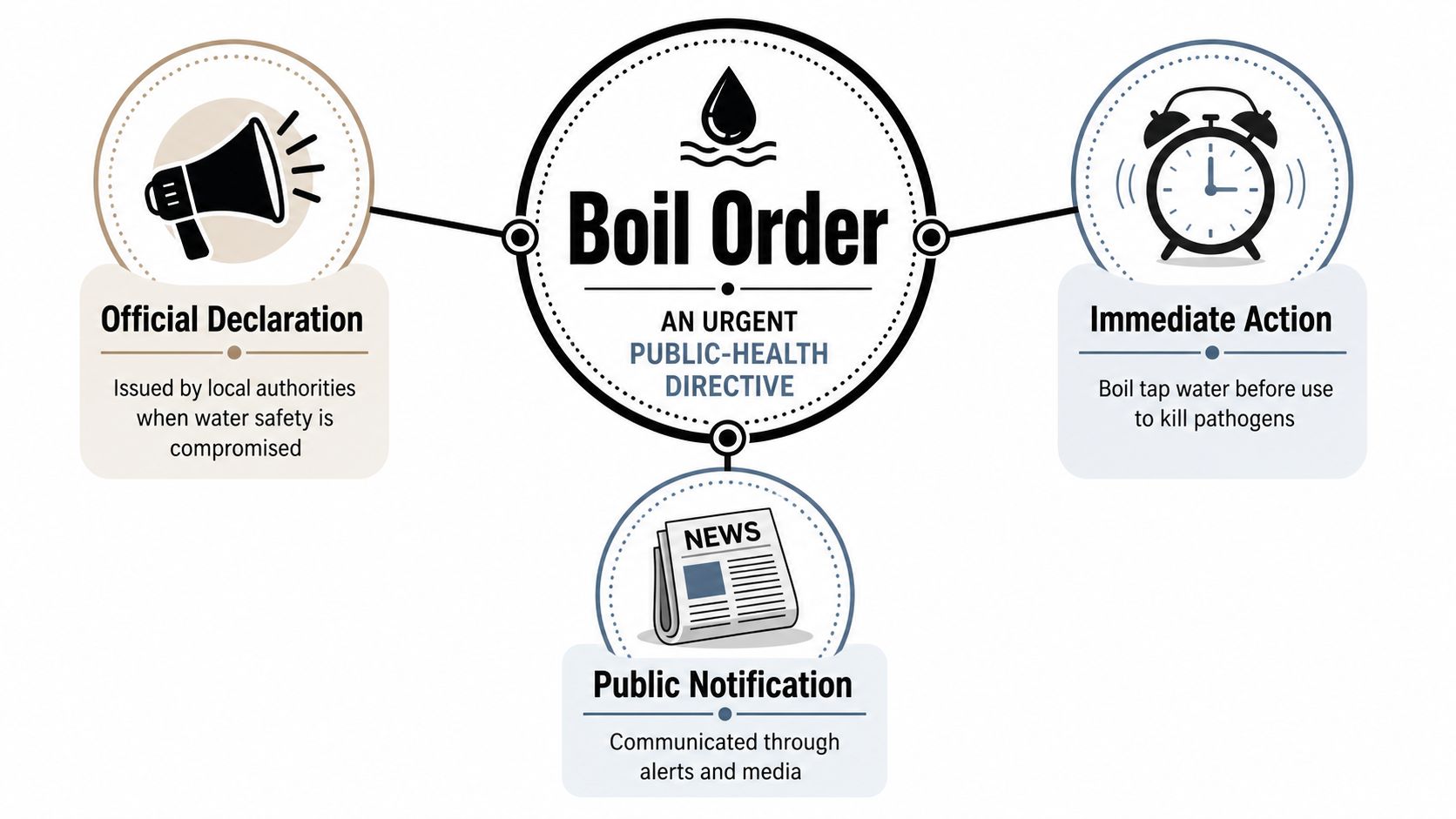
A boil order is a public-health directive, not a suggestion. Missouri's Department of Natural Resources says these orders are used when there is “a threat to the public health … that boiling the water will remedy,” and Illinois EPA guidance says they must be issued immediately when water pressure falls below 20 psi in part of the system or when contamination is known or suspected. The point is simple, the water system has lost the normal margin of safety, and officials are telling people to treat the water before using it.
The notice has a specific purpose
A boil order is issued to protect against microbiological contamination, which means germs that can make people sick. Illinois guidance describes it as a control measure used when the drinking-water system has confirmed contamination or when conditions could allow pathogens into the distribution system, such as a loss of pressure or compromised sanitary integrity. In other words, the notice isn't about inconvenience, it's about preventing exposure.
The standard emergency step is also straightforward. Public-health agencies commonly tell residents to bring water to a full rolling boil for 1 minute before drinking or food preparation. That step uses heat to inactivate microbes, which is why boiling is effective for this kind of event.
What boiling does and doesn't do
Boiling works because heat damages the proteins and other essential structures of many harmful organisms. New York State explains that boiling can kill or inactivate viruses, bacteria, and protozoa under boil-order conditions. The same guidance also makes the limit clear, boiling does not remove chemical contaminants, so a boil order is only the right response when the concern is microbial, not chemical.
Practical rule: if the notice says to boil, treat the water as unsafe until you've done the full rolling boil and cooled it before use.
That distinction matters because people sometimes assume any “water problem” can be fixed with a pot on the stove. It can't. A boil order has a narrow purpose, and when you follow it correctly, it's one of the simplest emergency protections a household can use.
Why Boil Orders Are Issued
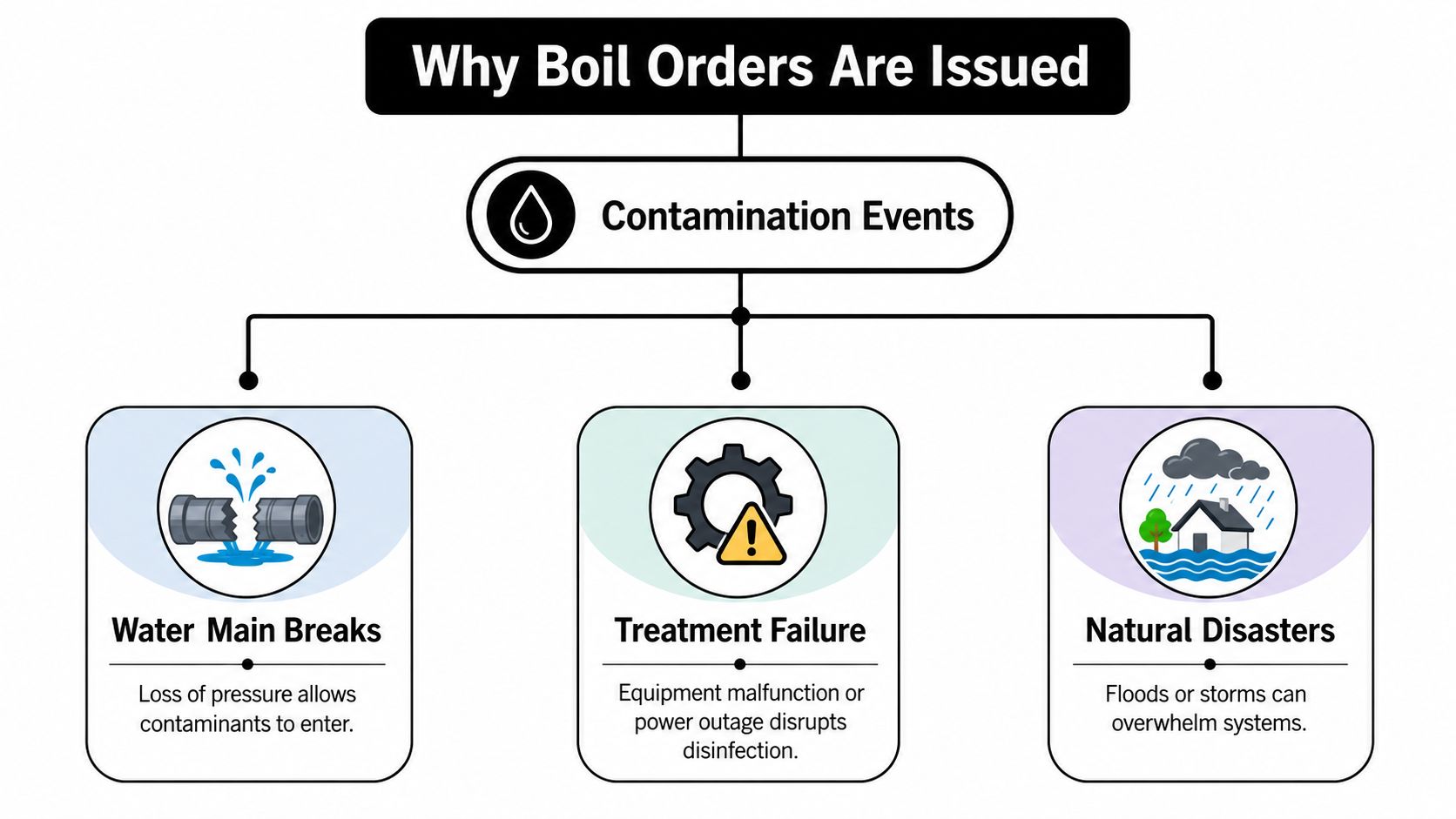
A boil order usually starts with a failure in the system, not with anything a homeowner did. Illinois EPA guidance points to low pressure, main breaks, compromised sanitary integrity, and analysis that suggests microbiological contamination. Missouri's Department of Natural Resources also identifies E. coli bacteria and high turbidity as the causes of most boil orders in Missouri.
Pressure loss opens the door
Water pressure matters because it helps keep outside contaminants from moving into the pipes. Illinois and Rockford utility guidance both note that pressure below 20 psi is a common trigger, because leaks, breaks, or valve work can allow ingress contamination. When pressure drops, the system can no longer provide the same barrier against contamination.
That's why a main break can trigger a notice even before anyone has confirmed a sickness source. The event itself creates the risk. If soil, floodwater, or other contamination gets into the system during repair or pressure loss, officials have to assume the water may no longer be safe to drink.
Microbial indicators change the response
Missouri's DNR says boil orders often trace back to E. coli or turbidity issues. Turbidity means cloudiness in the water, and while cloudy water doesn't automatically mean dangerous water, it can signal conditions that make disinfection less reliable. Public-health officials look at that kind of warning sign seriously because it can point to a broader system problem.
A boil order is often the last line of defense after something upstream has already gone wrong.
That's the homeowner lesson here. If a notice arrives after a break, loss of pressure, or treatment disruption, the order is responding to a real vulnerability, not just sending a broad caution. Knowing the trigger helps you understand why the notice was issued and why you shouldn't ignore it.
Health Risks and Who Is Most Vulnerable
The hardest part of a boil order is that compliance isn't perfect. In a community waterborne outbreak study, 31% of households said someone drank unboiled water after they'd been told about the order, and 12 of 14 people, or 86%, who later developed diarrhea said they had drunk unboiled water after notification (study PDF). A separate meta-analysis found that the median effective compliance rate fell to about 68% once other risky behaviors like tooth brushing were counted (study PDF).
Why some households are at greater risk
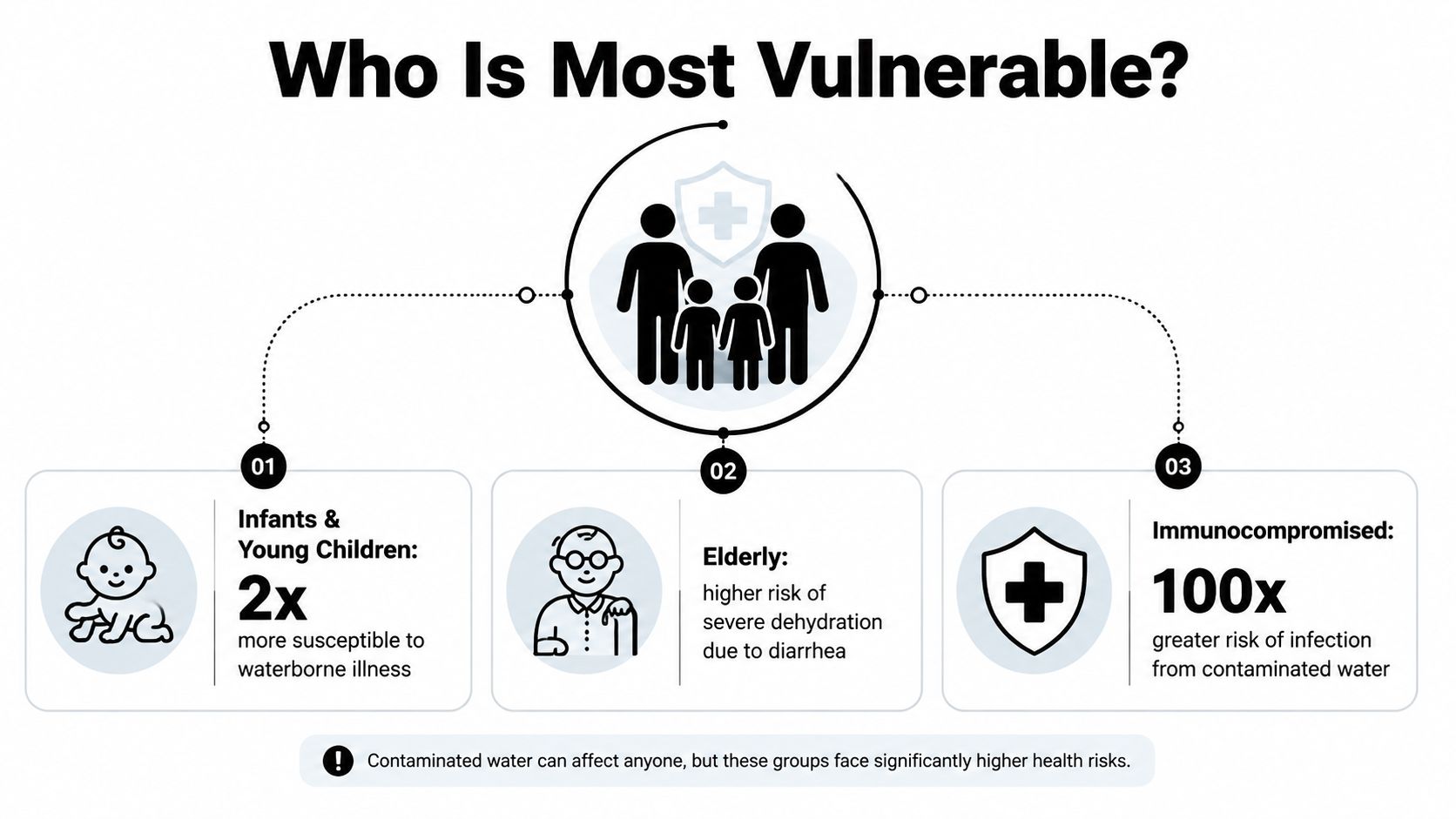
The issue isn't just whether people read the notice. It's whether everyone in the house follows it consistently, every time water is used. Young children can drink from cups they shouldn't, older adults may forget a temporary rule during a long outage, and immunocompromised people have less room for error because even a small exposure can matter more.
That's why boil orders are treated as urgent public-health controls. They only work if residents use boiled or otherwise safe water for the tasks that matter most, including drinking, food prep, and oral care. The order doesn't protect anyone who keeps using unboiled water out of habit.
The practical takeaway for families
If one person in the house forgets, the whole household can still be at risk. That's especially true in busy kitchens, shared bathrooms, and rental properties where people may not all get the same notice at the same time. A printed reminder near the sink, a note on the fridge, or a temporary shutoff of the water dispenser can help stop routine use before it happens.
Use the order as a household rule, not a personal preference.
That approach is more important than it sounds. The statistics show that many people understand the notice but still slip in daily routines like brushing teeth or pouring a glass from the tap. Boil orders are designed for imperfect real life, and the safest households are the ones that make the rule hard to miss.
What to Do During a Boil Order
Boiling water is the core step, but it has to be done correctly. For standard elevations, public-health agencies commonly advise a full rolling boil for 1 minute, then cooling before use. New York State also notes that longer boiling times may be needed at higher altitudes, and Missouri's DNR guidance says customers should boil water for three to five minutes to kill microbes, so residents should follow the specific instructions on their local notice when those differ.
Use the right water for the right task
The safest approach is to treat all tap water as suspect until the order ends. Use boiled water or bottled water for drinking, cooking, ice, brushing teeth, and anything that goes into your mouth. New York guidance is explicit that boiling can make the water safe for consumption, but it also warns that boiling is for microbial risk, not chemical contamination.
That means you should not assume filters, fridge dispensers, or pitcher filters solve the problem. If the notice affects the local supply, use only water that has been properly boiled or bottled for consumption. Cool the boiled water in clean containers before storing it.
Don't overlook the small daily uses
People usually remember drinking and cooking. They often forget the quieter habits, such as rinsing a toothbrush, making tea, or filling an ice tray. Official guidance from Missouri and Cook County says affected water should not be used for ice, produce washing, or oral care until the order is lifted.
- Drink and cook with boiled water: anything you ingest should come from water that has been fully treated.
- Pause ice production: throw out ice made during the event and avoid making new cubes until safe water is back.
- Avoid brushing with tap water: use boiled or bottled water instead.
- Treat food prep carefully: wash produce and prepare drinks with safe water only.
If you want a simple mental shortcut, use this one. If water is going into your body, into food, or into something someone will swallow later, it needs to be treated first.
Cleaning Your Plumbing and Appliances After the Order Lifts
When the notice ends, don't rush straight back to business as usual. Stagnant water can sit in branches of the plumbing, in hoses, and inside appliances long after the public system is cleared. Massachusetts provides some of the most practical guidance here, including flushing cold faucets, clearing hot-water pipes, and flushing water heaters after the notice is lifted (Massachusetts guidance).
Flush the home, not just the tap
Start with the places water sits the longest. Run cold-water faucets until the water clears, then flush hot-water lines as directed for your home setup. If your system includes a water heater, that tank can hold water that never moved during the alert, so it needs attention too.
Appliances deserve the same care. Ice makers, coffee machines, refrigerator lines, and point-of-use filters can all trap water inside them. If those components were exposed during the event, flush or replace parts as needed so you don't reintroduce stagnant water into routine use.
Pay attention to the plumbing details people skip
This is also the time to think about fixtures and accessories, not just pipes. Faucet screens, softeners, and filters may need cleaning, replacement, or sanitizing depending on the system. Massachusetts guidance is helpful because it goes beyond the basic “wait until it's over” advice and addresses the home plumbing system as a whole.
If water sat in a line during the order, assume it needs to be cleared before you trust that fixture again.
Private wells need a separate mindset. A well user may need assessment and sanitizing after a contamination event because the source, the pump, and the home plumbing can all play a role in what comes out of the faucet. If you've got a well, a filter, or a softener, use a maintenance guide for whole-house systems as part of your cleanup checklist, then verify that the water is behaving normally before you return to routine use.
How Water Treatment Can Help Prevent Future Boil Orders
A boil order is a response to a failure, but long-term water treatment is a way to reduce how often your home is exposed to those failures. Households with recurring issues, private wells, or aging plumbing can benefit from water quality testing and system design that match the actual water coming into the home. That's especially relevant when the risk includes microbial contamination, sediment, cloudiness, or other conditions that stress the system.
Match the system to the problem
Not every home needs the same setup. Some properties need whole-home filtration to address sediment or taste issues, while others need reverse osmosis for drinking water or water sterilization equipment for higher-risk situations. The important point is that treatment works best when it's based on an actual water profile, not guesswork.
Regular maintenance matters too. Filter replacements, performance checks, and system optimization help keep equipment working the way it was designed to work. When homeowners skip that upkeep, even a good system can stop protecting the household as well as it should.
Use testing as the starting point
A good water test tells you more than whether water looks clear. It can help you understand whether your home is dealing with the kinds of conditions that often lead to urgent public-health notices, especially if your home relies on a private well or has older plumbing. That's a much calmer way to manage water quality than waiting for a notice and scrambling to react.
For homeowners who want a proactive next step, this water quality resource is a useful place to start thinking about prevention instead of emergency response. The benefit is peace of mind, because you're not just asking whether the water is safe today, you're also reducing the chance that tomorrow's notice catches you off guard.
Key Takeaways for Every Homeowner
A boil order is a public-health directive issued when water may be contaminated or when a system failure has created a real risk. The immediate fix is simple in concept, boil water as directed and use it for drinking, cooking, and oral care, but the reason behind the order matters just as much as the step itself.
The common triggers are pressure loss, main breaks, and microbial contamination, including issues tied to E. coli or turbidity. The health risk isn't theoretical, either, because real-world compliance isn't perfect, and the people who keep using unboiled water are the ones most likely to get hurt.
The part many homeowners miss is the cleanup after the notice ends. Plumbing, water heaters, ice makers, coffee machines, softeners, and filters can all hold water that needs flushing or sanitizing before normal use resumes.
Proactive testing and treatment change the whole experience. Instead of waiting for the next notice and hoping the problem stays small, you can learn what's in your water and build a system that fits your home.
Florida Water Management helps homeowners take that next step with professional water testing, whole-home filtration, reverse osmosis, and water sterilization solutions suited to local water conditions. If you want to understand what's happening in your water before the next boil order, visit Florida Water Management and request a free water test today.