

You're standing at the kitchen sink in Central Florida, filling a glass, maybe making a bottle for your baby, and wondering whether the water coming out of your tap is the water you want your family drinking every day. Then you see a water report, hear a comment from your dentist, or read something about fluoride, and the whole question gets sharper fast. If you've started looking into non fluoride water, you probably want a straight answer, not a lecture.
The straight answer is this, fluoride is common in U.S. water systems, but it's not universal, and choosing a lower-fluoride or fluoride-free setup is a real household decision, not some fringe obsession. In the U.S., CDC data for 2020 showed 209,145,650 people, or 62.9% of the total population, received fluoridated drinking water, while 17,558 of 51,373 community water systems provided fluoridated water, which means a large share of Americans were on systems without fluoridation (CDC water fluoridation statistics). That matters in Florida, where families use a mix of city water and private wells, and the water story changes from neighborhood to neighborhood.
Table of Contents
- Why Central Florida Homeowners Are Asking About Non Fluoride Water
- Understanding Fluoride in Public and Private Water Systems
- The Oral Health Question Most Articles Avoid
- How to Test Your Water for Fluoride
- Comparing Fluoride Removal Methods for Your Home
- Why Professional Installation Matters for Central Florida Water
- Your Next Steps to Cleaner Water
Why Central Florida Homeowners Are Asking About Non Fluoride Water
A lot of people do not start with a position on fluoridation. They start with a bottle in one hand and a glass in the other. A parent in Winter Haven might be mixing formula and asking a plain question, “What's in this water?” A homeowner in Frostproof might be on a private well and realize there is no monthly bill spelling that out the way city water does.
That is usually how the concern shows up, in real life. One person hears from a dentist that topical fluoride matters more than drinking water. Another sees a water report listing fluoride and realizes the number is no longer abstract. Someone else reads about cavity risk, then notices their home is on a nonpublic source and wants to know whether that changes anything for their kids.
Why the local context matters
Central Florida makes this topic more personal because the region is not one simple water market. Some homes sit on municipal systems, some on private wells, and many families move between both over time. The CDC's 2020 data show fluoridation is still the majority pattern nationally, but plenty of homes are outside it, and that is normal, not unusual (CDC water fluoridation statistics).
Practical rule: do not assume your water is fluoridated, and do not assume it is not. Check the actual source before you buy anything.
For Central Florida homeowners, the better question is simple, what does my household need from its water, and what do I need to do for oral health if fluoride is not part of the tap supply? That is the part most generic articles skip, and it matters more here because private wells and hard water change the picture fast. In this area, the water source is only half the story. The other half is what you do at the sink, at the dentist, and at the kitchen counter every day.
Understanding Fluoride in Public and Private Water Systems
Fluoride shows up in two different ways. It can occur naturally in groundwater, or it can be added to public supply water through a community program. That difference matters because homes on municipal service and homes on private wells start from very different conditions.
The U.S. Centers for Disease Control and Prevention identifies 0.7 mg/L as the current recommended fluoride concentration in community water systems, and the National Cancer Institute says that level is intended to help prevent tooth decay without discoloring teeth (National Cancer Institute fluoridated water fact sheet). Health Canada's drinking-water guidance also separates preventive levels from higher concentrations, and notes that 4.0 mg/L or higher triggers public-health follow-up (Health Canada technical document on fluoride).
What fluoride levels mean at the tap
Fluoride is a small ingredient with very different effects depending on dose and context. At the recommended level, public-health agencies treat it as part of cavity prevention. Above that, it becomes something to monitor, manage, or reduce.
The term non fluoridated water usually means water below the preventive dental target of 0.7 mg/L (Health Canada technical document on fluoride). That does not make the water unsafe to drink. It means the water is not doing the preventive dental work that fluoridated community water is designed to do.
Why the 0.7 mg/L target matters
The trade-off is simple. Communities use fluoridation to reduce decay risk, and comparative research shows that low-fluoride settings have higher childhood caries burdens than optimally fluoridated areas. In the study cited here, deciduous caries experience was 28.7% higher, permanent caries experience was 31.6% higher, and children in non-fluoridated or low-fluoride areas had 1.24 times the odds of having at least one decayed, missing, or filled permanent tooth (comparative fluoride and caries research).
A later modeling study published in 2025 projected that removing fluoride from public water supplies would increase tooth decay by 7.5 percentage points over 5 years, adding 25.4 million decayed teeth and about $9.8 billion in costs (same research source). That projection is not a household guarantee, but it shows why fluoride stays part of the oral-health conversation.
The Oral Health Question Most Articles Avoid
The uncomfortable part is not whether you can drink non fluoride water. You can. The key question is what happens to your teeth if fluoride leaves the tap and nothing replaces that protection. That's where a lot of content gets vague, and vague advice is exactly what families don't need.
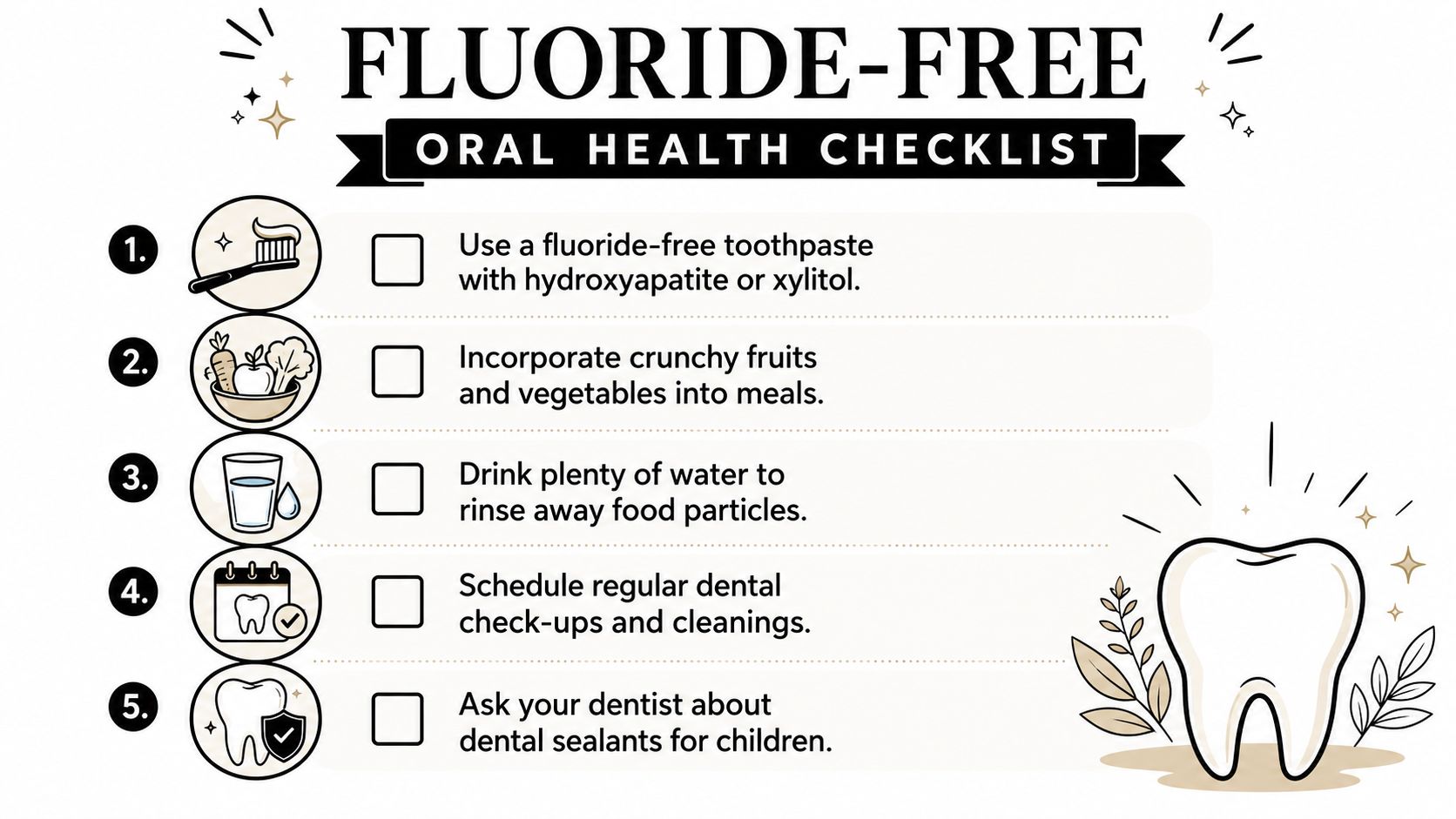
The CDC says people living without fluoridated water should still brush with fluoride toothpaste, limit sugary drinks, and understand that drinking water ideally contains 0.7 mg/L fluoride to reliably prevent cavities (CDC oral health guidance). That's the core point. If you choose fluoride-free drinking water, you need to move cavity prevention somewhere else.
What changes when you stop relying on fluoridated water
The biggest change is that prevention becomes more active. You can't assume the tap water is contributing to enamel protection over time. For children especially, that means more attention to brushing habits, snack patterns, and routine dental care.
A peer-reviewed study also found a significant positive relationship between children's deciduous caries experience and consumption of nonpublic water, even after adjusting for socioeconomic status and location, and the authors recommended fluoride addition to bottled water for younger children (PubMed study on nonpublic water and caries). That doesn't mean every family on a well or bottled water is headed for decay. It does mean source water matters.
Fluoride-free water is a water choice, not a dental plan.
What families should do instead
The practical response is straightforward. Use a fluoride toothpaste if your dentist recommends it, keep sugary drinks out of the daily routine, and be consistent about cleanings. If you're considering fluoride-free toothpaste products, talk to your dentist first, especially for young children who still swallow toothpaste.
You do not need to panic if you prefer non fluoride water. You do need to stop treating water as your only cavity defense. The families who do best are the ones who understand that the water choice and the dental plan are two separate decisions.
How to Test Your Water for Fluoride
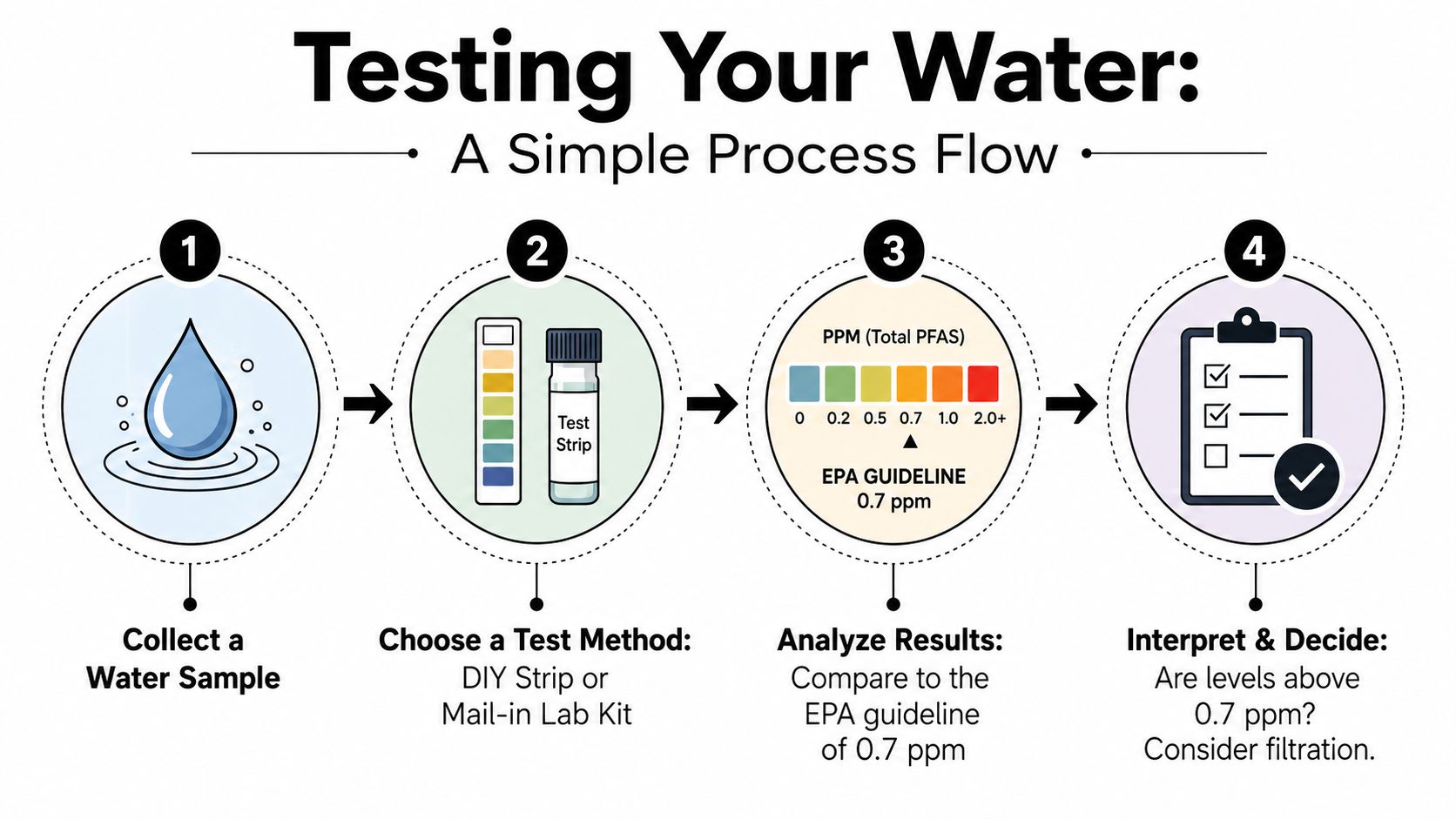
Stop guessing and test the water you drink. That is the smart move if you live on a private well, if you are buying a home, or if your city report does not give you the detail you need. For public-water customers, the annual water-quality report should list fluoride. For private-well users, a laboratory test is the right call.
For Central Florida homeowners, this matters because water can vary by source and by neighborhood. Private wells, hard water, and mixed water sources can make assumptions expensive fast. A single report gives you far more useful information than weeks of online searching.
Start with the source you actually use
If you are on city water, pull the annual consumer confidence report and find the fluoride line item. If you are on a private well, do not trust a neighbor's results or a seller's old paperwork. Wells can differ from one property to the next, so source-specific testing is the only reliable answer.
If you want a local starting point, use a test that is built around well water, not a generic sales pitch. The well water testing in Fish Hawk page is a practical example of the kind of source-based testing Central Florida homeowners should look for before choosing treatment.
What to ask for in the test
Ask for fluoride, and ask for the rest of the water profile too. That matters if you are choosing between filtration, reverse osmosis, or softening, because fluoride is only one part of the decision. A narrow test can leave you buying the wrong system.
Good testing tells you whether you need reduction, blending, or a complete treatment setup.
Use a certified lab when accuracy matters, especially for private wells and homes with infants or young children. For city water, the annual report is a solid first pass, but it does not replace point-of-use testing if you are planning a treatment system at the kitchen sink.
Comparing Fluoride Removal Methods for Your Home
Not every filter removes fluoride, and that mistake costs people money. Standard carbon filtration can improve taste and reduce some contaminants, but it does not materially address fluoride. If fluoride reduction is the goal, you need a system built for ion removal or membrane separation, not a flavor upgrade.
The most practical household option is often reverse osmosis. It lowers fluoride alongside other dissolved solids, and a clinical water analysis showed RO-treated water had reduced TDS, hardness, and fluoride compared with untreated water (RO chemical analysis study). The trade-off is real. RO also strips beneficial minerals, so some homeowners want remineralization after the membrane stage.
| Technology | Fluoride Removal % | Initial Cost | Annual Maintenance | Best For |
|---|---|---|---|---|
| Reverse osmosis | High, but exact percentages vary by system | Higher than a basic pitcher or carbon setup | Filter and membrane changes | Drinking and cooking water at one tap |
| Activated alumina | Effective for fluoride reduction | Moderate | Media replacement and monitoring | Targeted fluoride reduction where properly designed |
| Bone char carbon | Can reduce fluoride | Moderate | Media replacement | Point-of-use treatment in select setups |
| Distillation | Reduces fluoride by heat and condensation | Higher energy use | Cleaning and upkeep | Small volumes where maximum demineralization is acceptable |
| Standard carbon filtration | Not a fluoride solution | Lower | Cartridge changes | Taste, odor, and chlorine reduction only |
What works and what doesn't
Reverse osmosis is the cleanest fit when a family wants non fluoride water at the tap and also wants predictable drinking-water quality. Activated alumina and bone char can work, but they need the right design, the right flow rate, and regular maintenance. Distillation also removes fluoride, but it's usually a niche answer because it's slower and less convenient.
If you're comparing treatment choices in detail, this breakdown of reverse osmosis versus filtered water helps separate marketing language from actual performance. That comparison matters because people often buy “filtered” water and assume they've solved fluoride. They haven't.
My recommendation for most homes
For most Central Florida kitchens, I'd choose reverse osmosis at the point of use if the goal is fluoride reduction for drinking and cooking. If the household wants better mineral balance after treatment, add remineralization. If the goal is a whole-house change, design the system around the actual water profile first, not a brochure promise.
Why Professional Installation Matters for Central Florida Water
Central Florida water isn't one-size-fits-all. Hardness, minerals, iron, sulfur odors, sediment, and private-well variability can all change what works and what fails. A system that looks fine on a website can underperform fast if it's not sized correctly or matched to the actual water chemistry.
That's why professional installation matters more here than in a region with simpler water conditions. A good installer does more than bolt in equipment. They look at pressure, flow rate, fixture use, kitchen layout, and whether the household needs point-of-use drinking water, whole-home treatment, or both.
What goes wrong with DIY installs
DIY jobs usually fail in the same ways. The system is undersized, so flow drops. The connections leak, so the cabinet gets wet. The homeowner buys the wrong cartridge set and wonders why fluoride isn't dropping the way they expected.
Water treatment also needs ongoing service. Filters clog, membranes age, and performance drifts if nobody checks it. That's true whether the system is on municipal water or a private well.
One practical option for homeowners who want a local service model is Florida Water Management, which installs and services water purification systems and reverse osmosis setups for homes across Central Florida. The point isn't the brand name, it's the fit. Professional selection and maintenance are what keep the system aligned with the actual water in the house.
Practical rule: the cheapest system is the one that doesn't need to be replaced early because it was installed wrong.
If you want a realistic look at costs before committing, this guide on reverse osmosis system cost is worth reviewing. It's a better starting point than guessing from the price of a countertop filter, because installation and maintenance shape the total cost.
Your Next Steps to Cleaner Water
Start with a free water test from Florida Water Management. That gives you a real baseline before you buy equipment, change plumbing, or make assumptions about fluoride, hardness, or anything else in the water. If you're on municipal water, use the report and confirm the numbers. If you're on a private well, treat testing as essential, not optional.
Then choose based on the household, not the hype. Families with young children usually need a stronger drinking-water plan and a stronger dental routine. Private-well homes should prioritize testing and targeted treatment. Households that care about taste, mineral balance, and fluoride reduction should ask for a system design that matches all three goals, not just one.
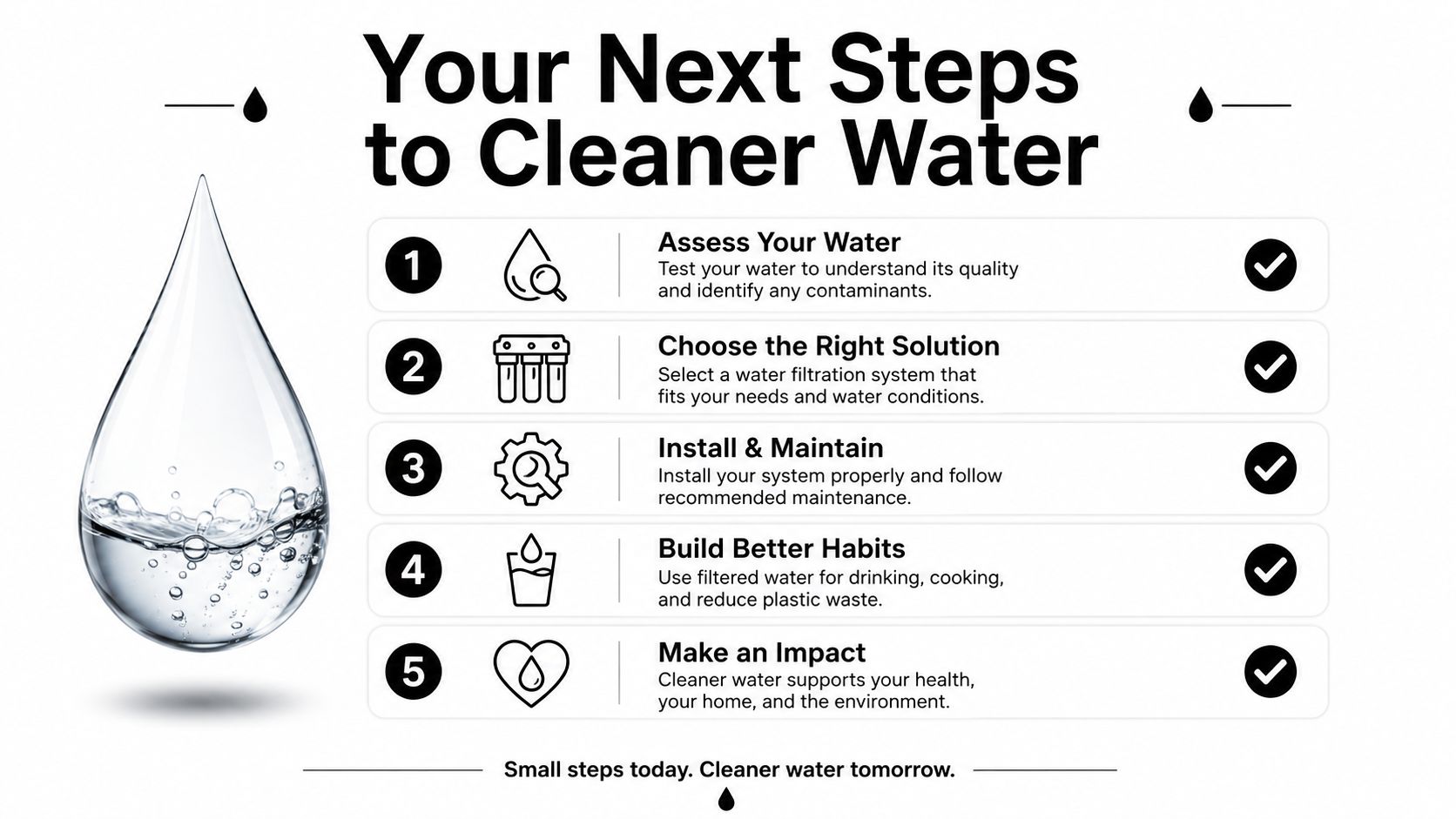
A good installation shouldn't turn your house upside down, and you shouldn't have to guess whether it's working. Ask about timelines, maintenance, and what the system will remove. If you're trying to decide between fluoride-free water and better oral protection, make both decisions on purpose.
Florida Water Management can test your water, explain the numbers, and set up a treatment plan that fits your home, your budget, and your source water. If you want straight answers about fluoride, hard water, or a reverse osmosis setup for drinking water, visit Florida Water Management and schedule your free water test today.