

You wipe down the shower door, run the dishwasher, and by the next day the white film is back. Glasses come out cloudy. Soap doesn't lather the way it should. Your skin feels tight after a shower, and towels get that stiff, scratchy feel even when you use decent detergent.
In Lakewood Ranch, those aren't random household annoyances. They're usually signs that your water needs a closer look. The mistake many homeowners make is stopping at a quick hardness strip and assuming that's the full picture. For hard water testing in Lakewood Ranch FL, that approach leaves too much unanswered. Local water can create scaling problems, but hardness alone doesn't tell you whether chloramines, pH, total dissolved solids, or other issues are also affecting your home, your plumbing, and your drinking water.
Table of Contents
- The Telltale Signs of Hard Water in Lakewood Ranch
- DIY vs Professional Water Testing A Clear Comparison
- Using Home Water Test Kits Effectively
- Interpreting Your Results Beyond Just Hardness
- The Hidden Risks in Lakewood Ranch Water
- Get Your Definitive Water Quality Answer Free
The Telltale Signs of Hard Water in Lakewood Ranch
A typical call starts with a homeowner describing three things at once. White residue on fixtures. Spotty dishes. Dry skin that got worse after moving in. Those symptoms usually point in the same direction.
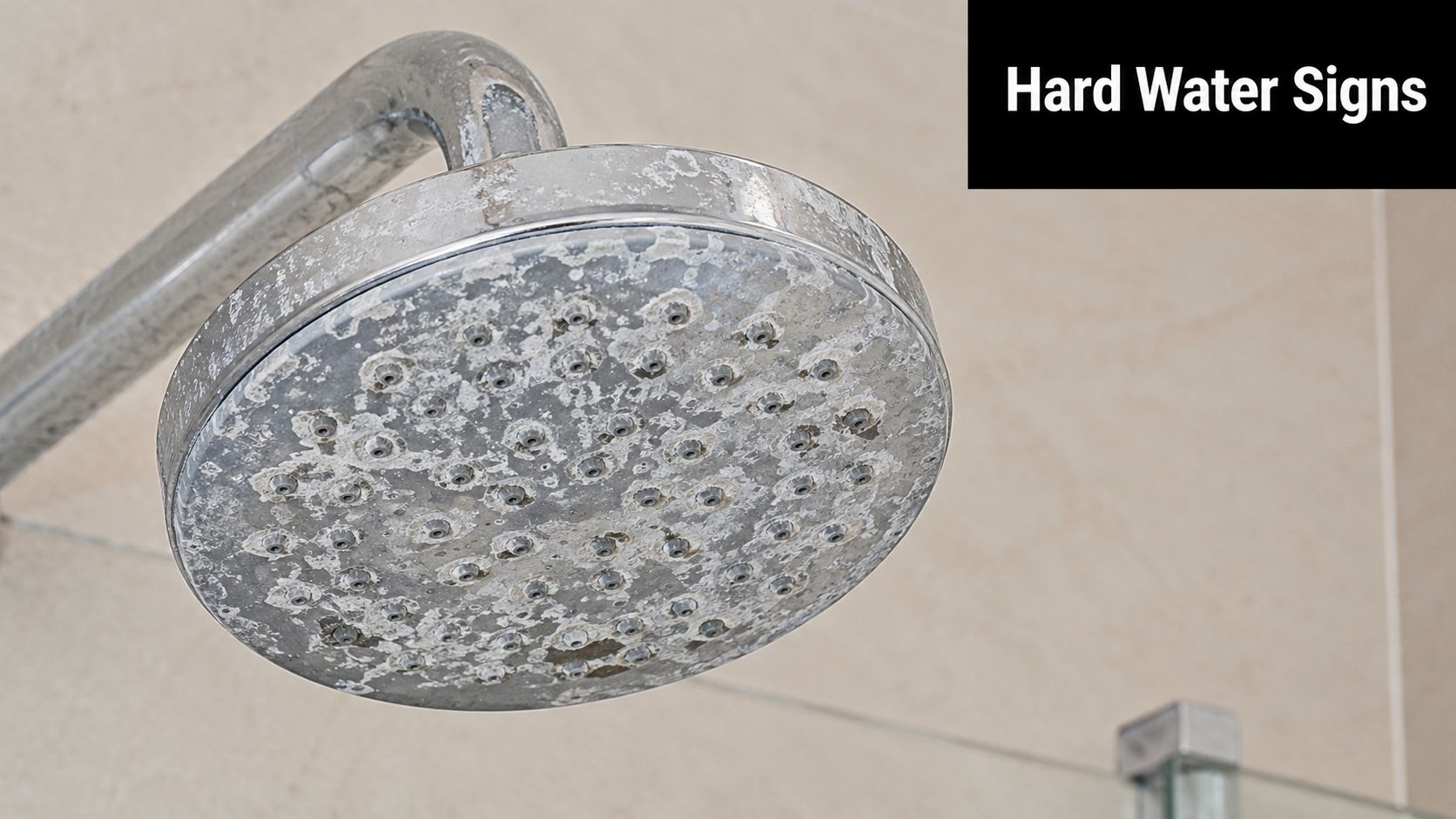
What those symptoms usually mean
Hard water is water that carries dissolved calcium and magnesium. In day-to-day life, that shows up as scale on faucets and showerheads, a chalky ring around drains, soap scum on tile, and laundry that never feels fully rinsed. Homeowners often blame the detergent, the dishwasher, or the water heater first. Sometimes the equipment isn't the root problem. The incoming water is.
Lakewood Ranch isn't unusual in that respect. Lakewood Ranch municipal water consistently exceeds 7 grains per gallon, or 120 parts per million, which is the threshold where water is officially classified as hard. Water above 10.5 grains per gallon, or 180 parts per million, is categorized as very hard, and treatment is strongly recommended to protect plumbing according to the water hardness reference for Florida conditions.
Practical rule: If you're seeing white buildup on multiple fixtures, not just one faucet, assume the issue is house-wide until testing proves otherwise.
What hard water does inside the house
Some effects stay visible. Others don't. You notice the shower glass first, but the more expensive problem often develops inside appliance valves, water heater components, and plumbing runs where mineral scale keeps collecting over time.
Common signs homeowners in Lakewood Ranch report include:
- Bathroom residue: White film on shower doors, faucets, and showerheads that returns quickly after cleaning.
- Kitchen spotting: Cloudy glasses and dishes even after a full dishwasher cycle.
- Bathing discomfort: Skin that feels dry or itchy after showering, plus hair that feels coated.
- Laundry issues: Towels and shirts that come out stiff instead of soft.
- Soap problems: Reduced lather from soap, shampoo, and body wash.
Why local testing matters
A lot of online advice treats hard water like a generic national issue. It isn't. Local source water matters, and so does the way that water is treated before it reaches your home. In Lakewood Ranch, homeowners are dealing with a regional pattern, not an isolated plumbing quirk.
That matters because symptoms alone can't tell you how severe the hardness is, whether it's hard versus very hard, or whether another water quality issue is riding along with it. That's why a professional assessment is usually the fastest path to a real answer instead of another round of trial and error.
DIY vs Professional Water Testing A Clear Comparison
Homeowners usually start in one of two places. They buy a test kit online, or they schedule a technician. Both options have a purpose. They aren't equal.
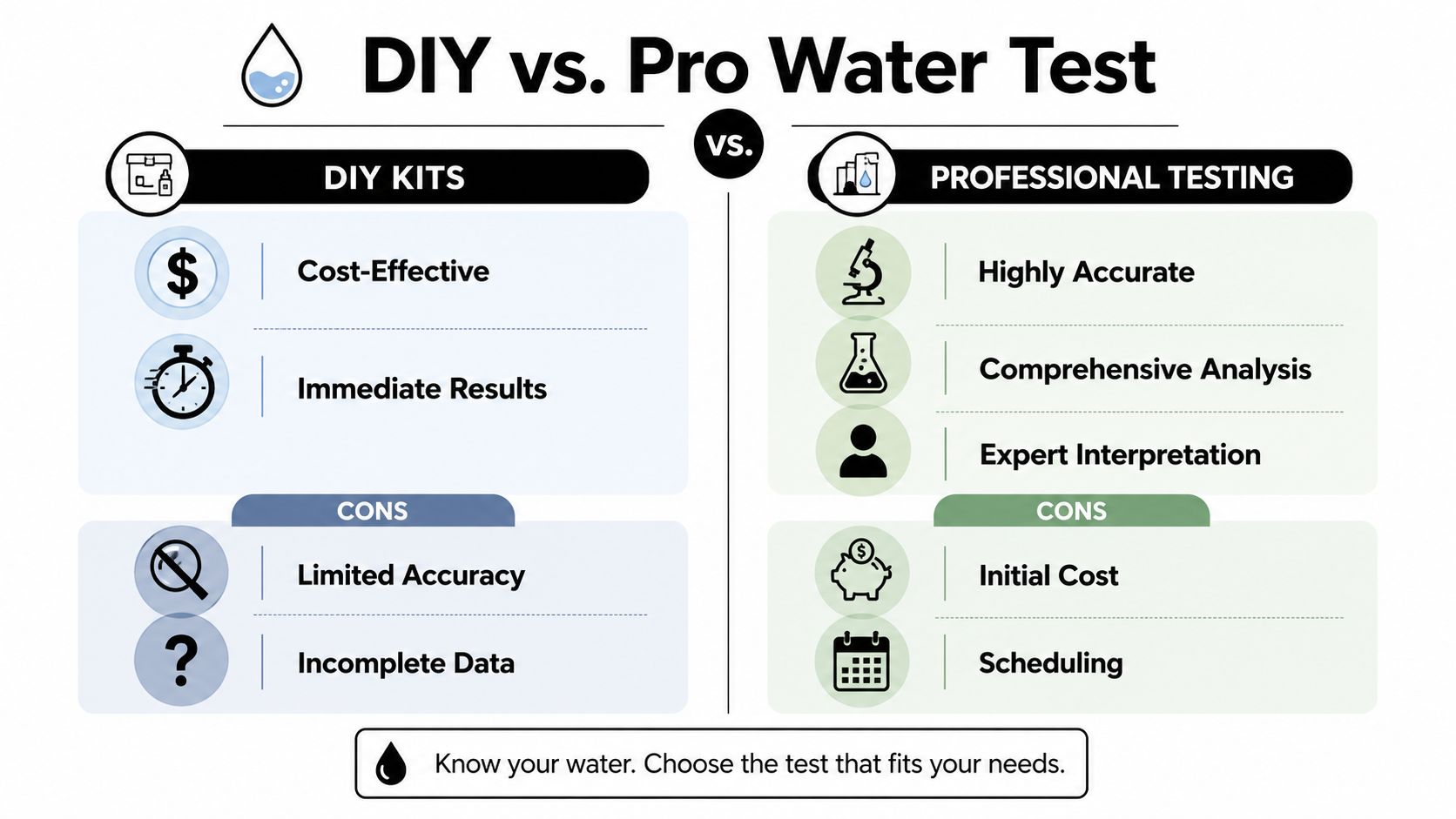
Where DIY kits help
A basic strip kit can answer one narrow question quickly. Is the water soft, hard, or somewhere in between? For a homeowner who just wants a rough first look, that's useful.
DIY kits also work well when you're checking whether a change happened after moving in or after a plumbing repair. If you use them carefully, they can confirm that your suspicion isn't coming out of nowhere.
Where DIY kits fall short
The problem is scope. Most DIY kits focus on a short list of readings, and many homeowners misread color strips under kitchen lighting. A strip can shift from one shade to another, but that doesn't automatically tell you what action to take next.
More important, a quick hardness kit doesn't usually explain the rest of the water profile. It can miss the things that affect taste, odor, plumbing wear, and treatment choices. That's where many Lakewood Ranch homeowners lose time. They test for one issue, then buy the wrong solution for a broader problem.
A strip that says "hard" doesn't tell you whether a softener alone is enough.
Side by side comparison
| Testing option | Best use | Strengths | Limits |
|---|---|---|---|
| DIY strip kit | Quick first check at home | Fast, simple, low effort | Narrow data, easy to misread, no expert interpretation |
| Drop-count or titration kit | Better hardness estimate | More specific than strips | Still limited in scope |
| Professional assessment | Full household diagnosis | Broader analysis, better interpretation, treatment guidance based on actual conditions | Requires scheduling |
Why professional testing wins in practice
The old objection to professional testing was cost. That's less convincing when a company offers a free assessment. At that point, the trade-off changes. You get a more reliable read on what's happening in your water without paying for a kit that may only answer part of the question.
For hard water testing in Lakewood Ranch FL, that matters because the goal isn't just to confirm scale. It's to understand what your water is doing to fixtures, appliances, and drinking quality so the fix matches the problem.
Using Home Water Test Kits Effectively
If you're going to use a home kit, use it correctly. Bad sampling creates bad results, and bad results lead to the wrong purchase.
Pick the right kind of kit
Not all kits do the same job. A strip test is fast and easy, but it's broad. A drop-count titration kit usually gives a more useful hardness reading because you count reagent drops until the sample changes color. If your main question is hardness, a titration-style kit is the better DIY option.
Check the package before you buy. Some kits only test hardness. Others combine hardness, chlorine, pH, and a few extra items. More boxes checked doesn't always mean better quality, but it does help you avoid the mistake of assuming one strip covers everything.
Collect the sample the right way
Use a clean glass or the vial that came with the kit. Let the water run briefly so you're not sampling water that sat in the faucet or inside the line. Don't touch the inside of the container or the test pad on the strip.
Then follow the timing exactly. Don't guess. If the instructions say dip for a short interval and read after a set wait, do that. Color-based tests are easy to skew if you let them sit too long.
A simple routine works best:
- Use cold water: Hot water can distort what you're trying to measure.
- Sample from a commonly used tap: Kitchen sinks are often the most practical choice.
- Read in bright light: Natural light is better than yellow indoor lighting.
- Write the result down: Don't rely on memory, especially if you're comparing rooms or retesting later.
Know what the kit can't tell you
DIY testing reaches its ceiling. A hardness strip may show mineral content, but it won't give you the full decision-making picture for a Lakewood Ranch home. It may not tell you enough about taste and odor issues, whether disinfectants are affecting the water, or whether more specialized treatment is worth considering.
Home kits are good for screening. They aren't the same as a full diagnosis.
If you're seeing multiple symptoms at once, scale, odor, cloudiness, skin irritation, appliance spotting, don't stop at the strip. That's the point where professional testing saves more time than another round of guessing.
Interpreting Your Results Beyond Just Hardness
A number on a test card doesn't help much unless you know what it means in the house. Homeowners often see a hardness reading and ask whether it's "bad." The better question is what that reading predicts for fixtures, appliances, and treatment needs.
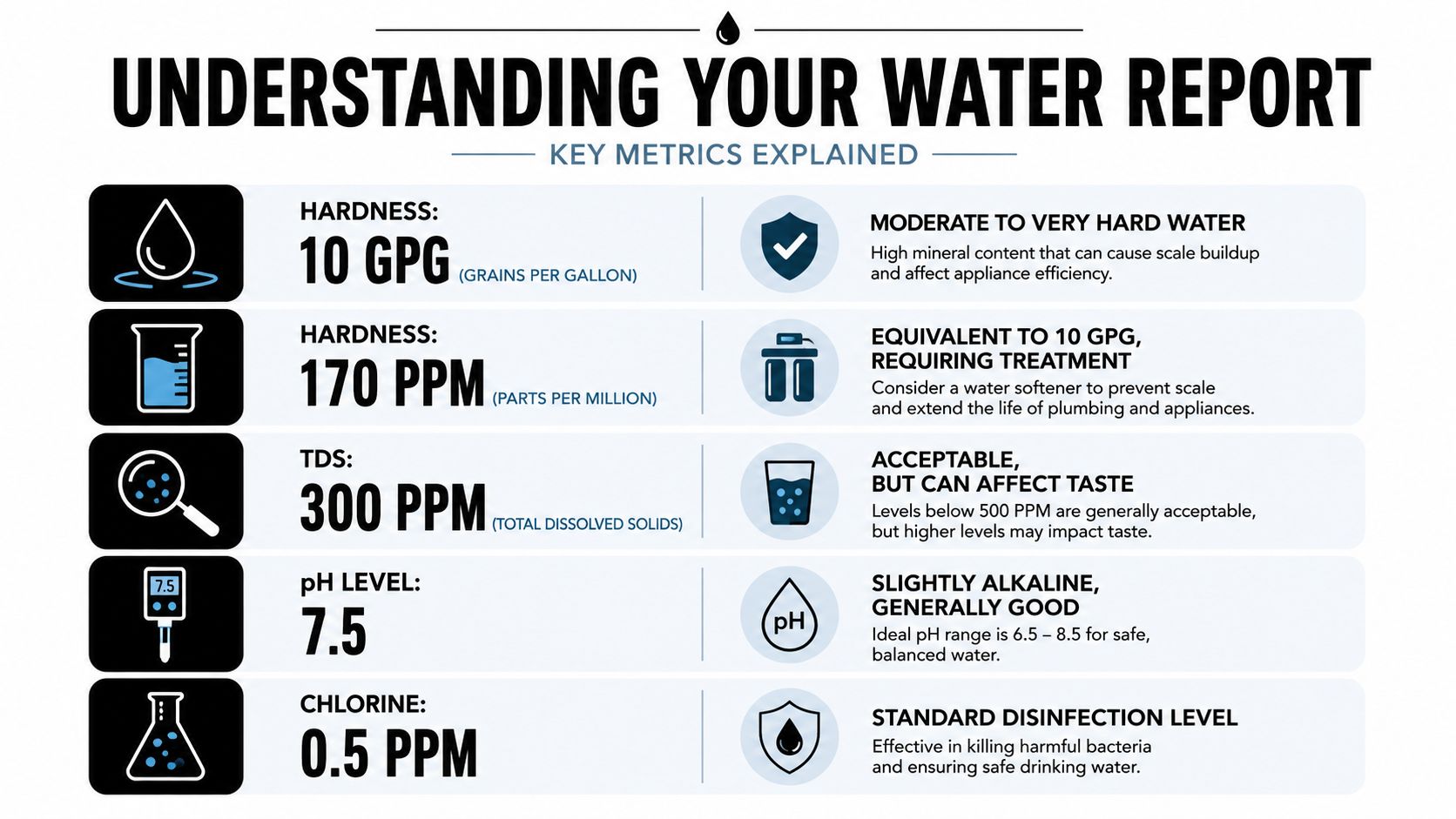
What hardness numbers mean in real life
Here's a practical way to read a hardness result.
| Hardness range | What it usually means at home |
|---|---|
| Soft | Minimal scale and easier soap performance |
| Hard | Noticeable spotting, soap issues, growing scale deposits |
| Very hard | Faster buildup and stronger reason to protect plumbing and appliances |
If you want a clearer reference point for how these ranges are commonly discussed, this guide to water hardness levels and what they mean is a helpful companion.
A lot of homeowners get tripped up by unit conversions. One report may use grains per gallon. Another uses parts per million. If you don't catch that, it's easy to underestimate what the number is telling you.
The bigger mistake is stopping at hardness
This is the part most generic guides miss. Lakewood Ranch residents on municipal water still need testing that goes beyond hardness and includes chlorine or chloramines, TDS, pH, lead, and PFAS because those factors affect appliance lifespan and health even if hardness is moderate, as noted in UF IFAS guidance referenced for broader water assessment.
That changes the whole conversation. A home can have moderate hardness and still need treatment for reasons a strip test won't reveal.
What else matters in Lakewood Ranch
A full reading should put these questions on the table:
- Chlorine or chloramines: These affect taste and odor, and they matter when choosing whole-home filtration.
- TDS: Total dissolved solids influence overall water character and can affect how water tastes and behaves.
- pH: Water that's out of balance can contribute to plumbing and fixture issues.
- Lead and PFAS: These aren't issues you can spot by looking at a shower door or a dish rack.
Don't match a treatment system to one symptom. Match it to the full water profile.
That's why professional testing produces better decisions. It turns isolated readings into a plan. Without that, homeowners often install a softener when they also need carbon filtration, or they focus on drinking water while leaving the whole house exposed to the issue that's damaging fixtures.
The Hidden Risks in Lakewood Ranch Water
A lot of homeowners hear that city water is legal to drink and assume that ends the discussion. Legally compliant and ideal for your household are not always the same thing.
Legal limits aren't the only benchmark
For Lakewood Ranch, that's an important distinction. Tap water in Lakewood Ranch has 3 contaminants detected above EPA Maximum Contaminant Level Goals, which are health-based guidelines, even though the water still meets federal legal limits, according to independent Lakewood Ranch tap water analysis.
That doesn't mean every home is facing the same level of concern, and it doesn't mean panic is warranted. It does mean homeowners shouldn't confuse "meets legal standards" with "no further testing needed."
Who should pay closer attention
Independent analysis tied to that same Lakewood Ranch profile recommends certified filtration for added protection, especially for people who are more vulnerable. In practical terms, that includes households with children, pregnant women, and anyone with a compromised immune system.
If your water already has an odor issue on top of hardness or disinfectant taste, compare those symptoms against common sulfur-related causes in this guide on why water smells like sulfur. Odor and hardness are different problems, but homeowners often experience them together and assume they're the same issue.
Why this changes the testing conversation
The hidden risk isn't just a health question. It's also a decision problem. When homeowners rely on one narrow test, they tend to solve the most visible symptom and miss the rest. That leaves families with scale control but no answer on drinking water quality, or better tasting water at one sink while hard water continues damaging appliances across the house.
Professional assessment matters because it separates inconvenience from exposure, and cosmetic issues from treatment priorities. That's the difference between buying a product and making a sound water-quality decision.
Get Your Definitive Water Quality Answer Free
By the time most homeowners start searching for hard water testing in Lakewood Ranch FL, they've already spent time scrubbing fixtures, trying cleaning products, or wondering whether they need a softener, a filter, or both. The fastest way to stop guessing is to get the water assessed properly.
What a real assessment should answer
A proper in-home evaluation shouldn't stop at hardness. It should identify the broader water profile, explain what the readings mean for your plumbing and daily use, and separate city-water concerns from well-water concerns.
That last part matters more than many people realize. Florida Department of Health guidance highlighted in South Florida water testing guidance recommends annual testing for bacteria and nitrate for well users, plus lead every three years, because basic hardness tests miss those risks as discussed in this review of hard water and testing differences for South Florida properties. If you're not sure whether your property's setup changes what should be tested, this article on whether you need a water softener helps frame the decision.
Why free professional testing is the smart move
A free professional water test removes the usual downside of hiring a technician. You get experienced eyes on the problem, professional equipment, and results explained in plain language. More important, you get clarity on what works, what won't, and what would be overkill for your home.
That saves homeowners from two expensive mistakes. Buying too little treatment and living with the same problem, or buying the wrong equipment because a DIY kit only showed one part of the picture.
If you want a definitive answer instead of another rough guess, schedule a free water test through the contact page for Florida Water Management.
Florida Water Management helps homeowners get a clear answer on what's in their water and what to do about it. If you're dealing with scale, chloramine taste, sulfur odor, staining, or you're just tired of guessing, book a free water test with Florida Water Management.