

You notice it first on the dishes. Glassware comes out cloudy, the shower door gets that dull film again, and towels start feeling rough instead of clean. Then you wonder whether the softener is failing, whether the salt is wrong, or whether Sarasota water is doing something a generic online guide never mentioned.
That last part matters more than most homeowners realize. A lot of advice about water softener repair in Sarasota FL treats every house like it's on the same water source. It isn't. Existing Sarasota repair content often skips the private well issue, even though 60% of Florida homes rely on private wells, and standard softeners can struggle when well water carries iron, sulfur, or microbial contamination that calls for pre-treatment filters or specialized resin, as noted in Angi's Sarasota water softener listings overview.
If you're trying to figure out whether you have a quick fix or a deeper water quality problem, the fastest way to stop guessing is to get a free water test and identify the root cause before replacing parts that aren't bad. You can schedule that through the contact page.
Table of Contents
- Your Guide to Water Softener Repair in Sarasota
- Signs Your Sarasota Water Softener Needs Repair
- Simple DIY Fixes You Can Try First
- When DIY Is Not Enough for Your Water Softener
- Your Professional Water Softener Repair Visit Explained
- Keeping Your Water Softener Running Smoothly
Your Guide to Water Softener Repair in Sarasota
You wake up in Sarasota, step into the shower, and the water feels wrong. Soap does not rinse clean. The glass door starts spotting again. Maybe the softener still has salt in the tank, so it is easy to assume the unit is working and the water is just having a bad day.
That assumption leads to a lot of repeat service calls.
Around Sarasota, especially in homes on private wells, the underlying problem is often more specific than “the softener quit.” A basic salt bridge can stop proper brining. Iron can foul the resin bed or clog small valve parts. Sulfur odor, sediment, or changes in well-water chemistry can make a softener look like the problem when the water needs pretreatment the softener was never built to handle.
The repair work goes better when the cause is identified first. I have seen homeowners spend money on resin replacement when the injector was packed with iron, and I have seen control valves swapped out when the actual issue was poor salt draw from a bridged tank. Both repairs miss the root cause. Both lead to the same complaint a few weeks later.
A solid diagnosis starts with what changed recently. Did the water source change after heavy rain, pump work, or seasonal shifts in a well? Did iron staining get worse before the soft water problems started? Did the softener begin using more salt, or stop using much at all?
Those details matter in Sarasota because the answer is not always inside the softener cabinet. In city water homes, repair is often more straightforward. In well water homes, iron, manganese, sulfur, and biofilm can change what “repair” really means. Sometimes the right fix is a part replacement. Sometimes it is a cleaning and reset. Sometimes the softener is functioning, but the water entering it has changed enough that the system setup no longer matches the job.
If you keep hearing that the unit was “fixed” but the symptoms return, the diagnosis was probably incomplete. Start with the actual water condition and the softener's behavior, not a guess based on one symptom. That approach saves money, avoids unnecessary parts, and gives you a much better chance of fixing the issue once.
Signs Your Sarasota Water Softener Needs Repair
The first sign is rarely at the equipment. It usually shows up in daily routines that used to feel normal.
What changes inside the house
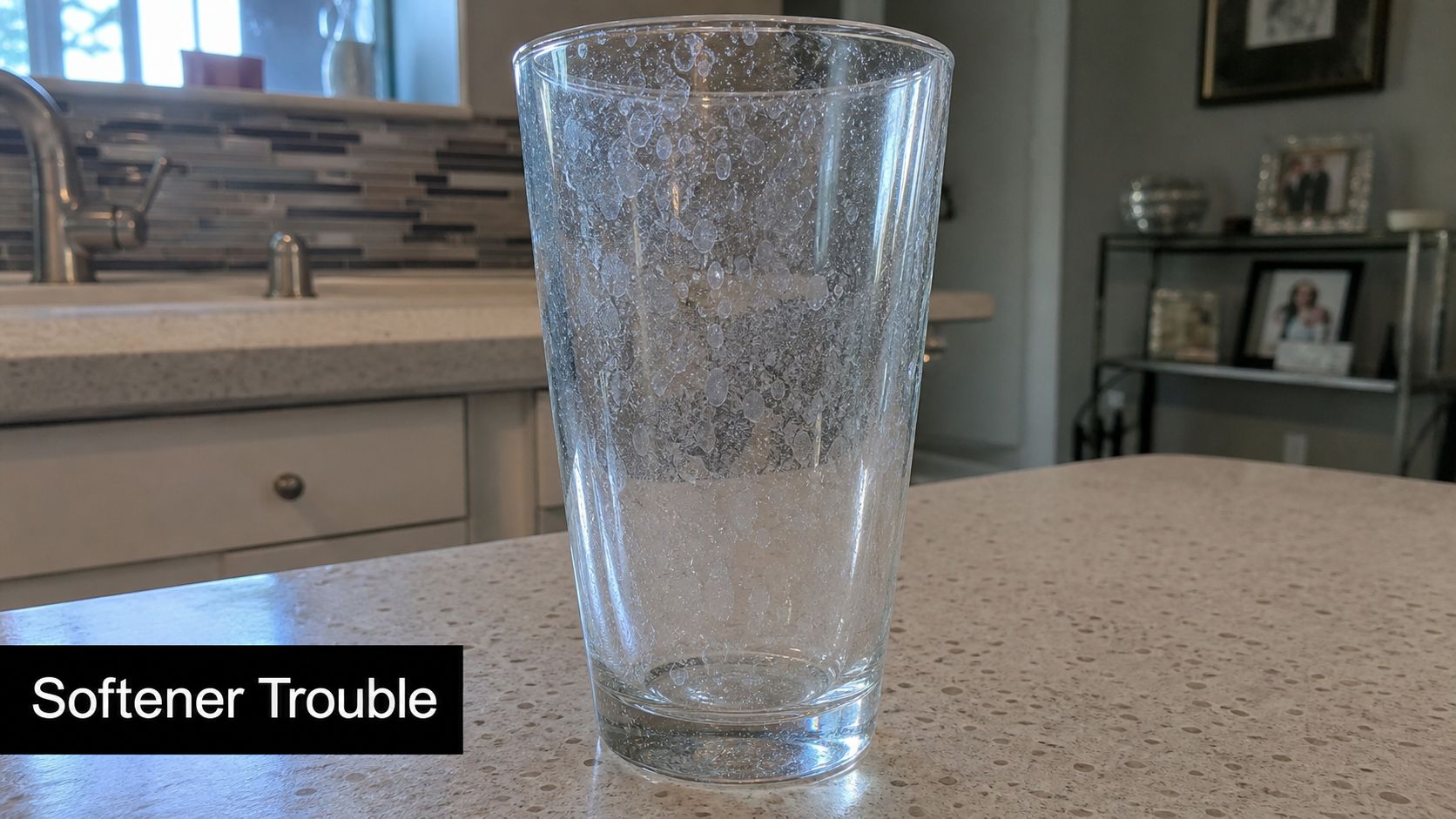
If your dishes start coming out spotted again, your soap doesn't rinse clean, or your shower walls build up film faster than they used to, softened water probably isn't reaching the house the way it should. You may also notice laundry feeling stiff, darker fixtures collecting scale, or skin feeling dry after bathing.
Those symptoms matter because they show hardness is getting past the system. They don't tell you the exact failed part, but they do tell you the softener isn't delivering the result it was built to deliver.
A different sign is water pressure that seems weaker than normal at multiple fixtures. That can happen when resin is fouled, the valve is obstructed, or flow through the softener is restricted.
What the softener itself is telling you
Look at the brine tank and control head before you assume the worst. A tank that has salt in it but seems hollow underneath may have a salt bridge, which blocks proper brine draw. A unit that regenerates far too often, makes unfamiliar motor sounds, or leaves water standing where it normally wouldn't also deserves attention.
Some homeowner clues are subtle. Others are obvious.
- Hard crust over the salt: Often points to bridging rather than a major mechanical failure.
- Frequent regeneration: Can mean settings are off, the unit is compensating for poor performance, or the media isn't exchanging properly.
- Rust-colored staining returning: Often points toward iron contamination affecting softener performance.
- Softener seems to run but water still feels hard: That usually means the system is operating, but not treating effectively.
A softener can still power on, cycle, and look normal from across the room while delivering poor water quality.
The key is to connect the household symptoms with what the equipment is doing. If both are changing at the same time, you likely have a genuine softener issue. If the softener appears normal but the water problems are escalating, especially on a well, the root cause may be upstream.
Simple DIY Fixes You Can Try First
A Sarasota homeowner on city water can often solve a softener hiccup with a quick check. A homeowner on a private well has to be more careful. Iron fouling, sulfur, and sediment can make a simple symptom look like the wrong problem.
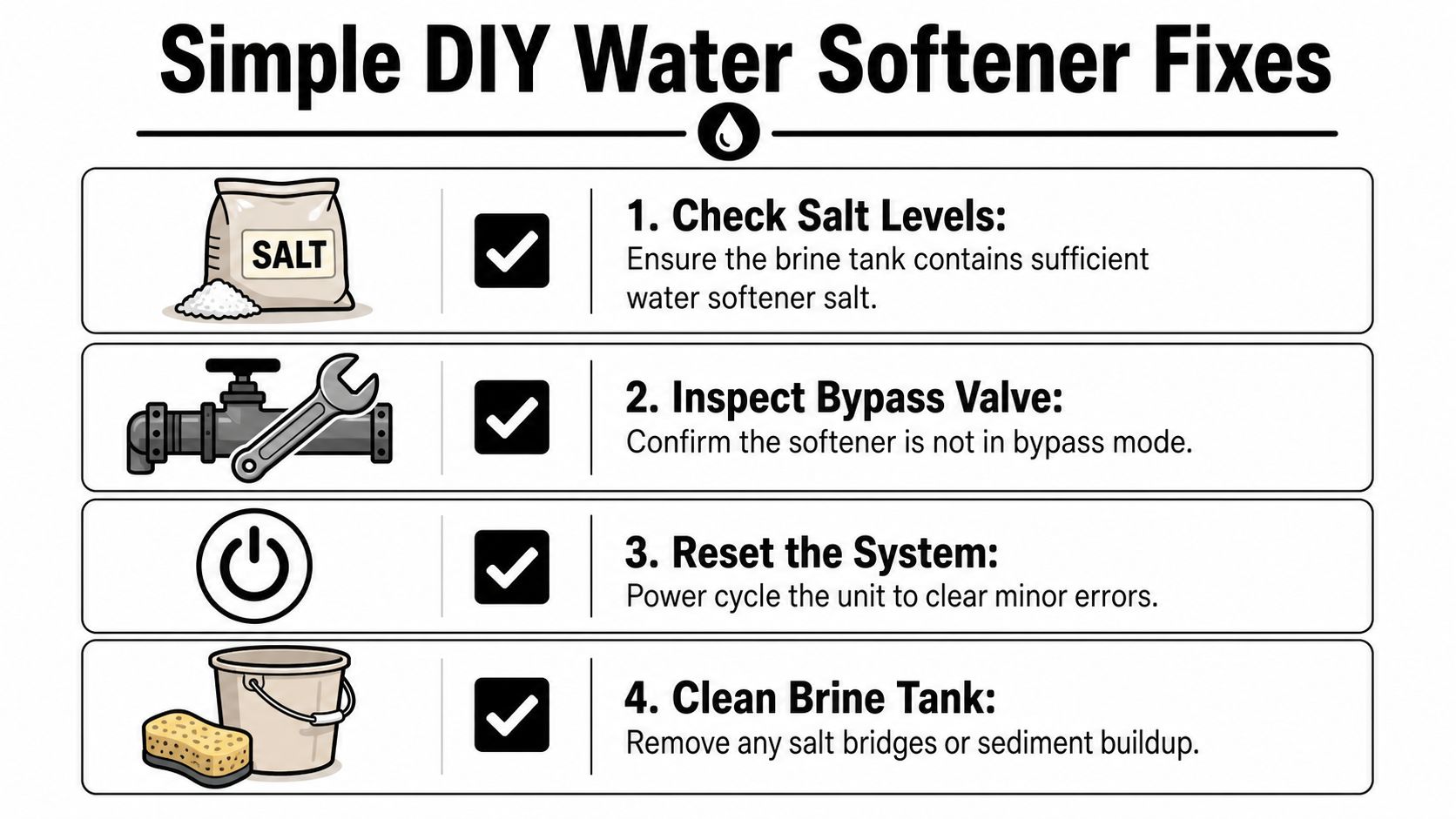
Start with the safe checks that do not require disassembly. Unplug the unit first, then open the brine tank and inspect the salt surface. If the top looks solid but your broom handle drops into a hollow spot below, you likely have a salt bridge. Break it up gently. Hitting too hard can crack parts inside the tank or damage the brine well.
Then verify the basics homeowners miss all the time:
- Salt level: Refill if the tank is low, and use salt made for water softeners.
- Bypass valve: Make sure the unit is in service mode, not bypass.
- Power and clock settings: Sarasota storms and short outages often reset control heads.
- Salt condition: Mushy salt, sludge, or heavy crust can keep the system from drawing proper brine.
If you want a practical walkthrough of water softener repair basics, that guide covers the common homeowner checks in more detail.
One simple test gives useful direction. Put the softener in bypass and check water flow at a faucet or shower. If pressure improves right away, the restriction is likely inside the softener. If nothing changes, the problem may be elsewhere in the plumbing, well equipment, or prefiltration.
A manual regeneration is also worth trying if the control head still has power. Listen for the unit to advance through its cycle and watch whether it draws brine and returns to service normally. That helps separate a programming or control issue from a brine delivery problem.
Private well owners in Sarasota should pause before taking the valve apart. Rust staining, orange slime, or recurring hardness after regeneration often points to iron fouling, not just low salt or a bridge. In that situation, a quick reset may not hold for long because the root cause is still in the resin bed, injector, or valve passages.
A few DIY steps are still reasonable. Clean visible salt sludge from the brine tank, confirm the drain line is not kinked, and run a manufacturer-approved iron cleaner if your unit allows it. Avoid poking into the injector or opening the control valve unless you know the model and have the parts diagram in front of you. I see plenty of Sarasota well-water systems turn into bigger repairs after a homeowner mixes up small seals or overtightens brittle plastic parts.
The goal is not just to get soft water for a day or two. It is to tell the difference between a simple maintenance issue and a repeat failure caused by iron, sediment, or a clogged valve.
When DIY Is Not Enough for Your Water Softener
Some water softener problems are worth a homeowner's time. Others aren't. The trick is knowing where that line is.
Clear red flags that need service
If you have water leaking from the valve head or tank, a dead control panel, resin beads showing up in fixtures, or repeated hard-water symptoms after basic checks, it's time to stop experimenting. Those failures usually involve internal components, electrical diagnosis, or media problems that need tools and testing most homeowners don't keep on hand.
This is also the point where “repair” and “guessing” split apart. Swapping parts before confirming the actual fault often creates a second problem on top of the first.
A few examples should push the job out of DIY territory:
- Persistent low flow through the whole house
- Visible leaks around the softener body or connections
- Sulfur odor or iron staining that keeps returning after simple resets
- Brine tank problems combined with poor water quality
Why Sarasota well water changes the repair decision
Private well homes around Sarasota and Central Florida often deal with high iron, sulfur odors, and microbial content, which can clog standard softener resin and call for specialized pre-filtration or sterilization before softening, as described in the BBB Sarasota water treatment category overview.
That's why a softener can seem like the problem when it's the victim. If iron or sulfur is overwhelming the unit, replacing one part won't fix the cycle of repeat failures. The system has to match the water.
Service call threshold: If your softener and your raw water quality are both suspect, testing the water first is safer than replacing hardware blindly.
A free water test is the practical next step. It tells you whether the softener needs repair, whether the resin has been fouled by well contaminants, or whether the home really needs pre-treatment ahead of the softener.
Your Professional Water Softener Repair Visit Explained
You turn on the shower after the softener was “fixed,” and the water still smells metallic or leaves orange staining. In Sarasota, especially on private wells, that usually means the first diagnosis missed the underlying cause. A good service visit separates a failed part from iron fouling, sulfur contamination, or resin damage so the same problem does not come right back.
What happens during diagnosis
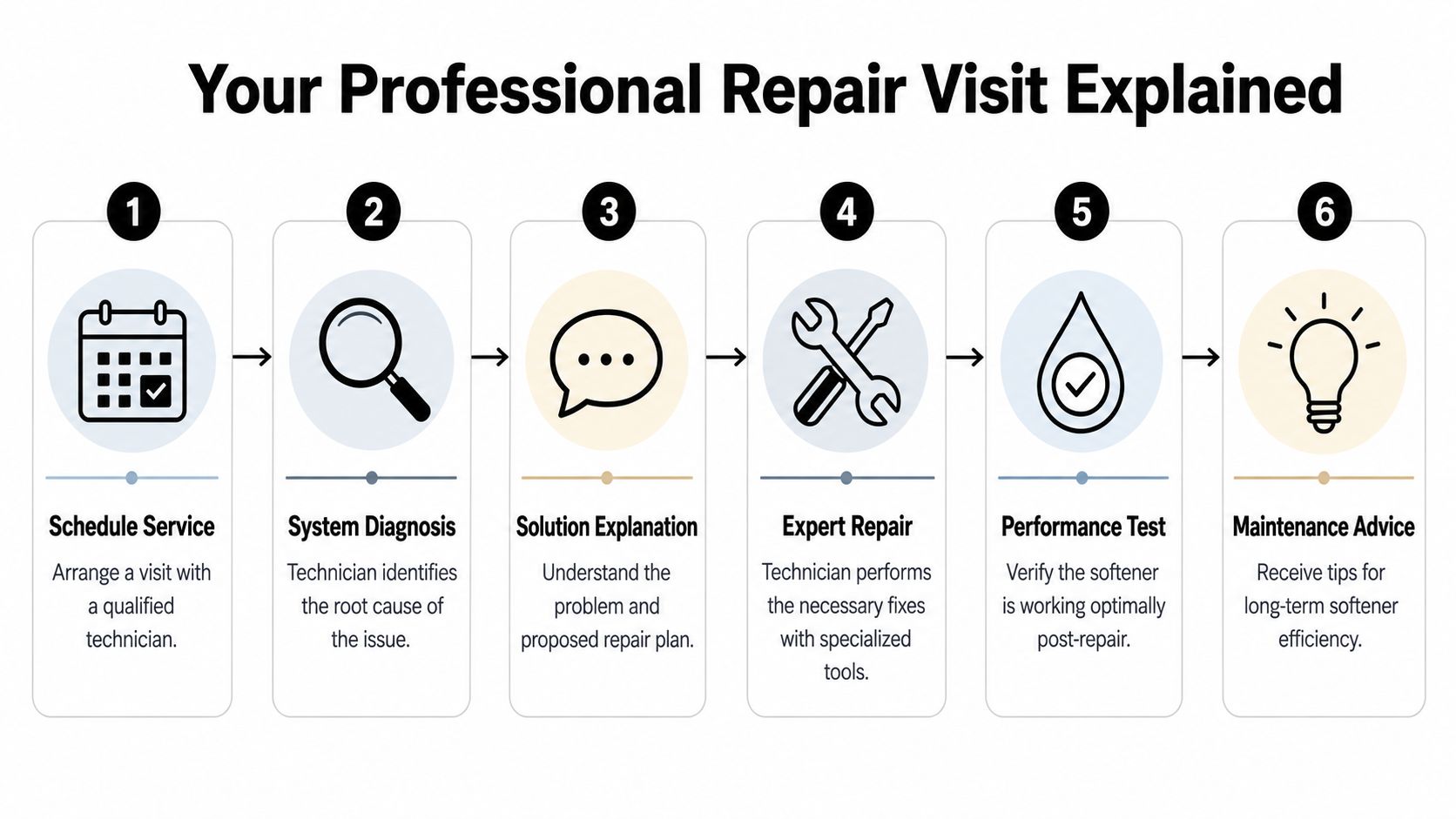
A proper visit starts with testing and inspection, not assumptions. The technician should compare raw water to treated water, confirm the control valve is advancing through its cycles, check whether the unit is drawing brine correctly, and look inside the brine tank for signs of clogging, crusting, or injector blockage.
On Sarasota well water, the diagnosis should go a step further. Iron can coat resin beads and make a softener look dead when the valve is still working. Sulfur and biological growth can create odor complaints that homeowners blame on the softener even when the larger issue is upstream water quality. That trade-off matters because a simple valve repair will not solve a fouled resin bed, and replacing resin will not fix untreated well contamination.
The typical local pricing range for installing or repairing a water softener in Sarasota is $1,300 to $3,500, with final cost depending on property size and water treatment needs such as hardness levels or contaminant type, according to Fehl Safe Water Systems' Sarasota pricing page. That range is wide for a reason. Two homes can have the same symptom and need very different work.
If you're comparing providers, it helps to review a company focused specifically on water softener service in Sarasota rather than a general plumbing listing.
What a real repair often includes
Professional repair often means correcting more than one issue during the same visit. A technician may clean or rebuild part of the valve, clear an injector or brine line restriction, replace a stuck float assembly, sanitize the system, or address resin fouling caused by iron-heavy well water. Those are all recognized repair tasks described on Bill the Plumber's water softener repair page.
Sometimes the right answer is repair. Sometimes it is repair plus pretreatment. On Sarasota wells, that distinction saves money because repeated softener failures often come from water conditions the unit was never meant to handle alone.
A solid service call should end with proof that the system is producing soft water again and that the control settings match the home's water use.
| Repair visit step | What the technician is checking |
|---|---|
| Water testing | Whether hardness is being reduced properly |
| Valve inspection | Whether iron, debris, or wear is blocking flow |
| Brine system review | Whether salt draw and refill are working |
| Media and tank evaluation | Whether resin, distributor components, or sanitation are needed |
| Final performance check | Whether treated water is actually soft again |
The best repair visit ends with verified performance and a clear explanation of what failed, why it failed, and whether Sarasota well water conditions are likely to cause the same problem again.
Keeping Your Water Softener Running Smoothly
A water softener usually gives warning before it fails completely. Homeowners who catch small changes early tend to avoid the messy repairs.
A simple maintenance routine that helps
You don't need an elaborate checklist. You need a repeatable routine.
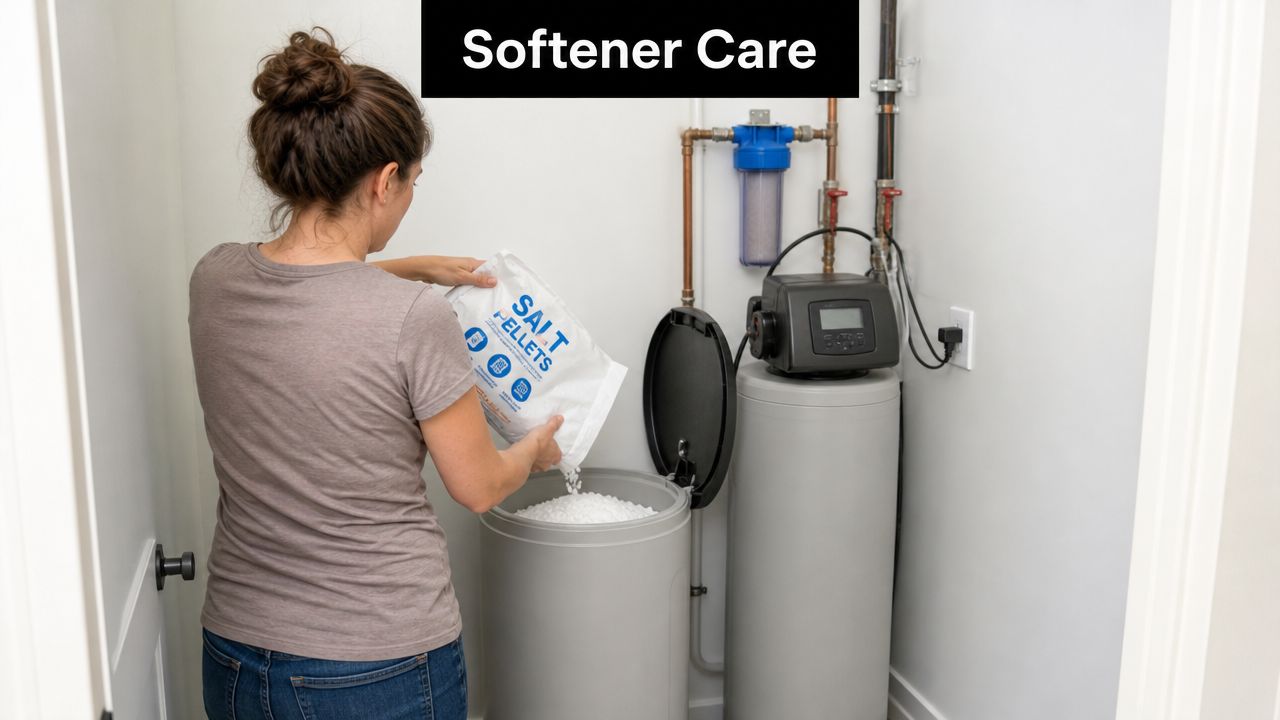
- Check the salt tank monthly: Look for bridging, mush, or unusual crusting.
- Watch for changing water feel: If soap doesn't lather the same way or spots return, don't ignore it.
- Keep the system supplied with the right salt: Low salt creates simple problems that look bigger than they are.
- Pay closer attention on well water: Iron and sulfur can shorten the gap between “working” and “not working.”
For homeowners who want a maintenance baseline, this guide on how to maintain a water softener is worth bookmarking.
What works and what usually backfires
The best maintenance is consistent and boring. The worst approach is waiting until the house feels hard again and then trying random fixes.
If your system uses resin and deals with iron, sanitation and inspection matter. If the softener sits on a well with recurring contamination, annual professional review is usually the safer move because a treatment setup can drift out of alignment with the water over time.
A few habits help avoid repeat breakdowns:
- Respond to symptoms early: Don't wait for heavy scale or major pressure loss.
- Treat the water source, not just the symptom: A softener can't solve every well-water problem by itself.
- Verify performance after any repair: Soft water should feel different, rinse better, and leave fewer deposits.
- Use water testing when symptoms are unclear: Guessing is how minor issues turn into expensive ones.
The goal isn't to fuss over the equipment. It's to protect plumbing, fixtures, appliances, laundry, and daily water quality with less hassle.
If your softener is acting up, the smartest next step is to stop guessing and test the water. Florida Water Management offers a free water test so you can find out whether you're dealing with hardness, iron fouling, sulfur, or another Sarasota-area water issue before paying for the wrong repair. Reach out through the contact page and get a clear answer on what your water needs.