

You're probably here because you've hit the same wall a lot of Central Florida homeowners hit. You want better water, you search online, and suddenly you're staring at labels like purified, distilled, spring, filtered, alkaline. Then questions begin. Which one is safer? Which one tastes better? Which one helps with hard water, sulfur smell, or a private well?
That confusion makes sense. Purified water and distilled water are both cleaner than untreated water, but they are not the same thing. One is usually better for daily drinking. The other is often better for equipment and specialty uses. And if you live in Sebring, Lake Wales, Winter Haven, Frostproof, or another Central Florida community, your local water issues matter just as much as the label on the bottle.
Here's the short version before we go deeper.
| Characteristic | Purified Water (from Reverse Osmosis) | Distilled Water |
|---|---|---|
| How it's defined | By a purity standard | By a boiling and condensation process |
| Typical household role | Drinking, cooking, ice, coffee | Humidifiers, steam irons, CPAP, lab-style uses |
| Mineral content | May retain trace minerals depending on method | No minerals |
| Taste | Usually more natural tasting | Often flat or bland |
| Cost approach | Often more practical at home | Often more expensive when bought by the gallon |
Table of Contents
- The Water Aisle Dilemma Understanding Your Options
- What Do Purified and Distilled Really Mean
- How Each Type of Water Is Produced
- Comparing Purity Taste Minerals and Cost
- Which Water Is Right for Which Use
- The Central Florida Water Factor
- The Best Water Solution for Your Florida Home
The Water Aisle Dilemma Understanding Your Options
A homeowner walks into the grocery store to buy water for a CPAP machine, a coffee maker, and the family's drinking water. Three minutes later, the cart is still empty. One jug says “purified.” Another says “distilled.” A third says “drinking water.” All of them look clean, and none of them explain the difference in a way that helps when you've got real water problems at home.
That confusion gets worse in Central Florida because the question usually isn't just about taste. It's also about hard water scale, sulfur odor, iron staining, sediment, and well safety. If your shower doors spot up fast or your dishwasher leaves residue, the bottle label alone won't solve the bigger issue.
One fact clears up a lot of the confusion right away. Distilled water is a specific type of purified water produced by boiling water into steam and condensing it back into liquid, a process recognized by the FDA under U.S. bottled-water standards as a valid method to produce purified bottled water (FDA-recognized bottled water distinction).
Why people mix them up
The word “purified” sounds like the final answer. In plain language, it sounds like the cleanest possible option.
But “purified” is a broad category. “Distilled” is one specific way to get there. That's why you can't treat the two labels as interchangeable.
Practical rule: If you're choosing water for a device that hates mineral buildup, distilled water often makes sense. If you're choosing water for everyday drinking, purified water is usually the more comfortable fit.
The better question to ask
Instead of asking which one is best in general, ask this:
- For drinking every day
- For cooking
- For a humidifier or CPAP
- For a home with hard water
- For a home on a private well
Once you frame it that way, the answer gets much easier. The label matters, but your actual water problem matters more.
What Do Purified and Distilled Really Mean
The biggest misunderstanding in the purified water vs distilled water conversation is that people think these terms describe the same thing. They don't.
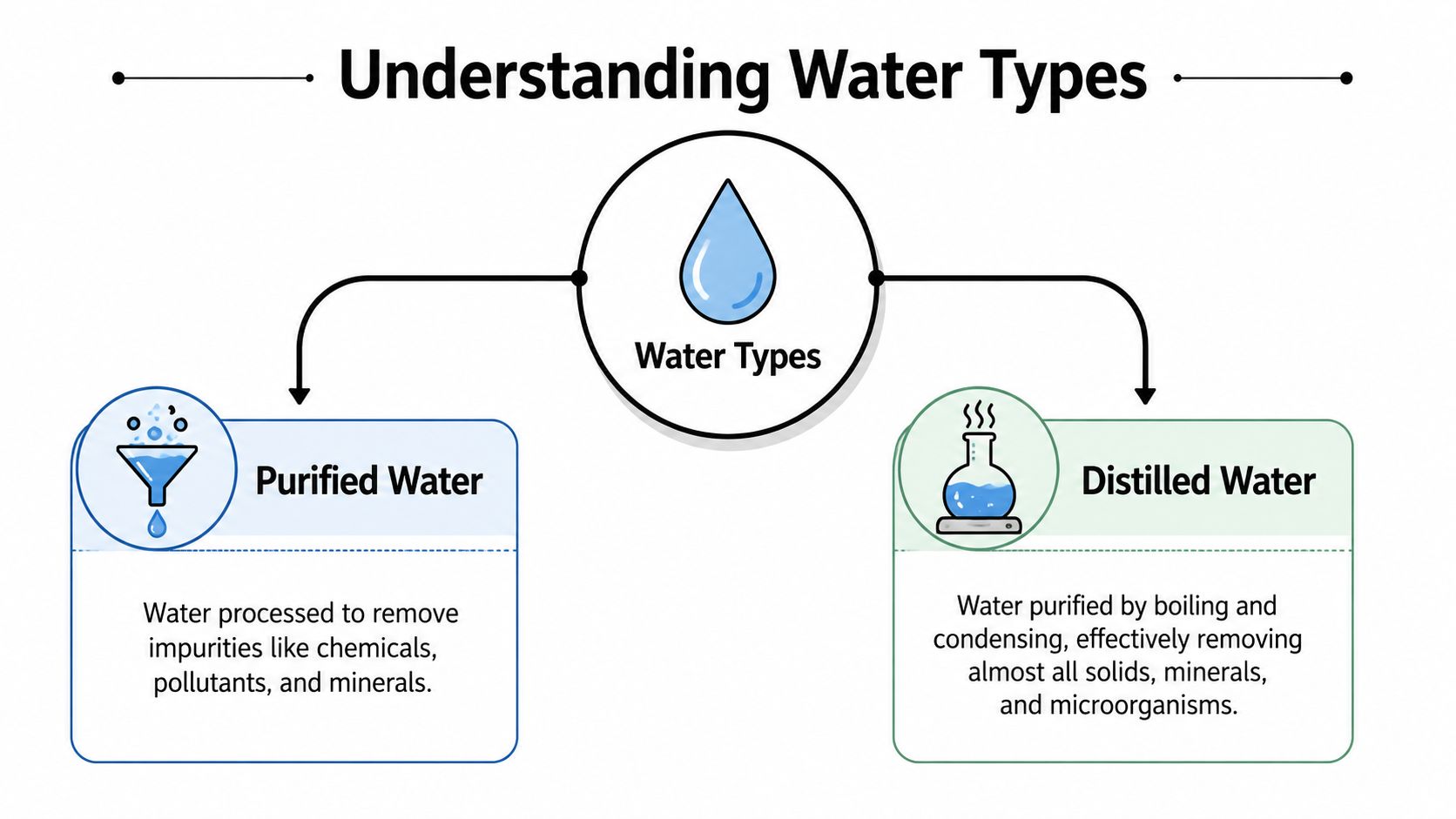
Purified water is defined by how clean the water is at the end. Distilled water is defined by the method used to make it.
Purified water is a standard
Purified water must meet a strict cleanliness benchmark. The technical distinction is clear: purified water is defined by a purity standard of contaminants below 10 ppm, while distilled water is defined by a thermal process involving boiling and condensation. That same distinction also notes that distillation removes dissolved minerals and electrolytes and can reach 0 ppm Total Dissolved Solids (technical comparison of purified and distilled water).
That means purified water can be made more than one way. A company or home system might use reverse osmosis, carbon filtration, deionization, UV treatment, or a combination.
Distilled water is a process
Distillation works like this. Water is heated until it turns into steam. The steam is collected and cooled back into liquid water. In that process, minerals and many other impurities are left behind.
That's why distilled water is often described as chemically pure H₂O. It contains 0 mg/L of minerals, including calcium and magnesium, because the dissolved solids are removed during distillation (distilled and purified water differences in mineral content and cost).
An easy analogy
Think of purified water as passing a final exam. There are different ways to study, but the result has to meet the standard.
Think of distilled water as one specific study method. It can produce a very clean result, but it isn't the only path.
All distilled water is purified water. Not all purified water is distilled water.
That one sentence helps most homeowners sort out the label problem fast.
Where taste enters the conversation
Readers often encounter a point of confusion. People hear “more pure” and assume it must taste better.
Not always.
When water has no calcium or magnesium left, it often tastes flat. Purified water may still retain trace minerals depending on the treatment method, so many people prefer it for drinking.
How Each Type of Water Is Produced
The production method tells you a lot about how the water will behave in your home. It affects mineral content, taste, practical use, and cost.
How distillation works
Distillation is simple to describe, even if it takes energy to do. Water is boiled. Steam rises. That steam gets condensed back into liquid water. Minerals don't travel with the steam, so they're left behind.
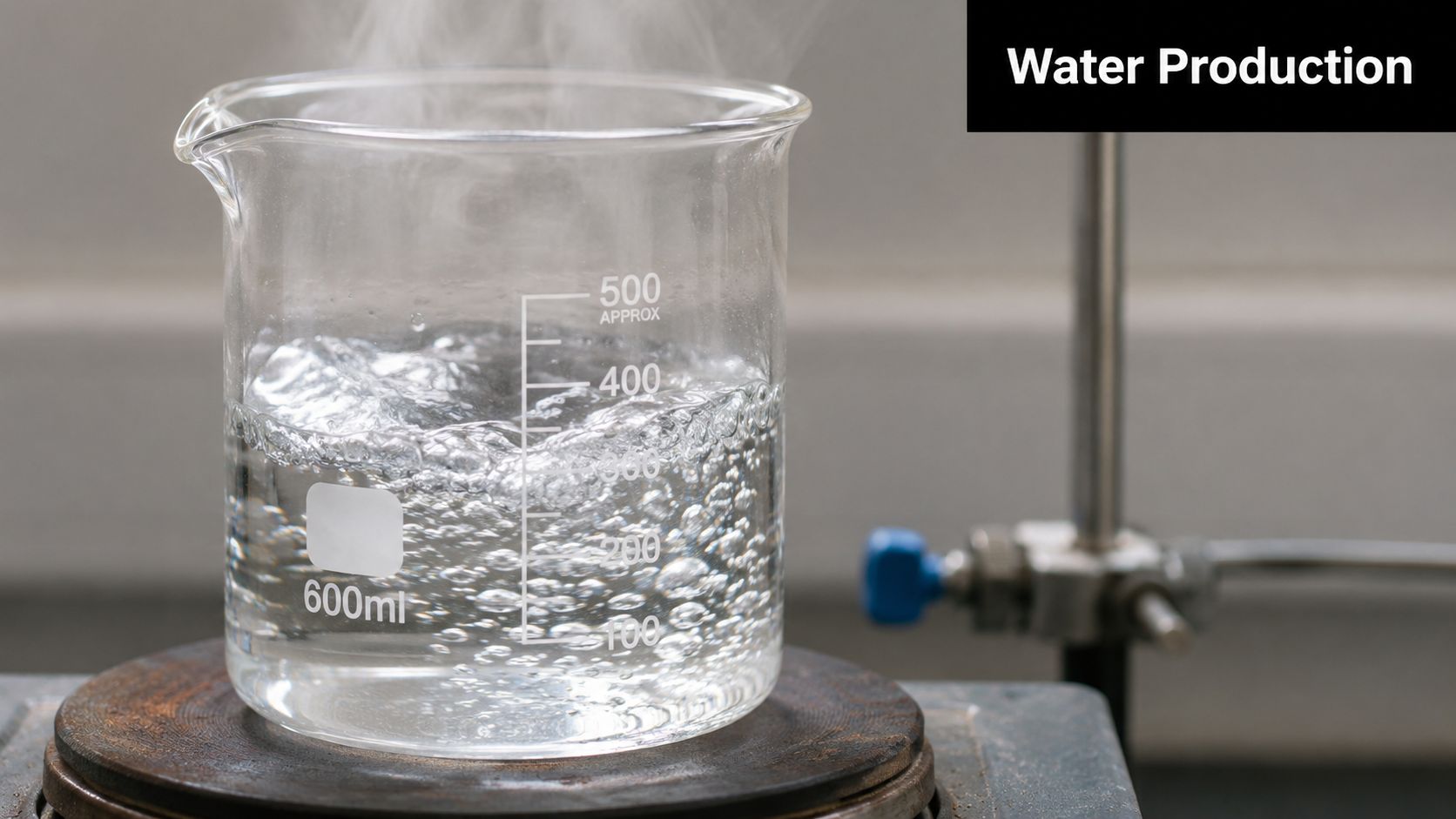
This is one reason distilled water is popular in settings where mineral-free water matters, such as medical equipment, laboratories, humidifiers, and steam irons. It's also why homeowners use it in devices that build up scale quickly.
One technical detail matters here. Distillation is strong at removing minerals and many contaminants, but it cannot remove certain volatile organic compounds, pesticides, or solvents unless additional filtration is applied (water treatment methods and distillation limits).
How purified water is made
Purified water doesn't come from just one machine or one single treatment path. It can be produced through several methods, including:
- Reverse osmosis
- Carbon filtration
- Deionization
- UV sterilization
In homes, reverse osmosis is one of the most practical options for drinking water. Water moves through a specialized membrane and treatment stages that reduce a broad range of impurities to very low levels.
Why homeowners usually prefer reverse osmosis at home
For a Central Florida homeowner, a key advantage of purified water from a home system is convenience. You don't have to keep hauling gallon jugs from the store. You get treated water on demand for drinking and cooking.
It also fits real household routines better.
- Coffee and tea: Better-tasting water usually gives better results than flat-tasting mineral-free water.
- Ice makers: Purified water can improve flavor without requiring bottled water storage.
- Daily cooking: Treated water at the tap is easier than planning around bottled jugs.
Distillation is a very specific purification method. Reverse osmosis is often the more practical household solution when the goal is better drinking water every day.
Comparing Purity Taste Minerals and Cost
A Central Florida homeowner usually notices the difference between purified and distilled water in ordinary moments. You fill a glass from the kitchen tap because the well water has a sulfur smell. You make coffee, and it still tastes off. Then you buy distilled water for a humidifier and wonder if that same jug is really the best choice for drinking too.
That is the key comparison. Purity matters, but so do flavor, mineral content, and what it costs to keep good water in the house every day.
Purity and contaminant reduction
Both purified water and distilled water are cleaned to a high level. The practical difference is what you need the water to do in your home.
Purified water is usually the better fit for daily household use because it is designed to reduce a broad range of unwanted contaminants while staying convenient for drinking and cooking. Distilled water is stripped down even further in one specific way. It removes minerals very effectively, which is why homeowners often save it for appliances that do not handle hard water well.
That distinction matters in Central Florida. If your biggest headache is scale from hard water, distilled water helps in small devices where mineral buildup causes trouble fast. If your bigger concern is better-tasting drinking water from a municipal supply or a treated well system, purified water is often the more useful choice at the tap.
Homeowners who are still sorting out treatment options can get a clearer picture from this guide on reverse osmosis vs filtered water, especially if they are comparing under-sink systems with simpler filters.
Taste and mineral content
Taste is often the deciding factor.
Distilled water commonly tastes flat because the minerals that give water a more familiar taste are removed. Purified water, especially from a reverse osmosis system with remineralization or other finishing stages, usually tastes cleaner without seeming empty.
A simple way to compare them is to picture cooking with each one. Distilled water does the job, but many homeowners find it makes coffee, tea, and plain drinking water taste less satisfying. Purified water tends to feel more natural for daily use.
| Characteristic | Purified Water (from Reverse Osmosis) | Distilled Water |
|---|---|---|
| Taste | Usually clean and familiar for drinking | Often flat or bland |
| Minerals | May retain small amounts, depending on treatment | Minerals are removed |
| Best fit | Daily hydration, cooking, ice, coffee | Equipment and specialty use |
If your water already has a sulfur odor or a strong mineral taste, neither label alone tells the whole story. A gallon jug may taste better than raw well water, but it does not solve the source problem in the home.
Cost over time
Cost usually becomes clear once you look at how the water will be used.
Buying distilled water for one appliance, such as a CPAP machine or steam iron, is usually manageable. Buying jug after jug for a whole family's drinking water and cooking gets expensive fast, and it adds the weekly chore of storing and hauling it.
Purified water from a home treatment system usually costs less over time than relying on store-bought jugs, as noted earlier in the article. It also fits daily life better. You turn on the tap, fill the pot, fill the bottle, and move on.
For many Central Florida homes, that convenience matters as much as the water quality itself. A household dealing with hard water stains, well water odor, or poor taste often needs a practical everyday solution, not a specialty water for every single use.
Bottom line: Distilled water makes sense when you need mineral-free water for equipment. Purified water is usually the better everyday choice for drinking, cooking, taste, and long-term cost.
Which Water Is Right for Which Use
A lot of homeowners don't need one perfect water for everything. They need the right water for each job.
Best uses for distilled water
Distilled water shines when minerals cause problems.
Use it for equipment that can clog, scale up, or fail early when hard water dries inside it.
- Humidifiers: Mineral-free water helps reduce internal deposits.
- Steam irons: It helps prevent scale from collecting in the heating chamber.
- CPAP machines: Many users choose distilled water because the lack of minerals reduces residue in the water chamber.
- Laboratory-style or medical uses: Distilled water is often preferred where contamination needs to be kept very low.
If your home has hard water, these are the exact places where distilled water earns its keep.
Best uses for purified water
Purified water usually makes more sense for normal household life. It's the better fit for drinking, cooking, and anything where flavor matters.
Common uses include:
- Drinking glasses and bottles
- Cooking pasta, soup, and vegetables
- Coffee and tea
- Ice makers
- Pet water bowls
This is also the water many homeowners prefer when their tap water has a chlorine taste, a stale smell, or a noticeable aftertaste.
What about well water problems
If you're on a private well, the question isn't only purified water vs distilled water. It's also what's in your raw water before treatment starts.
A gallon jug won't fix:
- Sulfur odor
- Iron staining
- Sediment
- Bacteria concerns
- Hardness throughout the plumbing
That's why bottled water can be a bandage, not a whole-house answer. It may help at the kitchen sink, but it won't protect the water heater, shower valves, laundry, or fixtures.
If the problem shows up in your pipes, tubs, toilets, or appliances, the solution usually has to start where water enters the home.
The Central Florida Water Factor
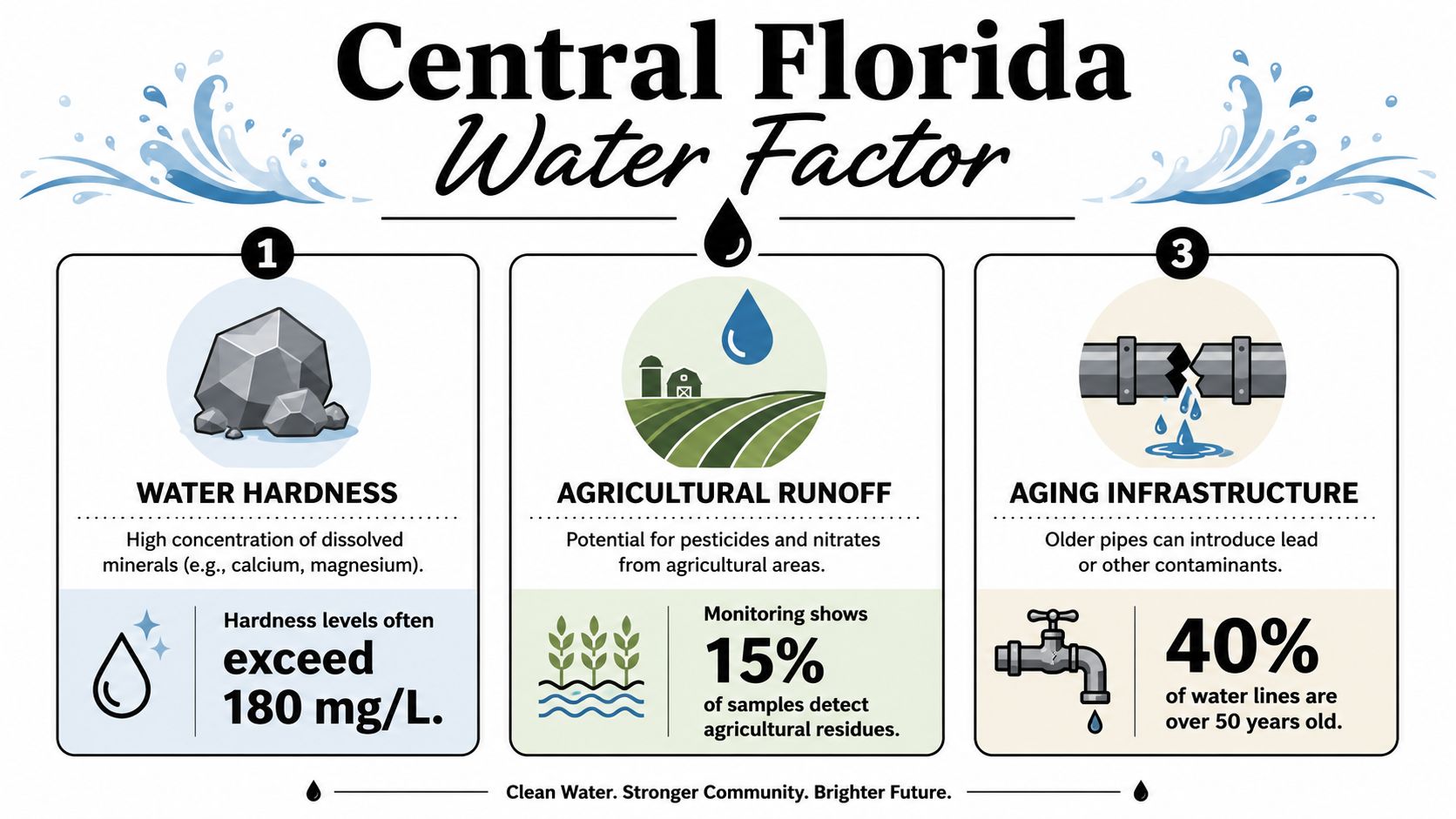
Central Florida changes this conversation in a big way. Generic online advice often assumes average city water and average household concerns. That's not what many homeowners in Sebring, Avon Park, Lake Wales, Winter Haven, Frostproof, and nearby communities are dealing with.
You may be dealing with hard water that leaves scale, municipal water that has an unpleasant chlorine taste, or private well water that brings sulfur odor, iron, or sediment into the house.
Why bottled water doesn't solve house-wide problems
If you buy purified or distilled water at the store, you may improve what goes into your glass. But bottled water doesn't do anything for the water running through the rest of your house.
It won't stop scale from building on fixtures. It won't help your dishwasher. It won't reduce sulfur smell in the shower. It won't deal with sediment entering from a well.
That's why many local homeowners eventually move from “Which jug should I buy?” to “What's in my water?”
Why source treatment matters more in Florida homes
For daily drinking water, a good home reverse osmosis system is often the more practical answer because purified water must meet a standard of less than 10 ppm total dissolved solids under the United States Pharmacopeia definition (USP purified water standard and home reverse osmosis relevance).
For broader household problems, treatment usually needs to happen before the water reaches sinks, showers, appliances, and laundry.
A useful next step is learning how homeowners reduce contamination issues across the home, not just in one bottle or one faucet. This overview of ways to reduce water contamination is a good place to start.
What local homeowners should pay attention to
- Hard water: If white scale shows up on fixtures, you have a treatment issue bigger than drinking water alone.
- Sulfur smell: Rotten egg odor usually points to a source problem that bottled water won't correct.
- Iron or sediment: Staining and grit suggest the water needs system-level treatment.
- Well water safety: Private wells need direct evaluation because the homeowner is responsible for water quality.
The Best Water Solution for Your Florida Home
For most Central Florida households, the smartest long-term answer isn't choosing bottled distilled water for everything. It's building a water treatment setup that matches your home's actual conditions.
If your main concern is everyday drinking and cooking, purified water at the tap is usually the best fit. It tends to taste better, works well in the kitchen, and is easier to live with than carrying in bottled jugs week after week.
If your main concern is protecting one specific appliance or medical device from mineral buildup, distilled water still has a clear place. Many homeowners keep it on hand for that narrow purpose and use treated household water for the rest.
What a better home setup usually looks like
A Florida home often needs more than one layer of treatment. The right combination depends on whether you have city water or a private well, and whether the problem is hardness, odor, sediment, iron, or microbial risk.
A practical setup may include:
- Whole-home filtration for water entering the house
- Water softening if hardness is affecting plumbing and appliances
- Reverse osmosis at the kitchen sink for drinking and cooking water
- Specialized treatment for sulfur, iron, sediment, or well-water concerns
Why testing comes first
The label on a bottle can't tell you what's in your own water. That's the part many homeowners skip, and it's why they spend money on the wrong fix.
A family with chlorine taste from city water needs a different solution than a family with sulfur and iron from a well. A landlord trying to protect fixtures in a rental has a different priority than a homeowner trying to improve drinking water flavor.
If you're weighing long-term options, it helps to see how a whole-house water purification system fits into a full-home strategy.
Good water treatment starts with diagnosis. If you don't know whether you have hardness, sulfur, iron, sediment, or another issue, you're guessing.
For homeowners in Central Florida, that's the key point. Distilled water and purified water both have their place. But if your water problem affects more than the glass in your hand, the right answer is usually a tested, customized treatment plan for the home itself.
If you want to stop guessing, schedule a free water test with Florida Water Management. Their team works with Central Florida homeowners dealing with hard water, sulfur odor, iron, sediment, chlorine taste, and private well concerns. You can also reach out directly through the contact us page to get your water checked and find out which solution fits your home.